A powerful offshore earthquake off Mindanao has already turned into a test of Philippine disaster readiness, with tsunami warnings, building damage, and shifting casualty reports exposing how quickly chaos can spread after a major quake.
Story Snapshot
- PHIVOLCS recorded a **magnitude 7.8** quake offshore of Sarangani on June 8, 2026.[3]
- Local reporting says at least **three people died** and several others were injured in the early hours after the quake.[1]
- Authorities issued tsunami warnings for multiple Mindanao provinces and ordered **class suspensions** in affected areas.[1][2]
- Reports from General Santos City described **collapsed buildings** and significant structural damage.[1][2]
Offshore Quake Jolts Southern Mindanao
The United States Embassy in Manila said the Philippine Institute of Volcanology and Seismology recorded a magnitude 7.8 earthquake offshore of Sarangani at 07:37:41 a.m. on June 8, 2026.[3] The same alert placed the epicenter about 32 kilometers south of Sarangani, confirming that the event struck just off the coast rather than deep inland.[3]
ABC News reported the quake as an offshore magnitude 7.8 event that rocked the southern Philippines and prompted immediate tsunami monitoring across the region.[2] Inquirer’s INQToday likewise said the quake struck off Sarangani in Mindanao and tied its early coverage to PHIVOLCS and local disaster authorities.[1]
Tsunami Warnings and Government Response
PHIVOLCS issued tsunami warnings for nine provinces, including Sarangani, Davao Occidental, Tawi-Tawi, Sulu, Basilan, Zamboanga del Sur, Zamboanga Sibugay, Sultan Kudarat, and South Cotabato, according to INQToday.[1] ABC News also reported tsunami warnings in the Philippines and neighboring countries, showing how quickly a strong offshore quake can become a regional maritime threat.[2]
President Ferdinand Marcos Jr. ordered class suspensions in affected Mindanao areas, and the Department of Education announced broader suspensions across the south, according to the supplied reporting.[1] That response reflects the basic reality of disaster management: when a quake of this size hits near populated coastal communities, officials have to move fast before every detail is fully verified.[1][2]
Damage, Casualties, and Conflicting Early Numbers
INQToday reported at least one death and four injuries in General Santos City police reporting, plus two deaths in Barangay Cablon, Tupi town, bringing the total to three fatalities in the early tally.[1] ABC News later described the death toll as at least 32, showing how quickly numbers can change as rescue crews reach new sites and local governments update their assessments.[2]
https://twitter.com/JulianTHarris/status/2064016775323271494
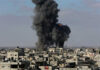
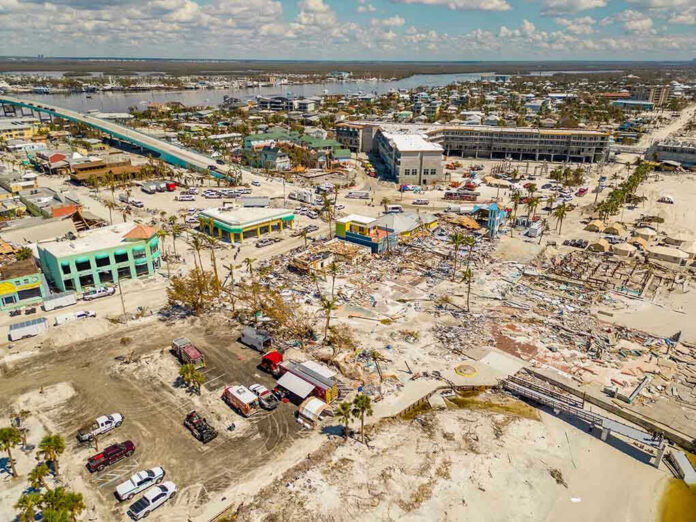
Structural damage was visible in the hardest-hit areas, with ABC News describing collapsed buildings, including a fast food restaurant and a school with structural damage, while INQToday reported significant damage in General Santos City.[1][2] ABC News also said some of the deadliest impacts came from landslides and collapsing structures, a reminder that the first danger after a major quake is often not only the shaking itself but also what fails afterward.[2]
Why the Early Record Still Matters
The supplied material shows a familiar disaster-reporting problem: the strongest facts often emerge in stages, while casualty totals, wave heights, and damage counts continue to shift.[1][2][3] That does not undermine the quake’s reality; it shows why early media snapshots should be read as developing reports, not final accounting, especially when agencies are still checking hospitals, police logs, and structural damage on the ground.[1][2]
The same reporting also shows that the event reached beyond the Philippines, with tsunami monitoring extending across nearby coastal areas and wave observations reported in multiple locations.[2] For readers who want straight answers without the spin, the important point is simple: Mindanao took a hard offshore hit, and the full human and physical cost was still being compiled as the warnings were lifted and rescue work continued.[1][2][3]
Sources:
[1] YouTube – 7.8 earthquake rocked Philippines’ Mindanao Island.
[2] YouTube – 15 Dead As 7.8 Magnitude Quake Hits Mindanao, Tsunami …
[3] YouTube – Magnitude 7.8 quake hits Philippines, at least 32 killed
© impactheadlines.com 2026. All rights reserved.