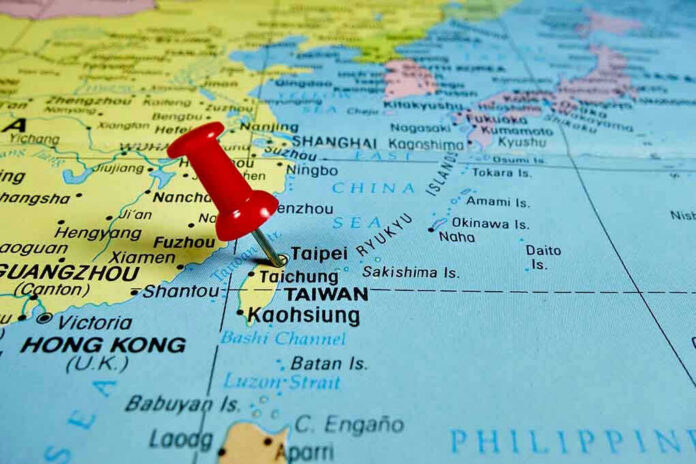
China is dangling “energy security” over Taiwan as a bargaining chip—tying basic survival needs to political surrender.
Story Snapshot
- Beijing is offering Taiwan “stable energy and resource security” if Taipei accepts China’s reunification demands.
- Xi Jinping’s New Year 2026 address described reunification as “unstoppable,” following major military drills.
- China’s messaging pairs incentives with threats, promising support for pro-unification forces while vowing to “crush” separatists and outside interference.
- The proposal underscores how Beijing frames reunification as inevitable while attempting to pressure Taiwan’s political choices through leverage over essentials.
Beijing Links Essential Supplies to Political Compliance
China’s latest “reunification” messaging centers on a transactional offer: Beijing says it can provide Taiwan with stable energy and resource security, but only if Taiwan accepts China’s reunification demands. The core fact pattern is straightforward—this is not presented as unconditional trade or humanitarian support, but as an exchange. By tying essential needs to political outcomes, Beijing signals it views energy stability not as a market question, but as coercive leverage.
Limited public detail is available from the provided research about the mechanics of the offer—such as whether it involves fuel deliveries, grid interconnection, pricing guarantees, or commodity contracts. What is clear is the structure of the pitch: security in exchange for submission. That approach matters because Taiwan’s energy resilience is a strategic vulnerability in any cross-strait crisis, and Beijing’s promise reads less like cooperation and more like a pressure point aimed at shaping Taiwan’s decision-making.
Xi’s 2026 Rhetoric Escalates After Major Military Drills
President Xi Jinping’s New Year 2026 address reportedly described Taiwan’s reunification as “unstoppable,” coming after major military drills. The sequencing is significant: Beijing paired a demonstration of force with a public claim of inevitability. The combination aims to set expectations internationally and psychologically condition Taiwan’s public to believe resistance is futile. Even without additional operational specifics in the research, the rhetorical posture tracks with a broader coercion playbook: show capability, then present demands as destiny.
China also reportedly vowed to support pro-unification forces in Taiwan while promising to “crush” separatists and external interference. Those lines draw a clear boundary around what Beijing deems legitimate politics inside Taiwan—and what it threatens to punish. That framing is not about free choice or democratic consent; it asserts China’s right to define acceptable Taiwanese political outcomes. For Americans who value self-determination, the language reads like an open attempt to narrow Taiwan’s options through intimidation.
“Carrots and Sticks” Messaging Targets Taiwan’s Internal Politics
The offer of resource and energy stability sits alongside threats, producing a classic carrot-and-stick structure. Beijing is not merely arguing for cultural ties or economic integration; it is coupling benefits with conditions and backing the conditions with warnings of force. By promising support to pro-unification forces, China signals it intends to influence Taiwan’s internal political balance, not simply negotiate state-to-state. That raises the stakes for Taiwan’s democracy and for any foreign partners invested in a free Indo-Pacific.
The research provided does not include Taiwan’s official response, independent verification of the proposal’s terms, or details on timing and channels. That limitation matters for readers trying to judge immediacy and credibility. Still, the described content—energy security offered only in exchange for reunification demands—fits a broader pattern of authoritarian bargaining: essential goods become instruments to achieve political outcomes. The constitutional principle at issue is self-government, and Taiwan is being told to trade it away.
Why This Matters for U.S. Interests and Constitutional Americans
China’s language about “crushing” separatists and “external interference” signals that Beijing views outside support for Taiwan as illegitimate. For the United States, that creates pressure on deterrence and on the ability to defend free societies without being branded an interloper. For conservative Americans skeptical of globalist word games, the takeaway is simple: Beijing is trying to redefine coercion as “historical inevitability.” If essentials like energy are weaponized abroad, it’s a reminder why energy independence and strategic resilience at home remain national priorities.
The bottom line from the available research is that Beijing is presenting reunification as non-negotiable while offering “security” as a conditional reward. Taiwan is being asked to accept political absorption in exchange for stability in necessities—while military drills and threats loom in the background. With limited details provided beyond those points, the clearest verified conclusion is about intent: China is pairing incentives and intimidation to shape Taiwan’s choices and constrain the space for independent decision-making.