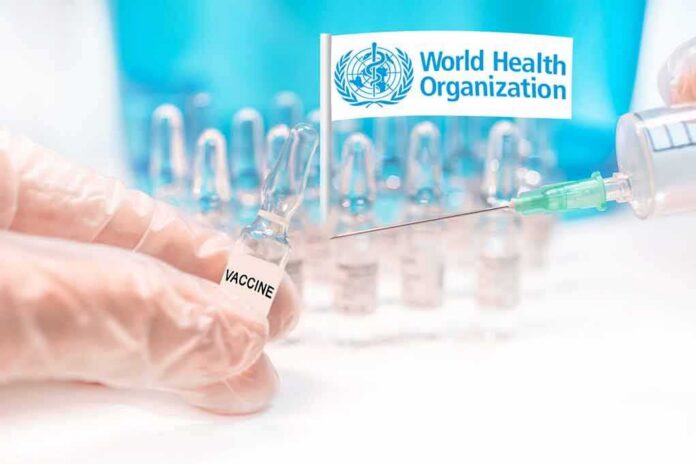
A deadly Ebola strain with no approved vaccine has just been labeled a “global concern,” raising new questions about whether world health officials and politicians are ready—or already failing us again.
Story Snapshot
- World Health Organization (WHO) declared the Bundibugyo Ebola outbreak in Congo and Uganda a Public Health Emergency of International Concern, warning of cross-border spread.
- At least 131 people are believed dead across recent Ebola outbreaks, with this rare Bundibugyo strain lacking any licensed vaccine or specific treatment.
- The declaration came unusually fast and without the usual emergency-committee process, fueling worries about politicized global-health decisions.
- Americans across the political spectrum see another example of distant elites making high-stakes calls while basic preparedness at home still feels shaky.
What this new Ebola emergency actually means
The World Health Organization (WHO) has determined that the Ebola epidemic caused by the Bundibugyo virus in the Democratic Republic of the Congo and Uganda is a Public Health Emergency of International Concern, a formal label reserved for “extraordinary” events that risk spreading across borders and need coordinated global action. The Centers for Disease Control and Prevention (CDC) confirms that Ebola outbreaks are ongoing in both countries, underscoring that the disease is often severe and frequently fatal.[4] WHO officials say the outbreak “poses a risk to neighboring countries,” which is why they are warning governments worldwide.
WHO’s declaration follows weeks of mounting reports from eastern Congo’s Ituri region and neighboring parts of Uganda, where suspected cases and deaths rose rapidly before the alarm was sounded.[1] Media accounts, citing WHO briefings, describe at least 246 suspected cases and around 80 deaths in Ituri alone at an early stage of the crisis, with additional fatalities later reported region-wide.[1] CDC data on a separate but recent Ebola outbreak in Congo’s Kasai Province, which caused 64 confirmed or probable cases and 45 deaths, shows how frequently the virus returns to fragile health systems in the region.[4] Together, these events help explain why WHO now treats the situation as a broader regional threat.
Why Bundibugyo Ebola worries doctors more than usual
WHO and CDC emphasize that Ebola, in general, can kill up to nine in ten infected people in some outbreaks, though fatality rates vary by strain and by the level of care available.[4][5] The current emergency is linked to the Bundibugyo variant, a rare species of the virus that has appeared only a few times since Ebola was first identified in 1976.[2][3] Unlike the better-known Zaire strain—against which vaccines and treatments were finally developed after the catastrophic 2014–2016 West Africa epidemic—Bundibugyo has no licensed vaccines or specific therapeutics.[2][5] That means doctors are essentially back to square one, relying on isolation, basic supportive care, and old-fashioned contact tracing.
Recent scientific reviews of past Ebola events in Uganda and Congo highlight how deadly these outbreaks can be, especially when health systems are already weak.[3] Researchers estimate that case fatality rates across Ebola virus species have averaged between 40 percent and 50 percent, with some strains higher.[3] In the current episode, WHO and news outlets report that several health care workers have died from suspected Bundibugyo infections, indicating both intense exposure and serious gaps in basic infection control.[2] WHO has also pointed to a three-week delay between the first likely case and laboratory confirmation as evidence that local clinics did not initially recognize the disease, allowing silent spread in communities and hospitals.[2]
Symptoms, spread risk, and what ordinary people should watch for
CDC explains that Ebola typically begins like many other illnesses—fever, fatigue, muscle pain, headache, and sore throat—before quickly moving to vomiting, diarrhea, rash, impaired kidney and liver function, and in many cases internal and external bleeding.[4][5] Because early symptoms look like flu, malaria, or COVID-type infections, outbreaks can smolder undetected, particularly in rural areas with few labs and limited transportation.[2][3][4] The virus spreads mainly through direct contact with blood or body fluids of a sick person, or with contaminated surfaces and burial materials.[4][5] That is why poorly equipped clinics, overcrowded hospitals, and traditional funeral practices can drive case numbers up fast when basic protective gear and clear information are missing.
WHO says the current Bundibugyo outbreak “poses a risk to neighboring countries” because of cross-border trade and travel between eastern Congo, Uganda, and the wider East African region. Earlier Ebola epidemics in Kivu and elsewhere showed how quickly the virus can cross borders when surveillance at checkpoints is thin and communities distrust authorities.[3][4] In the present crisis, WHO has urged countries not to close borders but instead to strengthen screening, information sharing, and rapid response teams.[2] That recommendation reflects a tension Americans know well from COVID: people want decisive border controls, but poorly planned restrictions can backfire without real readiness on the ground.
Fast-track declaration, slow institutions, and the “elite” problem
STAT News reports that WHO Director-General Tedros Ghebreyesus declared this emergency unusually quickly—faster than in several past crises—and did so without first convening a full emergency committee recommendation, a first in the history of Public Health Emergency of International Concern decisions.[2] That break from process will look to some like long-overdue urgency after years of foot-dragging on Ebola and COVID.[2][4] To others, it reinforces a darker suspicion: that unelected global health officials can move the goalposts anytime, while ordinary citizens are left to absorb the economic and social fallout. For Americans who already distrust the “deep state,” this kind of procedural shortcut is exactly what fuels anger.
An American doctor is among the hundreds of people who have contracted the rare virus linked to an Ebola outbreak that led the World Health Organization to declare a global health emergency over the weekend. https://t.co/yciwrnNMPM
— FOX 5 Atlanta (@FOX5Atlanta) May 19, 2026
Both conservatives and liberals in the United States have reason to watch how this plays out. Conservatives worry that global emergencies become pretexts for new spending, new bureaucracies, and new pressure to surrender border control to international bodies. Liberals fear that underfunded health systems—at home and abroad—will again leave poor communities to bear the brunt while elites fly first-class out of danger zones. What the evidence shows so far is simple: Ebola remains a severe, often deadly disease; this Bundibugyo strain lacks a vaccine; and outbreaks in fragile regions keep forcing the world to choose between early warnings and overreaction.[2][3][4][5] Whether global institutions handle this crisis with transparency and accountability, or repeat the half-truths and mixed messages of recent years, will say a lot about whether the system can still be trusted when the next alarm sounds.
Sources:
[1] YouTube – WHO declares global health emergency over Ebola outbreak
[2] Web – WHO declares Ebola outbreak a global public health emergency
[3] YouTube – WHO declares public health emergency over Ebola
[4] Web – Ebola Disease: Current Situation – CDC
[5] Web – Ebola virus disease – World Health Organization (WHO)
© impactheadlines.com 2026. All rights reserved.