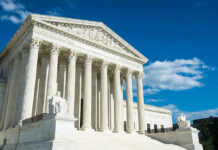
Supreme Court unanimously clears path for Christian street preacher to challenge city ordinance silencing his First Amendment-protected religious speech, delivering a vital win for constitutional freedoms amid endless foreign wars.
Story Highlights
- U.S. Supreme Court rules 9-0 on March 20, 2026, allowing Gabriel Olivier’s lawsuit to proceed despite his 2021 conviction under Brandon, Mississippi’s protest ordinance.
- Justice Elena Kagan authors opinion clarifying Heck v. Humphrey does not bar prospective relief against unconstitutional laws, protecting future speech rights.
- Olivier, a faithful evangelist, arrested for preaching Christianity on public sidewalks, not remote “designated areas,” highlighting government overreach on religious expression.
- Ruling could invalidate similar restrictive ordinances nationwide, bolstering defenses for patriots sharing conservative values in public spaces.
- Unanimous decision transcends politics, reaffirming core First Amendment protections when local governments try to muzzle dissent.
Christian Preacher’s Arrest Sparks Constitutional Clash
Gabriel Olivier, a Christian evangelist from Bolton, Mississippi, preaches to share his faith openly on public sidewalks near event venues. In May 2021, Brandon police arrested him outside the city amphitheater for violating a 2019 ordinance confining all protests and demonstrations to remote designated areas. Olivier viewed the spot as too distant to reach concertgoers effectively. He pleaded no contest in June 2021, paying a $304 fine and accepting one-year probation. This conviction did not end his fight for free speech. He filed a federal civil rights lawsuit later that year, arguing the ordinance violated his First Amendment rights. Lower courts dismissed the suit, citing Heck v. Humphrey precedent that blocks challenges implying a conviction’s invalidity. The Supreme Court reversed this on March 20, 2026, in a unanimous ruling.
Supreme Court Rejects City’s Procedural Blockade
Justice Elena Kagan wrote the Court’s opinion, holding Olivier’s suit seeks only prospective relief—an injunction halting future enforcement of the ordinance. This distinguishes it from barred retrospective attacks on convictions. The Court rejected Brandon’s claim that success would imply Olivier’s conviction was invalid, noting it would trap him between risking repeated arrests or abandoning protected speech. Kagan emphasized Heck bars suits creating conflicting judgments, but Olivier’s forward-looking claim avoids this. The ruling clarifies Heck’s scope applies to indirect assaults on convictions, not pure injunctions against ongoing violations. This procedural victory sends the case back to lower courts to assess the ordinance’s constitutionality directly. Even liberal Justice Kagan recognized the need to protect religious expression from overbroad local rules.
Unanimous Ruling Strengthens First Amendment Defenses
The 9-0 decision signals rare consensus across ideological lines, underscoring the principle’s strength. Olivier’s preaching involves loudspeakers, signs, and literature promoting Christianity—core religious exercise conservatives cherish against woke censorship. Cities like Brandon enacted these zones post-2019 to manage crowds, but they risk silencing dissenters. The ordinance mandates “demonstrators” stay in isolated spots, potentially chilling family values advocacy or patriotic rallies. This precedent limits government use of prior convictions to dodge accountability, empowering citizens nationwide. As MAGA families grapple with war fatigue and inflation from globalist entanglements, victories like this remind us the Constitution safeguards homefront liberties against bureaucratic overreach.
Long-term, the holding refines civil rights litigation under Section 1983, distinguishing damages claims from injunctions. Municipalities face more challenges to protest restrictions, possibly requiring revisions. Religious activists gain tools to preach without fear of permanent litigation bars. For Olivier, success could free him to evangelize near the amphitheater unhindered, upholding traditional values in public squares.
This City Arrested a Pro-Life Street Preacher Over His Speech – the Supreme Court Just Weighed In
https://t.co/ppDKAY5V2D— Townhall Updates (@TownhallUpdates) March 23, 2026
Broader Implications for Conservative Values
This ruling arrives amid 2026’s Iran conflict, where even Trump loyalists question endless regime-change wars betraying “no new wars” pledges. High energy costs from Hormuz tensions exacerbate frustrations with fiscal mismanagement and open borders. Yet domestically, the Court bolsters defenses against eroding constitutional rights—vital as leftists push speech codes. Street preachers like Olivier embody resilience, sharing faith without apology. The decision protects not just evangelicals but all voicing conservative principles against government silos. Families relying on self-reliance and gun rights see parallels: authorities cannot proceduralize away core freedoms. With the case remanded, watch lower courts scrutinize Brandon’s ordinance for First Amendment flaws.
Sources:
Mass Lawyers Weekly: Supreme Court preacher First Amendment 1983 Heck ruling
SCOTUSblog: Unanimous court allows street preacher’s free speech case to move forward
Supreme Court Opinion: Olivier v. City of Brandon, Mississippi