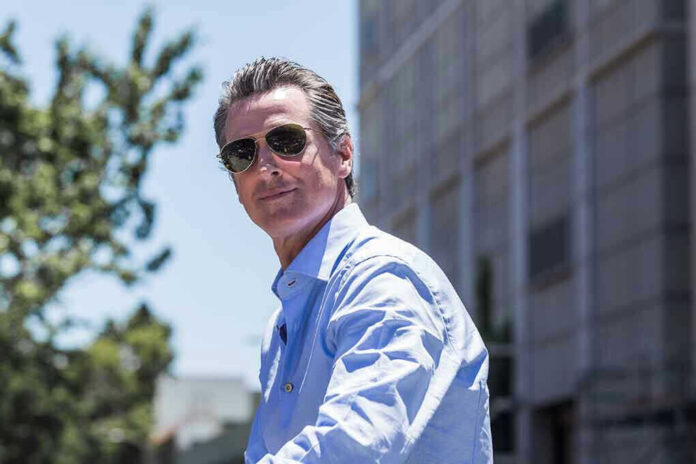
California Governor Gavin Newsom’s climate-focused trip to China was funded by a left-wing foundation with controversial ties to the Chinese Communist Party, sparking questions about foreign influence and transparency.
At a Glance
- The Hewlett Foundation funded Newsom’s 2023 climate trip to China with a $300,000 grant.
- The foundation has also given $112 million to a CCP-affiliated green energy group in China over the past decade.
- Newsom’s visit resulted in new climate agreements with Chinese officials, despite ongoing U.S.-China tensions.
- Critics are concerned about foreign influence on U.S. state policies through such private funding.
Hewlett Foundation’s Role in Climate Diplomacy
The Hewlett Foundation, known for its environmental grantmaking, played a pivotal role in funding Governor Gavin Newsom’s climate-focused trip to China in 2023. This trip was not an isolated incident but part of a broader strategy by the foundation to foster international climate cooperation. Over the past decade, Hewlett has directed significant funds, approximately $112 million, to Energy Foundation China (EFC), a nonprofit with alleged ties to the Chinese Communist Party (CCP). The foundation’s support for Newsom’s trip has raised eyebrows due to its controversial funding history.
While the foundation’s motivations appear to align with promoting global climate action, the fact that EFC is staffed largely by former CCP officials has prompted scrutiny. Critics argue that such financial backing could potentially influence U.S. climate policy to align with Chinese strategic interests, an accusation that has led to congressional and watchdog investigations. This situation illustrates the complex dynamics at play when private foundations engage in international diplomacy, especially with nations that have contentious relationships with the United States.
California’s Climate Diplomacy with China
California has a storied history of climate diplomacy with China, a bilateral engagement that spans over 15 years and multiple administrations. This relationship has been fostered by programs like the California-China Climate Institute (CCCI) at UC Berkeley, chaired by former Governor Jerry Brown, which has been instrumental in facilitating subnational climate cooperation. Newsom’s 2023 trip is a continuation of this tradition, aiming to strengthen ties and promote collaborative climate action despite broader U.S.-China tensions.
During his visit, Newsom engaged in high-level discussions with Chinese officials, including President Xi Jinping. The meetings resulted in new agreements focused on climate cooperation, with CCCI serving as the Secretariat for these agreements. These developments underscore the importance of subnational diplomacy in addressing global climate issues, though they also highlight the potential risks of foreign influence on state policies.
Implications of Private Funding in Diplomacy
The use of private foundation funding for international trips by state officials presents both opportunities and challenges. On one hand, it enables states like California to engage in climate diplomacy without relying on limited public funds. On the other hand, it raises questions about transparency and accountability, particularly when the funding sources have ties to foreign governments or entities with strategic interests that may not align with those of the United States.
The Hewlett Foundation’s sponsorship of Newsom’s trip to China exemplifies these complexities. While the trip resulted in tangible agreements and strengthened climate cooperation, the involvement of EFC and its connections to the CCP have fueled concerns about the potential for undue influence. These concerns are further amplified by the ongoing scrutiny of foreign funding sources in U.S. policy-making, especially concerning China.
Sources:
California-China Climate Institute (UC Berkeley)
Office of Governor Gavin Newsom