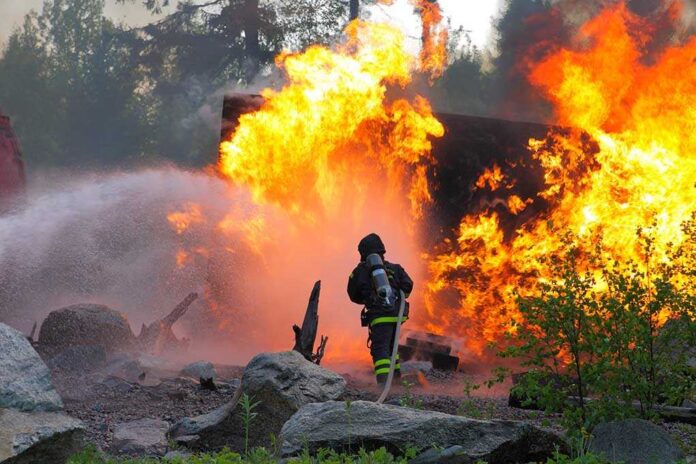
A Marine Corps F/A-18D crash near Rimrock Lake sparked a wildfire and fresh questions about flight safety and readiness.
Story Highlights
- A Marine Corps F/A-18D went down near Rimrock Lake and ignited a wildfire [10].
- Officials said similar crashes remain “under investigation,” with causes not yet confirmed [2].
- Reports from past F/A-18 crashes show pilots sometimes eject safely, but risks remain [3].
- Local responders focused on rescue and fire control while facts were gathered [1].
Crash Near Rimrock Lake Triggered Fire and Emergency Response
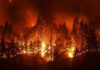
Local outlets reported that a military aircraft crashed near Rimrock Lake in Yakima County and sparked a wildfire. Fire crews and deputies moved fast to secure the area and attack the flames. Early information pointed to a Marine Corps F/A-18D training flight, but officials had not released a full account. The report stressed containment and safety first, while investigators began their work to confirm the chain of events and any hazards at the site [10].
National Park Service records from a different F/A-18 crash show the same early pattern. Rangers received a crash report, closed the area, and coordinated with federal teams. Officials focused on search and safety while the military handled the inquiry. That case mirrors the first-day steps seen after the Rimrock Lake crash, where local and federal roles run in parallel until a formal cause is known and released to the public [1].
Officials Emphasize Investigations Before Causation Claims
The United States Navy’s public statements in prior F/A-18 mishaps highlight a standard approach. Leaders state the incident is “under investigation,” avoid early blame, and work with local authorities. That language signals a careful process that protects evidence and avoids guesswork. The same stance now applies to the Rimrock Lake crash. The goal is to confirm facts on maintenance, weather, training profile, and any human factors before drawing final conclusions [2].
Coverage of other F/A-18 losses shows how first-day details can be limited. In a crash near China Lake, the outlet known as The War Zone reported the jet type and that the pilot ejected and was in good condition. Many other details remained unknown for days. That case shows why patience matters now. Key questions, like whether the Hornet carried live ordnance or had a specific malfunction, often take time to answer with confidence [3].
What Conservative Readers Should Watch For Next
Investigators will look at maintenance records, recent parts changes, and any alerts from the fleet. They will also review flight data, weather, and radio calls. Prior Marine and Navy statements in other events suggest they will not label this a systemic failure until the facts prove it. Readers should expect staged updates, not instant answers. If officials find a repeat issue, they will order checks across the fleet to keep pilots and nearby communities safe [2].
Local firefighters and deputies deserve credit for fast action to contain the blaze and protect homes and trails. Their work fits a clear pattern seen in other crash zones, where responders secure perimeters and prevent secondary harm. That front-line performance is why small fires do not become major disasters. As with other mishaps, close civil-military teamwork reduces risk while the military runs a full safety probe and shares results when ready [1].
Balancing Readiness, Safety, and Taxpayer Stewardship
Military flight training is dangerous, but America needs it to deter enemies and keep our edge. Prior mishaps remind us that pilots often eject and survive, yet every crash is costly. Past reports placed the jet type and basic facts quickly, but many specifics stayed unclear at first. That is the tradeoff between speed and accuracy. Taxpayers deserve transparency on what failed, what it cost, and what changes will prevent another loss of jet or risk to people nearby [3].
Earlier today, an F/A-18D Hornet fighter jet crashed near Rimrock Lake in Washington. The pilot successfully ejected and survived the incident. pic.twitter.com/iit3mLfW7e
— Moshe Schwartz (@YWNReporter) June 14, 2026
Conservatives should press for clear timelines, root-cause findings, and any fleet-wide fixes that follow. We do not need spin. We need facts, accountability, and common-sense steps that keep pilots safe and protect the public. Leaders must avoid political distractions and focus on maintenance discipline, parts quality, and realistic training. This approach supports strong defense and respects the communities that host ranges and routes where these aircraft fly every day [2].
Sources:
[1] Web – Marine Corps F/A-18 crashes in Washington state, sparks wildfire
[2] Web – F/A-18 Super Hornet Crash in Death Valley National Park
[3] Web – U.S. Navy Super Hornet Crashes in Death Valley National Park
[10] Web – Accident McDonnell Douglas F/A-18D Hornet 164017, Monday 8 …
© impactheadlines.com 2026. All rights reserved.