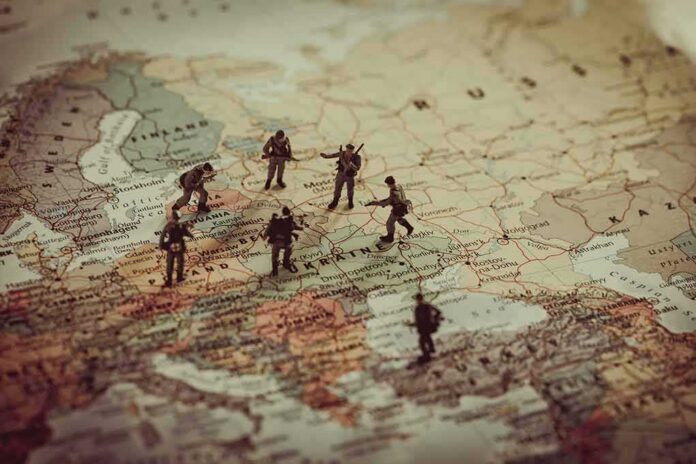
Lithuania is turning its eastern frontier into a machine that slows tanks and buys time.
Story Snapshot
- Defense leaders approved permanent border fortifications to obstruct hostile forces.
- Plans include mines, anti-tank obstacles, and more than 20 counter-mobility parks.
- Baltic partners coordinate a broader defense line along their eastern borders.
- Funding, timelines, and allied basing aim to turn delay into real deterrence.
Lithuania moves from talk to steel, concrete, and charges
Lithuania’s defense minister said the country will install permanent fortifications on borders with Russia and Belarus to stop hostile movement. The ministry tied the plan to a counter-mobility doctrine that blocks, channels, and slows armor. Officials set near-term milestones for initial sites and a multi-year rollout for depth. The plan emphasizes predictable choke points over thin lines. The message is simple: your tanks will not sprint through here without a fight.
The engineering list is blunt and practical. Crews will emplace anti-tank barriers, prepare bridges for demolition, seed obstacles with mines, and stage heavy materials in more than 20 counter-mobility parks. Units can then arm, block, and crater on short notice. The country is buying equipment this year to accelerate work. Logistics hubs along key roads and river crossings tie the plan together so commanders can shape the ground in hours, not weeks.
Border works fit a Baltic playbook to delay and deny
Defense ministers from Estonia, Latvia, Lithuania, and Poland announced joint coordination for a defense line on the eastern frontier. Each nation builds to its terrain, but the logic matches: make any assault crawl, force column bunching, and create kill zones for artillery, drones, and anti-armor teams. The joint statement frames fortification as a response to rising threats and a way to raise the cost of aggression across the whole region.
Funding aims to make the plan durable. Lithuania committed about one and a quarter billion dollars over ten years to strengthen the eastern border. Long-term money pays for concrete, earthworks, explosives, sensors, and rapid repair after sabotage or weather. The budget also buys training time for engineers and territorial units. A defense that only looks tough in photos fails when tires and tracks finally hit it. Budgets keep the steel and shovels moving.
Obstacles shape the fight; allies reinforce the outcome
Fortifications are only half the story. Lithuania is building a base to host roughly four thousand German troops. That force anchors the plan by adding armored, air defense, and logistics power on the ground. Border ditches and barriers stall the push; allied brigades deliver the punch. This pairing turns delay into deterrence, because an attacker must weigh not only the obstacle but the counterattack it invites.
Officials and analysts in the region stress that visibility is a feature, not a flaw. Barriers you can see from a drone are warnings. They force route choices and reveal intent, which helps defenders plan fires. The public also reads the signal: government is doing the slow, heavy work that wins time in a crisis. This approach aligns with common-sense defense: prepare early, show your cards, and make the other guy second-guess his plan.
From bridges to back roads, speed bumps everywhere
Specific steps already mark the map. Lithuania reinforced key bridges with anti-tank obstacles and prepared them for demolition if an attack begins. River crossings, causeways, and tight forest roads become instant choke points. Crews are cataloging culverts and narrow spans for rapid block or blast orders. These actions reflect lessons from Ukraine: deny easy movement, strip momentum, and force armor into exposed lanes where defenders can strike first.
🇷🇺 Northern News: Situation Along Russia's Northwestern Borders
🇱🇹 Lithuania: Accelerating the Construction of a Defensive Border Belt
Lithuania is accelerating the creation of an engineering barrier system along its borders with Russia and Belarus. The government has approved… pic.twitter.com/WkFtgF9PGT
— Aiden Minnis (@VZSMO) September 8, 2026
Civil plans support the military map. Agencies are preparing a nationwide evacuation framework, which sets who goes where, on which roads, and when. Clear lanes for civilians free up routes for resupply and counterattack. This reduces panic and keeps fuel, medics, and ammunition moving. The plan blends old-school civil defense with modern command tools, closing the gap between a warning and an ordered, safe withdrawal if needed.
Sources:
cbsnews.com, kaitseministeerium.ee, china-cee.eu, armyrecognition.com, besacenter.org, reuters.com, express.co.uk, lrt.lt
© impactheadlines.com 2026. All rights reserved.