Japan prepares to restart the world’s largest nuclear power plant, defying the fears that paralyzed its energy sector since Fukushima while leftist green energy fantasies have left nations like Germany scrambling for reliable power.
Story Snapshot
- Kashiwazaki-Kariwa Nuclear Power Plant holds title as world’s largest at 8,212 MW capacity across 7 reactors
- Plant remains offline since 2011 Fukushima disaster despite passing safety checks, awaiting local government approval
- Japan operates only 13 of 33 available reactors, producing just 10% of electricity compared to 30% before 2011
- Energy security and carbon neutrality goals drive push for nuclear restart amid billions in fuel import costs
World’s Largest Nuclear Facility Awaits Final Approval
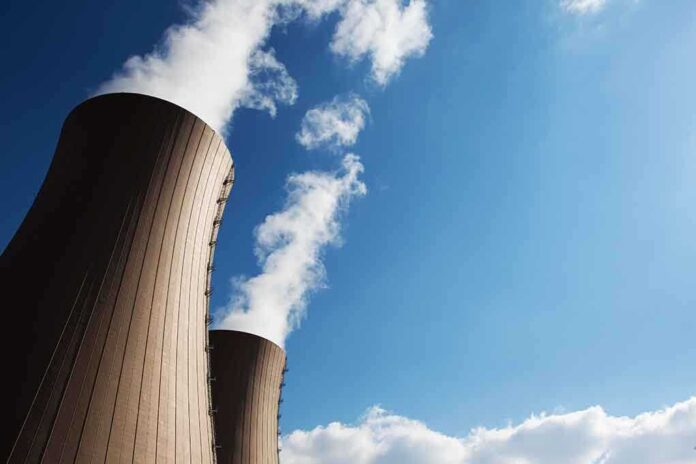
Tokyo Electric Power Company’s Kashiwazaki-Kariwa Nuclear Power Plant in Niigata Prefecture represents the pinnacle of nuclear energy infrastructure globally. The facility houses seven boiling water reactors and pressurized water reactors with combined capacity exceeding 8,200 megawatts. Units 6 and 7 received Nuclear Regulation Authority safety clearances in 2023-2024 following extensive post-Fukushima upgrades including reinforced tide embankments and backup power systems. However, Niigata Prefecture and Kashiwazaki City governments maintain de facto veto power under Japan’s unique post-2011 regulatory framework, blocking restart despite federal approval. The facility has remained completely idle since the 2011 Tōhoku earthquake and tsunami devastated the Fukushima Daiichi plant.
Energy Independence Versus Fearmongering Politics
Japan’s nuclear retreat following Fukushima exemplifies how disaster hysteria overrides practical energy policy. Before 2011, 54 reactors supplied approximately 30% of the nation’s electricity, providing stable baseload power and reducing dependence on imported fossil fuels costing roughly $60 billion annually. By 2024, only 13 reactors operate across six plants, forcing Japan to burn imported liquefied natural gas and coal while pursuing unrealistic renewable targets. The government aims for nuclear to provide 20-22% of electricity by 2030 and plays a key role in achieving carbon neutrality by 2050. Resource-poor Japan cannot afford the luxury of abandoning proven nuclear technology because coastal elites and anti-nuclear activists exploit legitimate safety concerns to advance their green agenda.
Local Resistance Rooted in Seismic Reality
Niigata Prefecture’s opposition stems from genuine geological concerns rather than abstract environmental ideology. The region experiences significant seismic activity, evidenced by the 2024 Noto Peninsula earthquake which renewed evacuation fears for residents within the 20-kilometer safety zone. Kashiwazaki-Kariwa’s coastal location in one of Japan’s most earthquake-prone areas creates legitimate risks that distinguish it from reactors in more stable regions. Local fisheries also face economic threats from contamination fears, whether scientifically justified or not. Post-Fukushima polling shows approximately 50% of Japanese citizens oppose nuclear restarts, giving local governments political cover to maintain their veto. TEPCO’s credibility remains damaged from the Fukushima disaster where redundant safety systems catastrophically failed when tsunami waves exceeded design specifications.
Strategic Implications for Energy Security
Kashiwazaki-Kariwa’s restart would deliver immediate economic benefits by reducing TEPCO’s fuel costs and stabilizing the regional power grid. The facility’s return to operation would advance Japan’s position as East Asia’s nuclear technology leader and provide a counterpoint to Germany’s disastrous nuclear phaseout that left Europe vulnerable to Russian energy blackmail. Japan’s ten regional utility monopolies, tied to industrial giants like Hitachi, Toshiba, and Mitsubishi Heavy Industries, continue pushing for nuclear expansion as renewables cannot provide reliable baseload power despite massive subsidies. The broader strategic question remains whether democratic nations will embrace proven energy technologies or surrender energy independence to satisfy activists who offer no practical alternatives beyond expensive, intermittent wind and solar installations.
🇯🇵 The world's biggest nuclear power plant is set to restart for the first time since the 2011 Fukushima disaster, its Japanese operator said, despite persistent safety concerns among residents.
➡️ https://t.co/NQn94BTNuR pic.twitter.com/iSN9gv3TUq— AFP News Agency (@AFP) January 21, 2026
The Kashiwazaki-Kariwa situation underscores the tension between legitimate safety concerns and energy realism. While proper regulatory oversight and local input serve important functions, indefinite paralysis of functional infrastructure serves neither safety nor prosperity. Japan’s experience offers lessons for American conservatives defending reliable baseload power against green mandates that would eliminate coal and natural gas without realistic replacements.
Sources:
Nuclear power in Japan – Wikipedia
Japan’s Experience in the Development of Nuclear Power – RIETI
Energy For a Bright Tomorrow: The Rise of Nuclear Power in Japan – Origins
A Brief Recent History of Japanese Nuclear Power – HNN
A Short History of Nuclear Power in Japan – POWER Magazine
Lessons Learned from the Fukushima Nuclear Accident – NCBI
The Fukushima Daiichi Nuclear Accident 10 Years Later – Cancer History Project