impactheadlines.com — A bomb that likely fell when Hitler and Hirohito still terrorized the world just killed a family in 2026—and no one can yet say with certainty what, exactly, blew up beneath their stilt house.
Story Snapshot
- A powerful explosion under a stilt house in a Papua fishing village killed five people and destroyed nine homes, with more still missing.[2][4]
- Police strongly suspect leftover World War II ordnance, but investigators have not yet produced a definitive technical identification.[2][3][4]
- The blast highlights how forgotten munitions from the 1940s still maim and kill civilians across the Pacific today.[1][3]
- Early “WWII bomb” headlines risk turning suspicion into “fact” before the forensic work is finished—something citizens should watch closely.
A Sunday afternoon turns into a war zone
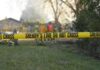
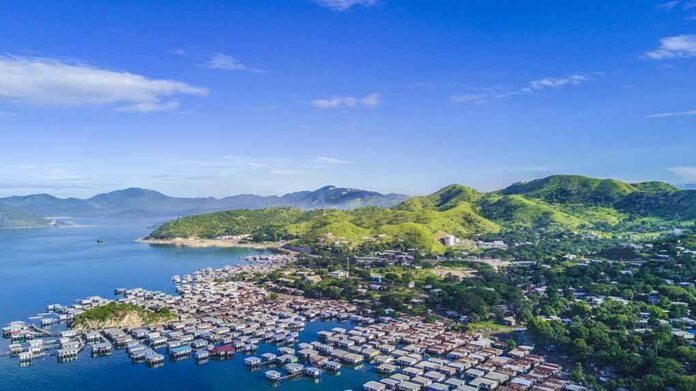
Villagers in Indonesia’s eastern Papua region were going about their Sunday when a thunderous boom ripped through a stilt-house settlement on Walter Monginsidi Street in Biak Numfor district.[2][5] Police say a device buried under a fisherman’s home detonated, hurling a ball of fire and a column of thick smoke into the sky, killing five people on the spot and injuring about nineteen others.[2][4][5] Nine nearby homes were reduced to splintered timber, twisted sheet metal, and ash.[2][4] Families fled to hastily arranged shelters as authorities counted the dead.
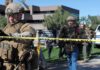
Papua police spokesman Cahyo Sukarnito told reporters the blast site looked like the aftermath of a wartime shell or mortar finally giving way after decades underground.[2][4] Footage shared with local media showed rescuers scrambling through debris while smoke still rose from the shattered settlement.[2] Officers cordoned off the area and warned residents to stay away amid fears that more unexploded devices might lurk in the soil.[1][4] Divers and search teams simultaneously looked for additional victims still listed as missing.[2][4]
“Strongly suspected” is not the same as proven
Reporters across the world quickly wrote the same phrase into their headlines: a “suspected” World War II bomb had exploded, killing five.[2][3][4] Cahyo’s statement used careful language: the source of the explosion was “strongly suspected” to be a bomb or mortar left from the war, and he promised further updates once the investigation and search ended.[2][3][4] That wording matters. It signals an informed guess based on local history and blast pattern, not a completed forensic analysis with lab reports, serial numbers, and fuse identification.[2][3]
None of the public accounts so far mention an explosive-ordnance disposal team publishing a technical breakdown of fragments, markings, or explosive residue.[2][3][4] Authorities have not told the public what actually triggered detonation: disturbance, impact from construction, heat, or some other chain reaction.[2][4][5] That gap leaves space for both legitimate caution and wild speculation. From a common-sense conservative perspective, citizens should demand facts, not just narratives that fit a familiar script about “old war bombs” conveniently explaining away every mysterious blast.
The long shadow of World War II in the Pacific
Eastern Indonesia, Papua New Guinea, and the Solomon Islands were once among the most heavily bombed regions on earth, as Allied and Japanese forces fought for airfields, ports, and sea lanes.[3] Ammunition ships such as the USS Mount Hood and USS Serpens exploded with such force that they shattered harbors and scattered ordnance across vast areas of sea and coastline.[3] After the war ended, tens of thousands of shells, bombs, and depth charges remained buried, rusting but still lethal, in jungles, reefs, and villages that later expanded over former battle zones.[3]
Recent history in the region shows that Papua’s tragedy is not an isolated anomaly. A Second World War bomb on Bougainville Island in Papua New Guinea killed a man and injured others when locals disturbed it, decades after the fighting stopped.[4] Health and military analysts have documented repeated ordnance-related injuries in Pacific communities where civilians farm, fish, and build homes on land once used as ammunition dumps or battlefields.[3] From that perspective, police suspicion that this was a World War II remnant is historically plausible, even if unconfirmed.
Why this incident should concern comfortable democracies
The scene in Biak Numfor exposes several uncomfortable truths that Western audiences prefer to ignore. First, war’s costs do not end with the armistice; they keep detonating in poor neighborhoods, not well-manicured suburbs.[3] Second, fast-moving media often convert early official guesses into hardened “facts,” especially when the story fits a familiar template.[2][3][4] Third, when institutions fail to preserve and publish detailed technical findings, citizens are left with trust or cynicism instead of verifiable evidence.[2][3]
From a conservative, common-sense standpoint, three questions deserve clear answers. Who is responsible for systematically surveying and clearing these known wartime dumping grounds? How transparent are local and national governments willing to be about explosive risks under people’s houses? And when tragic blasts occur, will investigators release the kind of hard data—photos, metallurgy, ordnance classification—that lets the public distinguish between a genuine World War II relic and something more contemporary or negligent? Until those answers appear, this “suspected WWII bomb” story remains a grim open loop, echoing across a region still living on top of someone else’s forgotten war.
Sources:
[1] Web – WWII Bomb Suddenly Explodes in Indonesia, Killing Five and Destroying …
[2] Web – Suspected World War II ordnance explodes in Indonesia, five dead
[3] YouTube – WWII-Era Bomb Explodes in Fishing Village, 5 Killed and 19 Injured …
[4] Web – Ammunition Ship Explosions in Papua New Guinea and Solomon …
[5] Web – Three recovering in hospital after lethal WWII bomb blast in PNG’s …
© impactheadlines.com 2026. All rights reserved.