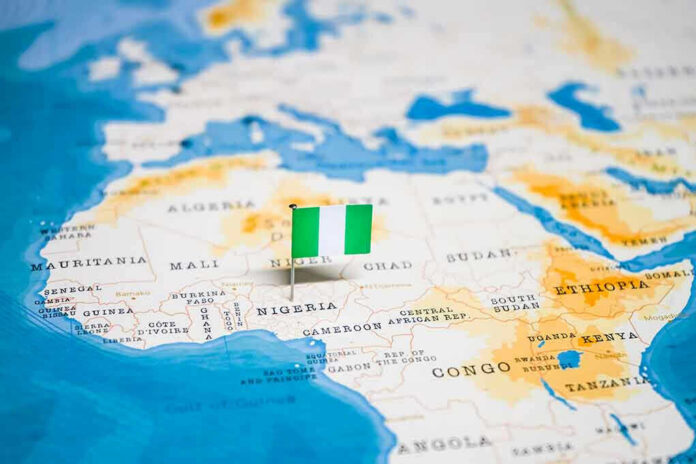
Nigerian sovereignty faces a new test as President Trump threatens military intervention over Christian persecution, igniting fierce debate about U.S. power, religious freedom, and the risks of overreach.
Story Snapshot
- President Trump publicly threatened military action against Nigeria, citing violence against Christians and suspending U.S. aid.
- Nigeria rejected the characterization and called for dialogue, seeking to preserve sovereignty and avoid escalation.
- The episode highlights rising tensions over religious freedom and sets a controversial precedent for U.S. intervention abroad.
- Legal, strategic, and humanitarian uncertainties abound, leaving both nations grappling with the fallout.
Trump’s Military Threat and Its Strategic Implications
On November 1, 2025, President Donald J. Trump issued a direct warning to Nigeria, threatening military intervention in response to ongoing violence against Christian communities. Announcing his decision on Truth Social, Trump declared Nigeria a “Country of Particular Concern” and ordered the Department of War to prepare for possible action if the Nigerian government did not act swiftly. This unprecedented move also included an immediate suspension of U.S. aid, signaling a major escalation in American policy and raising concerns among constitutionalists and advocates for limited government about executive overreach and the potential erosion of U.S. diplomatic norms.
Nigeria, Africa’s most populous nation, has long struggled with insecurity fueled by jihadist insurgencies, criminal banditry, and religious tensions between its majority-Muslim north and majority-Christian south. Both Christians and Muslims have suffered casualties in ongoing violence, often perpetrated by groups such as Boko Haram and ISWAP. The U.S. has maintained limited military cooperation and intelligence-sharing with Nigeria, considering it a strategic partner and major oil producer. However, Trump’s threat marks a dramatic shift from previous U.S. approaches, which focused primarily on counterterrorism rather than direct intervention triggered by religious-freedom concerns.
Diplomatic Fallout and National Sovereignty Concerns
Following the announcement, Nigerian President Bola Ahmed Tinubu rejected the U.S. characterization of Nigeria as religiously intolerant and called for diplomatic dialogue over confrontation. Tinubu emphasized the importance of respecting Nigeria’s sovereignty, warning that any collaboration with the U.S. must be firmly grounded in mutual respect rather than coercion. The Nigerian government’s response highlighted fears of destabilization and foreign overreach—concerns echoed by conservative Americans wary of globalist agendas and the expansion of executive power abroad. While the U.S. Defense Secretary confirmed that planning and review are underway, no military deployment has occurred, and diplomatic channels remain open as both governments seek to manage rising tensions.
Trump’s rhetoric, including his promise of a “fast, vicious, and sweet” response, has alarmed Nigerian officials and civil society groups. Many in Nigeria interpret the threat as a negotiating tactic, not an imminent operational plan. Nevertheless, the episode has triggered anxiety among Christian communities and broader society, with some fearing that political polarization and foreign interference could worsen existing problems rather than resolve them. This situation underscores the delicate balance required to defend religious liberty without undermining national sovereignty or setting dangerous precedents for intervention that could later be used against U.S. interests elsewhere.
Legal, Humanitarian, and Economic Implications
Strategic analysts warn that any military intervention in Nigeria would be logistically complex and fraught with risk, given the country’s size, challenging terrain, and the insurgent tactics of groups like Boko Haram. Legal experts question the legitimacy and legality of unilateral American military action, pointing to uncertainties that could undermine international norms and diplomatic relationships. Humanitarian advocates caution that suspending U.S. aid and threatening military action could disrupt critical programs, harming vulnerable populations and exacerbating social polarization around religious identity.
Trump threat of military action in Nigeria prompts confusion and alarm – the truth is Islamic trorists there attack more Muslims tan Christians, https://t.co/RDnR8fcO3E
— Unlikely Buddha (@Unlikely_Buddha) November 3, 2025
Economic consequences could be severe, with Nigeria’s role as a major oil producer making global markets sensitive to instability. The threatened halt of U.S. aid could impact both Nigeria’s economy and the operations of humanitarian organizations working in the region. Domestically, both Trump and Tinubu face political fallout, with their leadership decisions scrutinized by their respective constituents. The episode’s broader significance lies in the precedent it sets for U.S. intervention based on religious-freedom claims, a move that may invite future challenges to American values and constitutional protections if not carefully managed.
Sources:
Trump’s Nigeria Warning: Military Rhetoric, Strategic Implications, and Legal Uncertainties
Trump threatens Nigeria with military action amid claims of Christian persecution