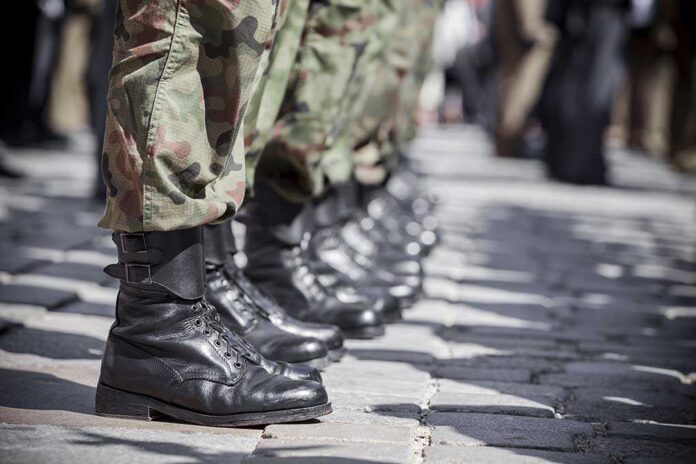
President Trump’s Pentagon has ordered every state to create specialized National Guard “Quick Reaction Forces” trained specifically for civil unrest, marking an unprecedented militarization of domestic law enforcement that raises serious constitutional concerns.
Story Highlights
- All 50 states ordered to form 500-member National Guard Quick Reaction Forces for civil unrest by January 1, 2026
- Federal court already ruled similar deployments violate Posse Comitatus Act restrictions on military policing
- Training includes advanced crowd control and nonlethal tactics beyond traditional disaster relief roles
- Deployments primarily target Democratic-led cities, raising questions about political motivations
Unprecedented Federal Mandate Transforms National Guard Role
President Trump issued an executive order on August 25, 2025, directing all state National Guards to establish Quick Reaction Force units of up to 500 troops each. Major General Ronald Burkett signed the implementation memo on October 8, 2025, detailing specialized training requirements that go far beyond the Guard’s traditional disaster relief mission. This represents the first nationwide mandate for dedicated civil unrest response forces in American history.
Secretary of Defense Pete Hegseth confirmed the program’s existence but declined to provide specific details about training protocols or deployment strategies. National Guard units across all states are now conducting monthly readiness reports while preparing for the January 1, 2026 operational deadline. The training curriculum includes advanced crowd control techniques, de-escalation tactics, and nonlethal weapon systems specifically designed for domestic operations.
Constitutional Challenges Mount Against Military Deployment
A federal court ruled on September 2, 2025, that similar troop deployments in Los Angeles violated the Posse Comitatus Act, which restricts military involvement in domestic law enforcement. Legal scholars warn these Quick Reaction Forces could set dangerous precedents by normalizing military intervention in civilian matters. The deployments have primarily targeted Democratic-led cities including Memphis and Chicago, fueling accusations of politically motivated federal overreach.
State governors and local officials express mixed reactions, with some viewing federal military support as necessary while others condemn it as unconstitutional government overreach. The traditional balance of federalism faces unprecedented strain as National Guard units, historically under state control, now operate under direct federal mandates. This shift fundamentally alters the relationship between federal authority and state sovereignty that conservatives have long defended.
Military Expansion Raises Liberty and Governance Concerns
President Trump described these deployments as “training grounds for our military” while framing civil unrest as a “war from within,” language that alarms constitutional advocates. The program’s focus on urban centers governed by Democrats suggests potential weaponization of military resources for political purposes. Defense contractors are already supplying specialized nonlethal equipment for these units, indicating long-term commitment to domestic military operations.
The normalization of military involvement in domestic law enforcement threatens core American principles of civilian governance and individual liberty. These Quick Reaction Forces represent a fundamental shift toward federal militarization that could permanently alter civil-military relations. Patriots who value constitutional government and limited federal power should closely monitor how these forces are deployed and whether they respect the legal boundaries that protect citizens from military overreach.
Sources:
National Guard ordered to form ‘quick reaction forces’ for civil unrest
Pentagon creating National Guard “quick reaction forces” across US
All states ordered to create rapid response National Guard units for civil disturbances
2025 deployment of federal forces in the United States