A nine-month-old pit bull mix died on a quiet residential block in Santa Ana on September 8, and the way police closed that case in barely three weeks says more about modern animal-cruelty enforcement than almost any other detail in the story — because it shows how a blurred, license-plate-free surveillance clip, once released to the public, can still end in an arrest within 24 hours of being posted.
Key Points
- Santa Ana police say surveillance video shows a woman luring a puppy with food, then driving her minivan over it on September 8 near West Park Lane.
- The vehicle was described as an older blue or green Honda Odyssey with a roof rack; no license plate was visible in the footage.
- Police released the video publicly on September 30 asking for help identifying the driver, and arrested a 75-year-old Anaheim woman, Hahn Nguyen, the following morning.
- Investigators say they located the vehicle through automated license plate readers, eventually finding it inside Nguyen’s garage.
- The case reflects a broader shift in animal-cruelty policing, where neighborhood cameras, public tips, and ALPR data now routinely close cases that once depended on luck alone.
What the Surveillance Footage Documented
According to Santa Ana police, a resident near 900 West Park Lane discovered a dead black-and-white male pit bull mix on the morning of September 8 and alerted animal services. A neighbor told officers she believed the death was no accident, and a canvass of nearby security cameras turned up footage that police say corroborated her account. The video, recorded around 9:15 a.m., shows a woman stopping an older blue or green Honda Odyssey with a roof rack, placing food on the street near the driver’s side door, and positioning the puppy beneath the vehicle before driving forward.
Reporting from the OC Register and NBC Los Angeles described the vehicle remaining stationary on top of the dog for roughly 15 seconds before the driver moved on. Because the footage was graphic, outlets that published it blurred the most disturbing portion, meaning the public has seen the incident only through described excerpts rather than the unedited clip. Police characterized the act in blunt terms, calling it one of the more disturbing animal-cruelty cases they had encountered, and said the lack of a visible license plate left them initially dependent on public recognition of the van itself.
From a Public Appeal to an Arrest in Under a Day
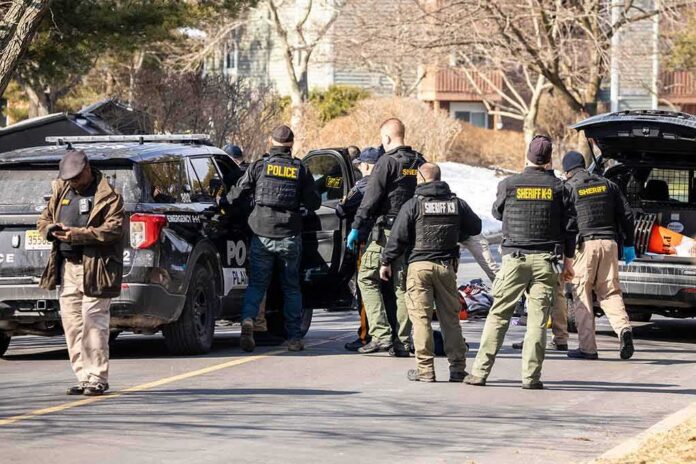
Santa Ana police released the surveillance video on September 30, asking anyone who recognized the minivan or the woman driving it to come forward. Within roughly 24 hours, investigators identified and arrested Hahn Nguyen, 75, of Anaheim, booking her on suspicion of animal cruelty and animal abandonment. That speed was not the product of a tip alone: police said they used automated license plate reader data to trace the Odyssey to two addresses, one in Anaheim and one in Fountain Valley, before locating the vehicle inside Nguyen’s own garage. The arrest is an allegation, not a conviction, and the published record does not yet include a public statement from Nguyen or her attorney addressing the footage.
That the case moved from an unidentified vehicle to a named, booked suspect in a single day illustrates how far animal-cruelty investigation has moved from its traditional reliance on eyewitnesses alone. The witness report that opened the case mattered — it told detectives where to look for camera coverage — but the identification itself hinged on the kind of networked vehicle data that patrol departments now use routinely for far more serious crimes, applied here to a case that began with a single dead puppy on a residential street.
A Recognizable Pattern in How These Cases Get Solved
The Santa Ana case is not an outlier in its mechanics. Departments across the country have closed strikingly similar cruelty cases in recent years using the same sequence: a neighborhood or doorbell camera captures the act, police release the footage publicly once other leads are exhausted, and community tips combined with location or plate data close the gap within days. A Boynton Beach, Florida man was arrested after surveillance video captured him abusing a service dog in two separate incidents; a Michigan City, Indiana man turned himself in after footage he had posted himself was identified and traced; a Tampa man was arrested after video showed a dog dragged behind his truck for a mile. In each instance, the video was necessary but not sufficient — identification required a second layer of corroborating data.
What distinguishes the Santa Ana case from a pure eyewitness account is precisely that second layer. Early coverage described police searching for an unknown woman in an unknown van; later coverage describes a named, booked 75-year-old Anaheim resident whose vehicle was found in her own garage. That arc — from anonymous description to specific identification — is now the default trajectory for cruelty cases captured on camera, and it is worth understanding on its own terms rather than assuming the video did all the work. The footage told investigators what happened; the plate-reader data and canvassing told them who.
A 75-year-old Anaheim woman has been arrested in connection with the death of a puppy that police say was intentionally run over in Santa Ana last month. https://t.co/M8HmMMD1aO pic.twitter.com/UUrizXGrgf
— KTLA (@KTLA) October 1, 2026
Why the Case Carries Weight Beyond Its Own Facts
Cases like this one tend to generate outsized public reaction, and that reaction is understandable: the deliberate killing of a young animal, captured on camera and described in granular detail by police, triggers a response that outpaces the slower administrative work of charging and prosecution. But the public value of this case lies less in the emotional charge than in what it demonstrates about enforcement capacity. Animal cruelty statutes in California and most states carry real criminal exposure, and departments increasingly treat cruelty video with the same investigative seriousness once reserved for property crime or assault — building a case from footage, witness statements, and vehicle data rather than treating it as a lower-priority complaint. For residents, the practical lesson is straightforward: a camera on a quiet residential street, paired with a willingness to report what it shows, now routinely produces an arrest within days, not months.
Sources:
nypost.com, cbsnews.com, latimes.com, ocregister.com, nbclosangeles.com, ground.news
© impactheadlines.com 2026. All rights reserved.