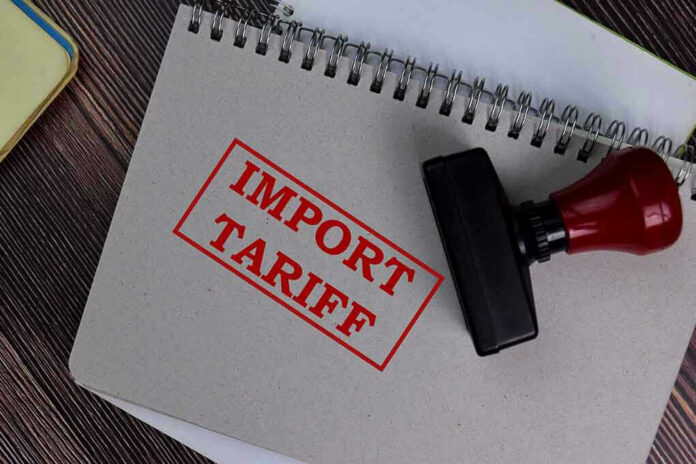
President Trump delivers a decisive America First victory by slashing tariffs on Indian goods from 25% to 18% after India bows to pressure and agrees to cut Russian oil imports, prioritizing U.S. workers and energy dominance.
Story Highlights
- Trump announces immediate tariff reduction to 18% on Indian imports following a key phone call with PM Modi, effective February 2026.
- India concedes by trimming Russian crude purchases and dropping tariffs and barriers to zero on U.S. goods, aligning with Buy American policies.
- Deal resolves months of trade tensions sparked by Trump’s 25% penalties on nations buying Russian oil, protecting American jobs.
- U.S. gains market access for farmers and manufacturers while strengthening ties against globalist threats like China.
Trump’s Tariff Triumph Secures Buy American Wins
President Donald Trump announced the U.S.-India trade deal on February 2, 2026, via Truth Social, lowering reciprocal tariffs on Indian imports from 25% to 18% effective immediately. The agreement followed a direct phone call with Indian Prime Minister Narendra Modi. India committed to reducing Russian crude imports and eliminating tariffs plus non-tariff barriers on all U.S. goods. This move enforces Trump’s reciprocal trade strategy, putting American workers first after years of unfair deals under previous administrations.
Timeline of Pressure and Concession
Modi visited Washington in February 2025, pledging a limited trade deal by autumn and $500 billion bilateral trade by 2030. Trump imposed 25% tariffs on Indian imports on July 31, 2025, targeting Russian oil buyers. A December 2025 Modi-Trump call led to India trimming those imports amid talks. US Envoy Sergio Gor reported advancing negotiations in January 2026. Trump’s February announcement capped a 12-month push rooted in his Fair and Reciprocal Plan from February 13, 2025.
Tariffs faced delays, including a 90-day halt on April 9, 2025, to allow talks. India offered cuts on US steel, autos, and pharma within quotas by May 2025. Deadlock over farm goods prompted the July penalties, echoing first-term disputes but adding the Russian oil penalty unique to this crisis.
Key Players and Power Dynamics
Trump led as chief negotiator, wielding tariff leverage to penalize Russian oil buyers and shrink trade deficits. Modi balanced India’s $500 billion trade goal with energy needs, using personal rapport from the December call. Indian Commerce Minister Piyush Goyal pushed quota-based cuts prioritizing national interest. US Commerce Secretary Howard Lutnick and Trade Rep Jamisen Greer flagged India’s barriers, while VP JD Vance set early terms and Envoy Gor provided updates. Trump-Modi chemistry overcame US envoys’ Washington dominance.
This deal boosts short-term relief for Indian exporters, averting 25-50% tariff cliffs, while opening India’s market fully to US products. US farmers and manufacturers gain access, reducing deficits and rewarding Buy American loyalty. Russian suppliers lose ground as India pivots, aiding US energy exports amid China tensions.
Long-Term Gains for American Priorities
Long-term, the pact paves the way for a full bilateral trade agreement delayed to 2026, with quotas preventing overreach. Economic impacts include roughly 7% cost cuts on Indian goods entering the US, benefiting consumers without sacrificing jobs. Politically, it fortifies the Modi-Trump alliance against globalism. Sectors like pharma, steel, and autos thrive, setting precedents for deals with Indonesia and others, as Trump’s Liberation Day tariffs realign global trade toward fairness.
Sources:
India-US Trade Deal Timeline: From 50% Cliff To 18% Relief (NDTV Profit)
India’s Trade Moves Under Trump 2.0 (China Briefing)
Liberation Day Tariffs (Wikipedia)
Trump 2.0 Tariff Tracker (Trade Compliance Resource Hub)
2025 United States–India Diplomatic and Trade Crisis (Wikipedia)
CRS Report on Tariffs (Congress.gov)