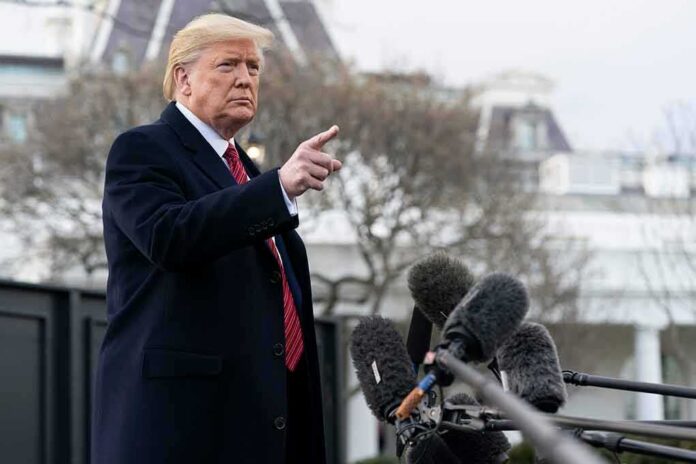
President Trump’s executive order reversing a 13-year Obama-era policy brings back mandatory fitness testing for schoolchildren, sparking a national debate over whether performance-based assessments belong in America’s classrooms.
Story Snapshot
- Trump signed executive order on July 31, 2025, reestablishing the Presidential Fitness Test eliminated by Obama in 2012
- Implementation began September 2025 with traditional components: one-mile run, sit-ups, push-ups, and sit-and-reach flexibility test
- Initiative framed as national security and health crisis response, tied to “Make America Healthy Again” agenda
- Education and health experts divided over performance-based testing versus inclusive, process-focused physical education approaches
Reversing Obama’s Educational Philosophy
The Trump administration’s July 31, 2025 executive order revoked Obama-era policies that eliminated the Presidential Fitness Test in 2012. The original Eisenhower-era program, established in 1956 during Cold War concerns about American youth preparedness, became a school staple for generations. Obama’s education officials scrapped it after experts argued competitive testing stigmatized less-fit students and emphasized performance over lifelong healthy habits. Trump’s order designates the test as the “main assessment tool for a Presidential Fitness Award,” requiring coordination between Health and Human Services and Education Department secretaries to implement modernized criteria across American schools.
Traditional Standards Return to Physical Education
Schools began administering the reinstated test in September 2025, using four traditional components measuring different fitness dimensions. Students complete a one-mile run for cardiovascular endurance, perform sit-ups to assess core strength, execute push-ups demonstrating upper body capability, and undergo sit-and-reach flexibility testing. While maintaining these classic elements, administrators implemented updated performance criteria reflecting modern fitness standards. Physical education teacher Dr. Terry Langdon called the test “a wonderful tradition” worth restoring, though implementation required curriculum restructuring, teacher training for standardized administration, and new data collection infrastructure across diverse school districts nationwide.
Health Crisis Meets National Celebration
The administration positioned the fitness initiative as addressing America’s childhood obesity epidemic and declining physical activity levels linked to increased screen time. Trump’s executive order explicitly cited “declining health and physical fitness” as threatening national vitality, connecting youth fitness to military readiness concerns and economic competitiveness. The timing aligns strategically with America’s 250th anniversary celebration in 2026 and the 70th anniversary of the original President’s Council on Youth Fitness. Officials also linked the program to upcoming international sporting events including the Ryder Cup, FIFA World Cup, and Olympic Games, framing physical excellence as demonstrating American strength on the global stage.
Competing Visions for Student Wellbeing
The policy shift exposes fundamental disagreements about measuring educational success and promoting student health. Supporters argue measurable fitness standards provide motivation, recognize achievement, and generate data for health interventions addressing sedentary lifestyles. Critics, particularly child psychology experts and equity advocates, warn performance-based testing increases anxiety among vulnerable students, exacerbates body image concerns, and potentially widens fitness disparities by socioeconomic status. Special education professionals question accommodation protocols for students with disabilities, while some educators express concerns about curriculum time constraints and whether testing produces genuine fitness improvement or temporary performance gains focused on test day results.
BREAKING: President Trump announces the return of the Presidential Fitness Test for grade schoolers, slamming the Obama administration for phasing out the tradition:
"We're bringing it back.
"We had the Obama administration, which phased out this wonderful tradition of physical… pic.twitter.com/mORbfkkcpc
— Fox News (@FoxNews) May 5, 2026
Broader Questions About Federal Priorities
Beyond the fitness debate, the executive order raises questions about federal authority in local education decisions and resource allocation priorities. School districts face administrative burdens implementing standardized testing protocols without clarity on federal funding support. The 13-year gap since elimination left many educators without institutional knowledge of proper administration procedures. While the order mandates developing “Presidential challenges and school-based programs that reward excellence,” specific accommodation protocols for students with disabilities remain unclear. As implementation continues through 2026, preliminary outcome data on actual fitness improvements, student psychological responses, and equity impacts across different school districts will reveal whether this reversal of Obama-era policy achieves its stated goals.
Sources:
Presidential Fitness Test Returns to US Schools – Endocrinology Advisor
Presidential Youth Fitness Program – Office of Disease Prevention and Health Promotion















![AIR FRANCE A320 & Business Lounge 🇫🇷 Paris CDG to Tunis 🇹🇳 [FULL FLIGHT REPORT]](https://impactheadlines.com/wp-content/uploads/sites/27/2026/08/maxresdefault-34-100x70.jpg "Misbehavior Kills Air France Sauna")