When two missing-person files end in shallow graves on a remote desert parcel, the story shifts from search-and-rescue to homicide calculus—identity, timeline, and terrain become the case’s spine, while cause and culpability wait on forensics and interviews to catch up.
At a Glance
- Los Angeles County Sheriff’s investigators identified the remains of Ricky Phillips, 61, and Edward Perez, 46, discovered in shallow graves on a Lancaster-area desert property; both men had been reported missing weeks earlier.
- Authorities have not released a cause or manner of death; such determinations often hinge on additional testing and scene analysis, which can take months.
- The discovery location—a remote Mojave-adjacent stretch—fits a historical pattern in Southern California where clandestine burials are concealed in sparsely trafficked desert terrain.
- Early identification tied the remains to active missing-person investigations, focusing detectives on the victims’ last-known movements and associates rather than a speculative suspect narrative.
What is known: identities, site, and investigative posture
Homicide detectives working a remote Lancaster site uncovered two shallow graves and, soon after, secured identifications: the deceased were Ricky Phillips and Edward Perez, both from the local area and both the subjects of recent missing-person reports. That sequence—recovery, forensic identification, linkback to active missing-person files—is the anchor set of facts in an otherwise developing case. The sheriff’s department has not released cause or manner of death. Nor have investigators named a suspect or theory in public filings, which is standard when laboratory and timeline work are still in progress.
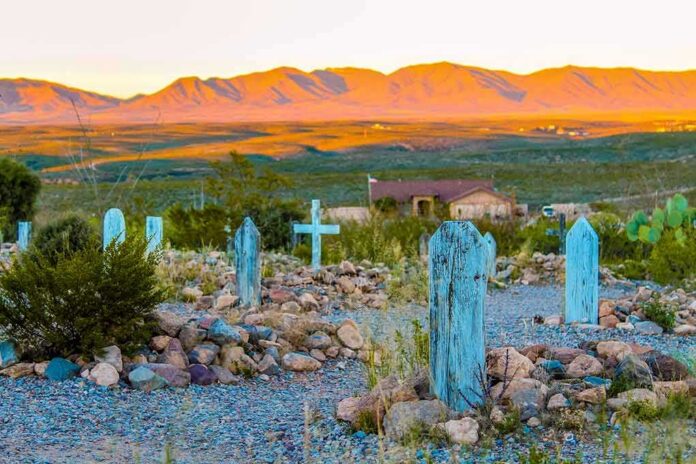
The burial site matters. Lancaster sits along the Antelope Valley edge of the Mojave, where scrubland, dirt roads, and private acreage create concealment opportunities. Law enforcement experience in this corridor treats shallow interments as both a forensic problem—disturbed strata, partial remains, scavenger activity—and an investigative opportunity: burial implies access to the site, time on scene, and sometimes vehicular traces or tool marks. Those details are often held back pending interviews and lab results, precisely to protect the integrity of those leads.
Why cause and manner take time: the mechanics of “deferred” rulings
In cases like this, the public often expects an immediate homicide label; the medical examiner’s workflow is more disciplined. If autopsy and scene findings don’t yet support a medically certain conclusion, the death certificate is marked “deferred,” meaning cause and manner will be assigned after additional testing and investigative correlation. Toxicology alone commonly requires weeks to months; histology, radiology, entomology, and DNA comparisons can extend that window. The Los Angeles County Medical Examiner publishes this protocol openly—deferred is a procedural state, not a shrug—and amends certificates once the evidence is in.
That lag is not mere bureaucracy. In desert recoveries, decomposition and environmental exposure complicate trauma interpretation. Heat accelerates tissue changes; sand abrasion and scavenging can obscure perimortem injury. Correctly distinguishing blunt-force from postmortem artifact, firearm trauma from fragmentation, or restraint from taphonomic changes requires methodical work. Rushing that call risks error—an error that can misdirect detectives or jeopardize a future prosecution.
The pattern in the desert: clandestine graves and investigative baselines
Southern California has seen high-profile desert burials before, and they illustrate investigative constants rather than convenient analogies. The McStay family murders, resolved by a San Bernardino County conviction years after the 2013 recovery of remains in shallow Mojave graves, showed how cell records, financial forensics, and scene artifacts can converge without an immediately obvious crime scene at the home or vehicle. Identification in other desert cases—some delayed by decades—has been achieved via dental records, traditional DNA, and, increasingly, advanced genetic genealogy, underscoring how the scientific tools and patient case building often outlast the news cycle.
Those precedents shouldn’t be read as templates for Lancaster, but they do set realistic baselines. Shallow graves typically reflect hurried concealment rather than sophisticated counterforensic planning; that, in turn, shifts investigative attention to opportunity and proximity. Who last saw the victims? Who had reliable access to the property? What communications, transactions, or conflicts cluster in the final days before disappearance? Detectives prioritize these questions while lab work proceeds, because people and data move while the science takes its measured time.
How investigators build the case from here: timeline, linkage, and terrain
With identities confirmed, the next moves are predictable to anyone who has watched a homicide-protocol investigation progress. First, harden the timeline: assemble last-known sightings; pull phone location and call-detail records; secure relevant surveillance captures along ingress and egress routes; harvest vehicle telematics where available. In modern practice, even a few definitive pings can anchor a victim-offender co-location window that drives interview strategy and search warrants.
Second, map relational links. Missing-person investigations already seeded contacts, routines, and potential frictions; homicides overlay those with motive hypotheses—financial pressure, retaliation, intimate-partner dynamics, or disputes that escalated. Investigators also interrogate the site itself: vehicle tracks, footwear impressions, grave tooling, and soil transfer can tie people and equipment to the burial. Each element is mundane on its own; together they form the probable-cause lattice that supports targeted searches and, eventually, charges.
Public information discipline: why silence is part of the strategy
The absence of a public suspect theory is not a vacuum; it is the operating security of a live case. Releasing partial trauma details can contaminate witness statements. Naming a person of interest prematurely can spook a cooperative interviewee into counsel-led silence or flight. The practice across large sheriff’s departments is to speak clearly to the essentials—recovery location, number of decedents, identification status—and protect the rest until disclosures serve the investigation rather than the news cycle. That’s particularly true in a setting like Lancaster’s outskirts, where rumor can travel faster than lab results.
For families, that discipline can feel like stonewalling; for investigators, it preserves the evidentiary chain. The formal record reflects that balance: identification, confirmation of investigative control at the scene, and a deferral on medical conclusions until the facts earn their labels.
Missing men found dead in shallow graves in California desert as mystery grows https://t.co/0wNHtslkxP pic.twitter.com/V9JDveC5w8
— California Post (@californiapost) October 3, 2026
What this means for the community and for justice
Two identified victims, both local, buried within reach of ordinary vehicles on open desert, signal a targeted crime with community ties rather than random predation. That narrows the aperture. It also raises urgency: if the deaths are ultimately ruled homicides, the offender’s risk to others depends on motive—personal, financial, or criminal enterprise—and whether the precipitating conflict persists. The most practical contribution from the public remains the same in every such case: credible tips anchored in time, place, and relationship; not theories, not echoes.
Sources:
nypost.com, latimes.com, rollingout.com, missingpersons.icrc.org, charleyproject.org, abc15.com, yahoo.com, abcnews.com
© impactheadlines.com 2026. All rights reserved.