Boston’s sanctuary city policies face federal threats, igniting a fierce battle over local autonomy.
Story Snapshot
- Boston Mayor Wu defends sanctuary policies against federal threats.
- DOJ warns of criminal charges and funding cuts for non-compliance.
- Wu emphasizes Boston’s safety and economic reliance on immigrants.
- Federal-local tension highlights national immigration policy conflicts.
Boston’s Sanctuary Policies Under Fire
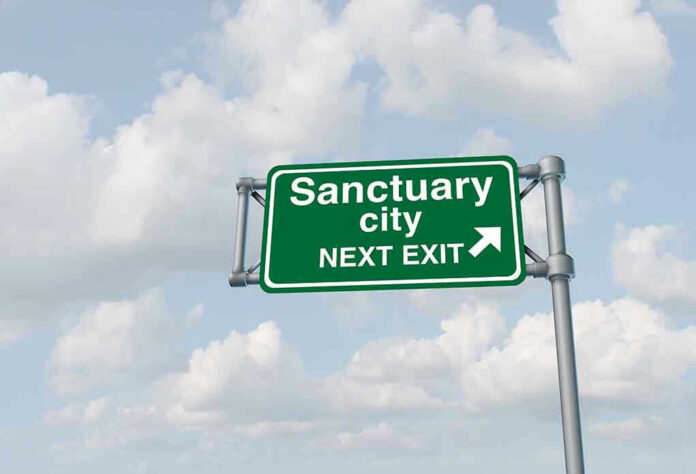
In a bold defense of local governance, Boston Mayor Michelle Wu has publicly reinforced her commitment to sanctuary city policies. The U.S. Department of Justice, led by Attorney General Pam Bondi, has threatened Boston with criminal charges and the withdrawal of federal funding. This confrontation underscores a broader national debate on immigration enforcement and the balance of power between federal and local authorities.
Wu’s steadfast position is backed by Boston’s low crime rates and economic success, which she attributes partly to the city’s diverse immigrant population. Her approach highlights the importance of community policing and fostering trust with immigrant communities, a perspective that resonates with Boston’s progressive policies but clashes with federal directives seeking stricter immigration controls.
Federal Response and Threats
The Department of Justice, under Bondi’s leadership, has issued ultimatums to sanctuary jurisdictions, demanding compliance with federal immigration laws. The August 13 letter to Boston marked a significant escalation, threatening sanctions and potential criminal charges. Bondi argues that sanctuary policies undermine federal law and public safety, a viewpoint that aligns with the Trump administration’s stance on immigration enforcement.
Despite these threats, Wu remains resolute. In her August 19 press conference, she declared, “Boston will not back down from who we are and what we stand for.” Her response, both in public statements and formal letters, emphasizes the city’s right to maintain policies that protect immigrant communities while promoting public safety.
Implications and Future Outlook
The ongoing conflict between Boston and the federal government has significant implications for other sanctuary cities and the national discourse on immigration policy. The potential loss of federal funding poses a substantial risk to city programs, while legal battles could set precedents affecting municipalities across the country. Meanwhile, immigrant communities in Boston face uncertainty, balancing the benefits of local protections against the risks of federal intervention.
As the situation unfolds, Wu’s leadership remains a focal point in the wider debate over immigration and local autonomy. Her stance reflects a broader trend among progressive cities prioritizing community safety and immigrant rights, even in the face of federal opposition. This ongoing tension highlights the complex interplay between national policies and local governance in shaping America’s immigration landscape.
Sources:
Mayor Michelle Wu Defends City’s Immigration Policies at Sanctuary City Congressional Hearing
Boston Sanctuary Cities Policies: Mayor Michelle Wu
Mayor Michelle Wu’s Response to Threats from U.S. Department of Justice