Foreign laboratory tests have confirmed what many conservatives suspected all along—Putin’s regime eliminated its most prominent critic through state-sponsored assassination, exposing the brutal reality of authoritarian power that threatens freedom-loving people worldwide.
Story Highlights
- Two independent foreign laboratories confirmed Alexei Navalny was poisoned with toxic agents
- Yulia Navalnaya publicly challenges Russian government denials with scientific evidence
- Findings align with previous international investigations identifying Novichok nerve agent
- Case demonstrates pattern of state violence against political dissidents
Independent Labs Confirm Assassination Plot
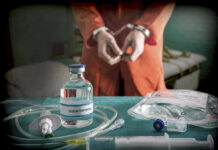
Yulia Navalnaya revealed that biological samples from her deceased husband underwent analysis at two foreign laboratories, both confirming the presence of toxic agents. These findings directly contradict Russian government claims that Navalny died from natural causes in prison. The laboratory results provide concrete scientific evidence supporting what international investigators concluded in 2020—that Russian opposition leader Alexei Navalny was deliberately poisoned by state actors using military-grade chemical weapons.
Timeline Reveals Calculated State Operation
Navalny’s poisoning followed a methodical timeline beginning August 20, 2020, when he collapsed aboard a domestic Russian flight. Russian authorities initially resisted his medical evacuation to Germany, suggesting early attempts to conceal evidence. Once transferred to Berlin’s Charité hospital, German doctors quickly identified cholinesterase inhibitor poisoning. Multiple international laboratories, including facilities in Germany, Sweden, Finland, and the Organization for the Prohibition of Chemical Weapons, independently confirmed Novichok nerve agent presence.
FSB Operatives Identified Through Investigation
Investigative journalists from Bellingcat, The Insider, Der Spiegel, and CNN traced the operation to Russian Federal Security Service agents. Their December 2020 investigation revealed detailed operational planning and identified specific FSB personnel involved in the assassination attempt. The use of Novichok, a military-grade nerve agent developed by Soviet chemical weapons programs, indicates state-level resources and authorization. This evidence pattern mirrors previous attacks on Russian dissidents, including the 2018 Skripal poisoning in Britain and Alexander Litvinenko’s 2006 polonium murder.
Navalny’s courageous decision to return to Russia in January 2021, despite knowing the risks, resulted in immediate arrest and eventual death in prison February 16, 2024. His widow’s determination to continue his anti-corruption work represents a direct challenge to Putin’s authoritarian control. The scientific evidence she presents undermines Russian disinformation campaigns designed to obscure state responsibility for political assassinations.
International Response Exposes Authoritarian Weakness
Western governments consistently supported the poisoning findings through diplomatic statements and sanctions, while Russian authorities maintained their denials despite overwhelming evidence. The Organization for the Prohibition of Chemical Weapons validated Novichok presence, lending international legal authority to assassination claims. This case highlights the importance of independent scientific institutions and investigative journalism in exposing authoritarian crimes. For Americans who value constitutional protections and individual liberty, Navalny’s persecution demonstrates why strong democratic institutions matter in preventing government overreach and protecting political dissent.
Yulia Navalnaya says foreign tests show her husband was poisoned | Reuters https://t.co/xK8nMbFL6Y
— Ashly Orndoff (@ashlycorndoff) September 17, 2025
Yulia Navalnaya’s emergence as a prominent opposition figure following her husband’s death may reshape Russia’s resistance movement. Her access to international laboratories and media platforms provides tools unavailable to domestic Russian activists. The case serves as a stark reminder that authoritarian regimes will use any means necessary to silence critics, making the defense of constitutional rights and press freedom essential for preserving democracy.
Sources:
Russian Ministry of Foreign Affairs – Official Statement on Navalny Case
U.S. Embassy Georgia – Putin’s Poisons: 2020 Attack on Aleksey Navalny
ABC News – Timeline of Alexei Navalny’s Life and Activism