While America fights a real shooting war abroad, FIFA is still trying to stage “neutral” soccer matches on U.S. soil with a regime-linked team that may not even show up.
Story Snapshot
- President Donald Trump said he “really don’t care” whether Iran plays in the 2026 World Cup, even as conflict between the U.S., Israel, and Iran escalates.
- Iran already qualified and was drawn into Group G, with all of its group-stage matches scheduled to be played in the United States.
- Iranian federation chief Mehdi Taj publicly questioned whether participation is realistic after strikes, signaling potential withdrawal.
- FIFA has tried to keep politics out, but earlier visa issues and now open conflict are colliding with tournament logistics and security planning.
Trump’s Message: Security First, Soccer Second
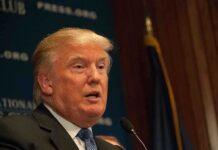
President Donald Trump told POLITICO he is indifferent to Iran’s participation in the 2026 FIFA World Cup, saying, “I really don’t care,” as the U.S. and Israel trade blows with Iran in a widening conflict. The remark lands in a uniquely tense moment: the U.S. is the main host of a tournament that will feature Iran—unless Iran pulls out or is unable to travel. Trump’s posture emphasizes national security priorities over sports symbolism.
Trump told FIFA Iran is welcome to play in World Cup in U.S., officials say https://t.co/H5TxNPAyox
— QuietlyAhead (@Sofia85852) March 11, 2026
Trump’s comments also come with a practical backdrop: his administration previously implemented a travel ban covering Iran, with a World Cup-related carveout for teams but not an automatic green light for every associated traveler. POLITICO reported that exemptions existed for teams, while other visas could still be handled case-by-case. For American fans, that distinction matters because it affects who enters the country and under what scrutiny, a core constitutional responsibility of the federal government.
Iran Qualified Early—But War and Visas Are Now the Real Bracket
Iran qualified as the first team for the 2026 tournament and was drawn into Group G alongside Belgium, Egypt, and New Zealand, with matches set in the United States. That scheduling detail is now central: Iran’s games are not in Canada or Mexico, but on American soil. According to reporting, Iran’s group-stage opener is planned for Los Angeles on June 15, putting a hard deadline on decisions that normally unfold slowly.
Iran’s federation president, Mehdi Taj, cast doubt on participation after the strikes, saying Iran could not be expected to look forward to the World Cup with hope following the attacks. That is not a formal withdrawal, but it is the strongest public signal so far that Tehran’s soccer leadership may step back. As of early March 2026, reporting indicates no final decision has been announced, and FIFA has continued meetings focused on logistics.
FIFA’s “Neutrality” Meets a Host Nation in Active Conflict
FIFA’s model depends on pretending geopolitics can be boxed out of stadium walls, but this situation tests that assumption. The organization previously mediated a dispute after some Iranian visa applications were denied for the World Cup draw held in Washington, when Iran threatened a boycott. Now, with open conflict and retaliation targeting U.S.-allied interests in the region, the complications are not just diplomatic—they are operational, including travel reliability and security planning.
What Happens If Iran Withdraws: Replacement Scenarios and Cascading Disruption
Reporting suggests that if Iran withdraws, FIFA would need to replace it with another Asian team, with scenarios involving Iraq or the United Arab Emirates depending on results and playoff pathways. That kind of substitution is not a simple swap. It affects group preparation, match planning, and competitive fairness for other teams already drawn into Group G. It can also disrupt regional schedules if airspace closures and embassy constraints continue affecting travel.
Bottom Line for U.S. Hosts: Sovereignty, Screening, and Clear Priorities
For American organizers, the most concrete issue is not rhetoric—it is who is allowed into the country and under what conditions. Trump’s stance signals he will not treat World Cup participation as an entitlement overriding U.S. sovereign control of borders and security decisions. White House FIFA Task Force Director Andrew Giuliani framed U.S. actions against Iranian leadership as protecting the event, but FIFA has offered no definitive public roadmap beyond monitoring developments.
Limited public detail remains on the final status of Iran’s participation, because neither FIFA nor Iran has issued a conclusive decision in the reporting provided. What is clear is the collision of sports, security, and immigration policy: a U.S.-hosted global tournament is facing the possibility that a qualified team cannot—or will not—play amid war, visa disputes, and heightened scrutiny. For U.S. citizens, that reality reinforces why border control and national defense cannot be outsourced to international institutions.
Sources:
Donald Trump makes “really don’t care” statement about Iran’s participation in 2026 FIFA World Cup
Donald Trump Does Not Care if Iran Plays in 2026 FIFA World Cup Amid Unrest
Iran World Cup doubts grow as Trump dismisses concerns amid broader sports disruption
Trump to POLITICO: ‘I really don’t care’ if Iran plays in World Cup
Trump dismisses Iran World Cup concerns amid ongoing military strikes: ‘I really don’t care’