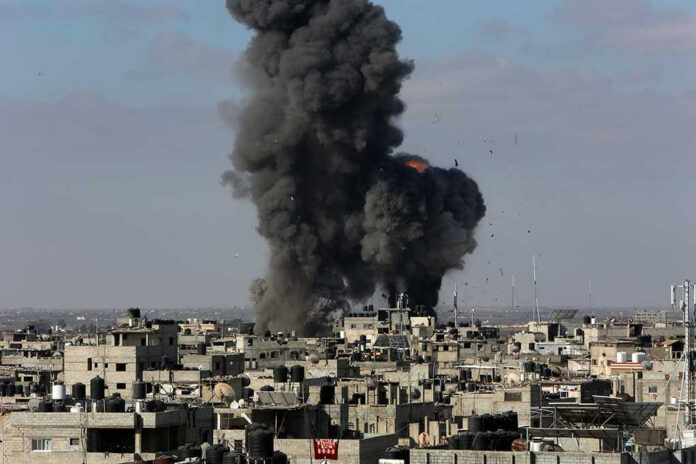
impactheadlines.com — Iran launched a wave of ballistic missiles and drones at Kuwait, striking a country that had nothing to do with the U.S. military operations Iran claimed to be answering — raising urgent questions about who pays the price when superpowers go to war.
Story Snapshot
- Iran fired ballistic missiles and drones at Kuwait after the U.S. bombed Iranian radar and drone sites, targeting a third country that was not party to the original exchange.
- Kuwait’s air defenses intercepted 97 ballistic missiles and 283 drones, according to Kuwaiti and allied reporting, but four Kuwaiti servicemembers were killed and 77 others were wounded.
- Iran described the attack as retaliation for U.S. strikes; Kuwait’s foreign ministry held Iran “fully responsible” and called the strikes a violation of its sovereignty.
- The escalation follows a rapid tit-for-tat sequence that began when Iran shot down a U.S. drone, triggering American strikes on Iranian military sites, which Iran then answered by targeting Kuwait.
How the Escalation Unfolded
The crisis accelerated after Iran shot down an American MQ-1 Predator drone, prompting U.S. Central Command to conduct what it described as self-defense strikes against Iranian radar installations and drone command-and-control sites. [3] Iran then launched what it publicly characterized as a retaliatory strike — not against U.S. soil, but against Kuwait, a close American ally that hosts significant U.S. military assets, including Ali Al Salem Air Base. [2][5] The sequence produced what reporters described as a “flurry of tit-for-tat exchanges” compressed into hours.
Kuwaiti air defenses activated across the country, with sirens sounding over Kuwait City as incoming missiles and drones were tracked and engaged. [4] According to figures attributed to Kuwaiti and allied sources, defenders intercepted 97 ballistic missiles and 283 drones during the attack window. [8] Despite those intercepts, the strikes were not entirely neutralized — reports indicate U.S. drones at a Kuwaiti base were damaged and American personnel were injured, while four Kuwaiti servicemembers were killed and dozens more wounded. [1][8]
Kuwait Holds Iran Responsible
Kuwait’s foreign ministry did not accept Iran’s retaliation framing. Officials publicly stated they were holding Iran “fully responsible” for what they called heinous attacks on Kuwaiti territory. [2][5] That language matters: Kuwait is a sovereign nation that did not participate in the U.S. strikes on Iran, and its government made clear it viewed the attack as a violation of its borders rather than a legitimate act of war between Iran and the United States. The attack placed Kuwait — and its civilian population — directly in the crossfire of a conflict it did not initiate.
Iran acknowledged launching the strike but framed it as a proportionate answer to American military action. [11] What Iran has not provided publicly, based on available reporting, is a formal legal or operational justification explaining why Kuwait — rather than a direct U.S. target — was selected. The absence of that explanation has left Kuwait’s government and its people absorbing the consequences of a decision made in Tehran in response to decisions made in Washington. [2][5][10]
What Remains Unverified and Why It Matters
The public record on this confrontation carries real gaps that Americans on both sides of the political aisle should recognize. The U.S. government described its strikes on Iran as measured self-defense, but no independent damage assessment or legal finding has been made public to confirm that characterization. [3][7] Iran’s claim of retaliation is reported through wire summaries and broadcast paraphrases rather than authenticated government statements or operational orders. [2][5][6] In fast-moving military crises, the version of events that gets repeated first tends to stick — regardless of what the full picture eventually shows.
🚨 Iran Launches Massive Attack on US Bases in Kuwait
Iranian media reports:
“After the US attempted to assassinate General Vahid Hakan in Tehran last night, IRGC launched the largest wave of missile & drone strikes since the ceasefire against the US Bases in Kuwait. IRGC Chief… pic.twitter.com/Zkdxhfl7EZ
— And We Know©🇺🇸 (@andweknow) June 1, 2026
For Americans already skeptical of government institutions, the pattern here is familiar: officials on multiple sides issue statements, media outlets amplify the most dramatic framing, and the public is left with an incomplete picture of who decided what, when, and why. The people absorbing the most immediate cost — Kuwaiti servicemembers, U.S. military personnel, and civilians who heard sirens over Kuwait City — had no vote in any of those decisions. [4][8] Whether this escalation leads to a broader regional war or a negotiated pause, the gap between official narratives and verifiable facts remains a problem that neither side of the American political debate should be comfortable ignoring.
Sources:
[1] Web – Iran Launches a Wave of Missiles and Drones at Kuwait in Retaliation …
[2] Web – Iran missile strike at Kuwait base damages US drones …
[3] Web – Kuwait says it faces a missile and drone attack as shaky …
[4] YouTube – Kuwait intercepts drones, missiles as US and Iran trade fire
[5] YouTube – Sirens sound over Kuwait City following US attacks on …
[6] YouTube – US bombs Iran military sites as Kuwait is hit by drone and …
[7] YouTube – US Bombs Iranian Military Sites | Kuwait Hit By Missiles
[8] YouTube – American ally Kuwait says its facing drone and missile …
[10] Web – US strikes Iranian air defenses, drone sites as Kuwait …
[11] Web – US bombs Iranian military sites and Kuwait is hit by drone …
© impactheadlines.com 2026. All rights reserved.