impactheadlines.com — A massive Staten Island shipyard blast left first responders and workers hurt while officials said the cause remained unknown, spotlighting how fast facts get muddled when lives are on the line and accountability is still unfolding.
Story Snapshot
- Officials reported at least 16 injured as fire on a barge escalated to an explosion; causes remained under investigation [1].
- Firefighters arrived to reports of workers trapped in a confined space as a dockside blaze intensified [2].
- Injury counts varied across outlets, underscoring early-reporting confusion that can erode public trust [1].
- Multiple city agencies responded, signaling a major incident with ongoing safety and environmental reviews [1].
What Authorities Confirmed On Scene
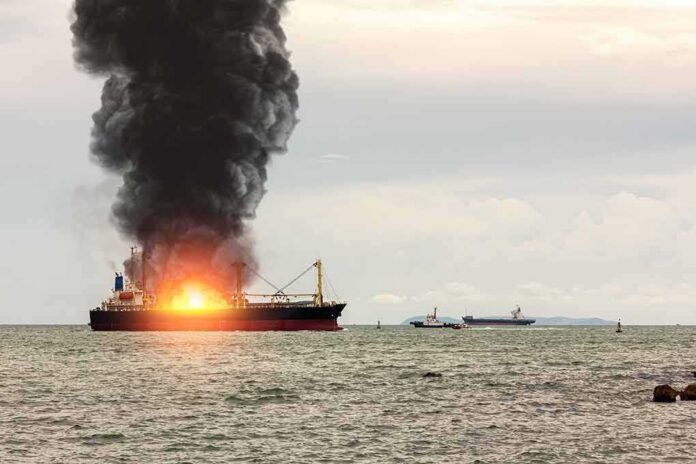
City officials said a barge fire at a Staten Island shipyard ignited around midafternoon, growing to a two-alarm response before an explosion occurred roughly an hour later; at least 16 people were injured, including seriously hurt firefighters and a civilian, while the cause remained under active investigation [1]. Reporters on site were told hazardous materials teams, the Department of Buildings, and the Department of Environmental Protection were called, reflecting standard major-incident protocol as investigators worked to secure the area and gather initial facts [1].
Live coverage cited New York City Fire Department briefings that crews mobilized after receiving reports of two workers trapped in a confined space near the dock, and that firefighters encountered a fire burning within a metal structure by the shipping docks [2]. Such conditions complicate rescue and suppression, often requiring ventilation, gas monitoring, and methodical entry to protect trapped workers and responders. Officials emphasized that origin-and-cause work would follow once the scene was stabilized, not before, to avoid disturbing critical evidence [2].
Conflicting Early Numbers And Why They Matter
Television and online reports varied on injury totals, with some citing 16 injured and others broadcasting higher counts during breaking coverage, including references to dozens hurt; those contradictions are typical during fast-moving incidents but risk undermining confidence if not clarified promptly [1]. The discrepancy illustrates a recurring pattern in industrial accidents: dramatic visuals and partial data reach the public before investigators can reconcile counts, identities, and medical statuses, leaving space for speculation that hardens into narrative [1].
Wire-service and trade-fire reporting likewise echoed that at least 16 were injured by early evening, including two firefighters and one civilian with serious injuries, and stressed that the fire was still burning while command tracked patient numbers and responder safety [6]. As the emergency evolved, officials reiterated that no definitive cause had been established, reinforcing that early figures and details would remain provisional until interviews, scene documentation, and forensic analysis could be completed and cross-checked against medical and dispatch logs [7].
Safety Questions Without Premature Conclusions
Investigators faced a complex environment involving a barge, dockside structures, and potential confined spaces—settings where ventilation, flammable residues, and hot-work controls can make the difference between a controllable incident and an explosion; however, officials did not attribute fault or specify an ignition source at this stage [2]. Conservative readers should expect agencies to release findings after fire marshals, building inspectors, and environmental teams review origin, fuel pathways, and work permits, rather than jumping to conclusions that may not survive formal scrutiny [1].
FDNY: 16 hurt in fire, ‘major explosion’ at Staten Island shipyard https://t.co/00H9tDd99R
— PennLive.com (@PennLive) May 23, 2026
Clear accountability requires records, not rumors. That means incident-command logs, 911 recordings, firefighter interviews, and inspection histories to determine who was responsible for safety controls and whether procedures were followed. While the presence of hazardous materials teams and building inspectors signals thorough due diligence, it does not prove code violations by itself; the process must document whether confined-space protocols, ventilation standards, and dockside operations met required thresholds before any negligence finding is justified [1].
How To Read This As A Citizen And Taxpayer
New Yorkers watching rising costs and strained services deserve transparent answers when major urban infrastructure incidents strain first responders and city budgets. Demanding timely, factual updates—injury reconciliations, scene photographs, and preliminary origin-and-cause summaries—pressures institutions to release information that honors our firefighters’ sacrifices and protects workers without politicized spin. Waiting for official conclusions based on evidence keeps the focus on competence, safety, and stewardship of public resources rather than on social-media rumor cycles that cloud accountability [6].
Sources:
[1] Web – 3 FDNY firefighters injured in explosion, fire on barge at Staten …
[2] YouTube – LIVE | Explosion at Staten Island shipyard injures dozens
[6] Web – Fire, shipyard explosion on Staten Island injures at least 16 …
[7] Web – Fire and Explosion at Staten Island Shipyard Injures 16, Including …
© impactheadlines.com 2026. All rights reserved.