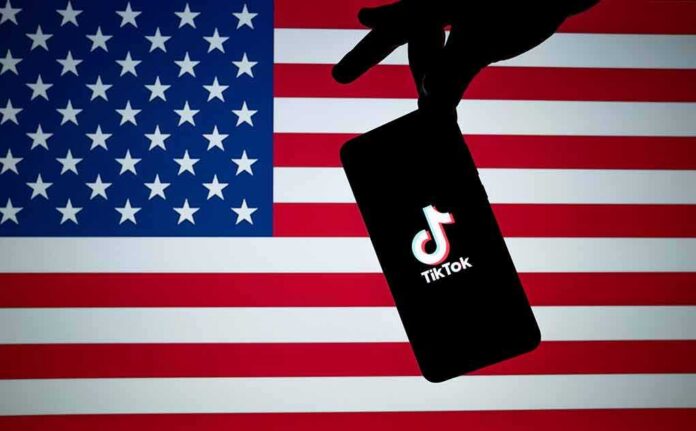
Federal agents arrested a Washington state man after a TikTok video called for killing President Trump and Secret Service agents, turning online rage into a federal case.
Story Snapshot
- Agents arrested Ayden Langevin after a video urged violence against President Trump and Secret Service.
- A federal complaint alleges a June 1 TikTok post made explicit threats; a witness saved the clip before deletion.
- Langevin allegedly told investigators he regretted the post and deleted it within about 40 minutes.
- The case tests the line between protected speech and “true threats” under federal law.
Arrest Tied to Explicit Online Threats
Federal authorities charged Ayden Langevin with interstate communications containing a threat to injure after a TikTok video called for rushing the White House with guns and killing President Trump and members of the United States Secret Service, according to a criminal complaint filed in federal court in Tacoma. Local reporting says the Federal Bureau of Investigation linked the June 1 post to Langevin, and a witness saved the video before it was deleted. The arrest followed rapid online identification of the account.
Law and Crime reported the video included statements about grabbing guns and “actually” killing President Trump, which prosecutors argue moved beyond heated rhetoric into a direct call for unlawful violence. Social media accounts amplified the clip and tagged law enforcement, accelerating scrutiny of the speaker and content. The quick turn from viral post to arrest reflects how public pressure and digital evidence now shape threat investigations and timelines.
What Investigators Say Versus Langevin’s Account
Charging documents, as described by local outlets, say agents tied the video to a TikTok account linked to Langevin and documented language advocating mass violence against named federal protectees. The same reports say Langevin allegedly told investigators he made the video, regretted it, and deleted it within 30 to 40 minutes. He also allegedly said he was angry about world events when he posted the clip and later removed social media from his phone. These claims will likely surface in court arguments about intent and context.
Prosecutors often stress that threat laws protect officials and the public even when a speaker claims they did not mean to act. Guidance from legal experts explains that a “true threat” covers statements that seriously express an intent to commit unlawful violence against a specific person or group. The speaker does not need to plan or attempt the act for the statement to break the law, if a reasonable person would view it as a threat. That standard frames how judges and juries weigh charged words against free speech.
How The Law Draws the Line on “True Threats”
Federal rules for threats against the President require that the statement be a “true threat” and be made knowingly and willfully. Courts examine the words, the target, how and where they were delivered, and whether a reasonable listener would view them as serious rather than hyperbole or a joke. Recent guidance also underscores that the harm of a threat includes fear and disruption, even if no attack follows, which is why law enforcement moves fast when posts target protectees.
For many Americans, this case highlights two shared worries. People want strong protection for leaders and agents who shield them. People also worry about a system that seems to react only after social media outrage or viral pressure. When a single clip triggers a federal case within hours, it fuels a broader sense that rules are applied unevenly and that online mobs now set priorities. That distrust spans left and right and feeds the belief that distant elites call the shots, not citizens.
Why This Moment Matters Beyond One Arrest
Threat cases like this show how a short post can reshape a life, a community, and a news cycle. Investigators treat specific, targeted violence as a public-safety emergency, which most agree is necessary. Defense lawyers will press the boundaries of intent, context, and speed. The outcome will not settle the country’s deeper frustrations with government, but it will signal how the justice system balances safety and speech when anger, algorithms, and politics collide in real time.
Sources:
thegatewaypundit.com, x.com, thenewstribune.com, congress.gov, govinfo.gov
© impactheadlines.com 2026. All rights reserved.