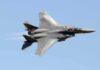
Non-stealthy B-52 bombers now flying directly over Iran mark a turning point in yet another Middle East conflict that threatens to spiral beyond the promises made to war-weary Americans who voted against endless regime change wars.
Story Snapshot
- B-52 bombers conduct first overland missions in Iranian airspace after 30 days of intensive strikes degraded air defenses
- Over 11,000 targets destroyed in Operation Epic Fury, including missile systems and underground bunkers
- Pentagon leadership touts air dominance while Trump administration faces growing criticism over another costly Middle East engagement
- Deployment of Cold War-era bombers signals complete destruction of Iranian air defenses but raises questions about mission scope
B-52 Deployment Marks Escalation in Operation Epic Fury
Chairman of the Joint Chiefs Gen. Dan Caine announced during a Pentagon briefing that B-52 Stratofortress bombers successfully completed their first overland missions directly over Iranian territory. The deployment represents a significant escalation in Operation Epic Fury, the month-long conflict that began in late February 2026. These non-stealth heavy bombers, first introduced in the 1950s, typically operate from standoff distances when facing sophisticated air defenses. Their ability to penetrate Iranian airspace demonstrates the extent to which US forces have neutralized threats, according to military officials.
The B-52s flew from RAF Fairford in England to deliver massive payloads including GBU-31 JDAMs, GBU-72 bunker-penetrating bombs, and JASSM cruise missiles against hardened targets. On March 31, strikes on an ammunition depot in Isfahan triggered massive secondary explosions visible in social media footage. Unlike the stealthy B-1 and B-2 bombers used in initial phases, B-52s lack advanced radar-evading capabilities, making their deployment feasible only after air defenses have been thoroughly suppressed. This tactical shift allows commanders to keep bombers airborne for extended periods, enabling dynamic targeting rather than pre-planned strikes.
Thirty Days of Strikes Degrade Iranian Military Infrastructure
US and coalition forces struck over 11,000 targets across Iran during the first month of operations, systematically dismantling the nation’s integrated air defense systems and missile production facilities. The campaign employed munitions, cyber warfare, electronic jamming, and space-based assets to create corridors safe enough for conventional bombers. Previous Israeli strikes and Operation Midnight Hammer in summer 2025 had already weakened Iranian defenses before this latest escalation. The sustained bombardment targeted military-industrial nodes, communications infrastructure, and underground bunker complexes housing uranium stockpiles and weapons production.
Gen. Caine declined to provide specific mission counts or target lists, citing operational security concerns. Defense analyst Mark Gunzinger stated the B-52 overflights prove not just air superiority but air dominance over significant portions of Iranian territory. The Pentagon’s confidence in deploying vulnerable aircraft reflects the complete collapse of Iranian anti-aircraft capabilities that once posed credible threats to American forces. This operational freedom comes at a strategic cost that many conservatives question, particularly those who supported Trump’s 2016 promises to avoid new Middle East entanglements.
Growing Conservative Backlash Against Regime Change Operations
The expanding conflict with Iran tests the Trump administration’s relationship with its base, many of whom explicitly opposed another costly Middle East war. MAGA supporters who championed America First policies now find themselves questioning how air dominance over Tehran serves national interests or protects constitutional freedoms at home. High energy costs continue squeezing American families while billions in military resources flow toward destroying Iranian infrastructure. This disconnect between campaign rhetoric about ending forever wars and current military operations deepens frustration among voters aged 40 and older who remember previous regime change disasters.
The deployment of B-52s alongside B-1 and B-2 bombers demonstrates impressive military capability but raises fundamental questions about mission objectives and exit strategies. Pentagon officials emphasize the threat Iranian missiles pose to Gulf allies and regional stability, yet many conservatives argue those concerns don’t justify American blood and treasure. The operation also strains relationships with Israel, as some MAGA voters increasingly question whether US military actions serve American interests or function as proxy enforcement for foreign priorities. These tensions reveal a conservative movement divided between supporting military strength and opposing interventionist foreign policy that contradicts foundational limited government principles.
Sources:
Top US General Says B-52 Bombers Now Flying Over Iran
US Deploys B52 Bombers Iran Strikes
What B-52 Bombers Bring to Iran Fight and What It Means for War Now
US Air Superiority Iran B52 Overland Flights General