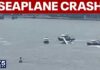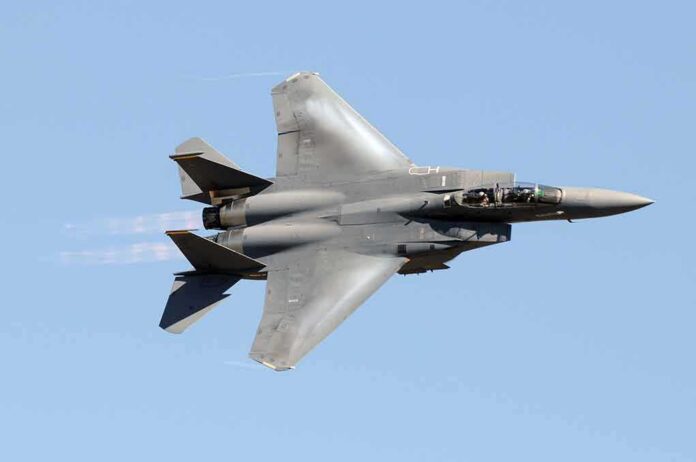
F-16s lit the afternoon sky with flares after a small plane strayed toward the World Cup final and President Trump’s security bubble.
Story Snapshot
- NORAD confirmed F-16s intercepted a civilian plane inside a restricted zone near New York.
- Pilots used flares to get the pilot’s attention, then guided the plane away.
- The airspace was locked down around MetLife Stadium for the World Cup final.
- These intercepts happen often during big events and VIP visits.
F-16 Intercept Near MetLife: What Happened And When
North American Aerospace Defense Command said two F-16 fighters intercepted a general aviation plane that violated a Federal Aviation Administration no-fly zone over New York at about 4:18 p.m. Eastern Time on July 17, 2026. The restriction covered airspace around MetLife Stadium before the World Cup final. The interception happened as security teams surged on the ground and in the air ahead of match day. The timing and location match the event’s peak alert window reported by national outlets.
NORAD procedures call for a set playbook: establish radio contact, signal visually, and if needed use flares to alert the pilot. Reporters cited the command saying fighters used flares during this incident and then escorted the aircraft out of the restricted area without injuries or damage. That sequence tracks with years of standard intercept practice around special events and visits by presidents, vice presidents, and foreign leaders. The goal is safety and control, not drama.
Why A No-Fly Zone Existed Over A Soccer Game
The Federal Aviation Administration issues temporary flight restrictions to seal airspace around mass events and high-value targets. The World Cup final brought a dense crowd, global attention, and a presidential presence, so security teams layered defenses on land and in the sky. News coverage ahead of the match detailed an air exclusion zone and quick-reaction fighter coverage staged to respond within minutes if any aircraft wandered inside the ring. This is standard risk management when a stadium becomes a global stage.
Organizers also planned ceremonial flyovers that required tight coordination. A public advisory said F-16s would roar over MetLife before kickoff, so residents were told to expect jet noise and brief activity above the stadium. That display flight and the security patrols are different missions. One is a scripted salute. The other is a shield that stays up as crowds gather, motorcades move, and late arrivals flood the airspace around nearby airports.
Trump’s Presence Raised The Security Ceiling, Not The Rules
Donald Trump’s attendance did not create the concept of a no-fly zone. It raised the bar on how strictly teams enforced it. Media reports noted a larger protective bubble, more overwatch, and quicker triggers for intercepts because a former president was on site, alongside world leaders and a global broadcast. That calculus matches past weekends when Trump stayed in Bedminster. On one of those weekends, fighters responded to more than ten general aviation violations in the area. Frequency rises when weather is good and small planes are active.
These violations almost always trace back to simple causes: missed notices to air missions, outdated charts, or a pilot who missed a broadcast. The Norfolk visit example showed multiple same-day incursions that ended with safe escorts and pilot counseling, not arrests or shootdowns. That pattern points to a reality most headlines skip. The military shows up fast because that is their job. The outcome is usually a warning and a lesson learned.
Flares, Risks, And The Line Between Signal And Spectacle
Flares sound scary to people on the ground, but they work as bright, hot attention-getters visible in daylight. Pilots fire them away from any aircraft to avoid harm while signaling, “Look at me, follow me.” Coverage tied to this intercept made the flare moment the headline, yet the more important point is what came next: positive control, a safe escort, and the zone secured. That is the desired end state at big events that draw both crowds and careless flyers.
NORAD Fighter Jets Intercept Multiple Aircraft Infringing on Restricted U.S. Airspace
Airspace violations in the skies above President Donald Trump kept the North American Aerospace Defense Command busy on Sunday.Trump was in New Jersey to attend the World Cup final, which…
— 🇺🇸⭐️OUR-VOICES⭐️🇺🇸 (@iswho) July 20, 2026
Common sense says keep politics out of air safety. The facts support that view. The World Cup final had a published no-fly zone. NORAD staffed it with jets and radar. A small plane drifted in. Fighters signaled with flares and led it out. The same playbook protected New York, Washington, and Bedminster on other busy days. The fix for repeat breaches is simple and boring: pilots must check restrictions before every flight and obey them. That beats reading about flares later.
Sources:
youtube.com, dailybaku.az, newsweek.com, tass.com, cbc.ca, ria.ru, homeland.house.gov
© impactheadlines.com 2026. All rights reserved.