Washington put up to $20 million on the table to help catch two alleged Guatemalan narco leaders, signaling a hard push against cross-border crime backed by cash and public pressure.
Story Snapshot
- The State Department offered up to $10 million each for two alleged Guatemalan traffickers.
- The offers come under the Narcotics Rewards Program, a long-running tool against kingpins.
- Past rewards have led to arrests and convictions across the region, with payouts exceeding $135 million.
- Experts say removing leaders can disrupt cartels but may also fuel fragmentation and violence.
U.S. Posts Two $10 Million Rewards Targeting Guatemalan Traffickers
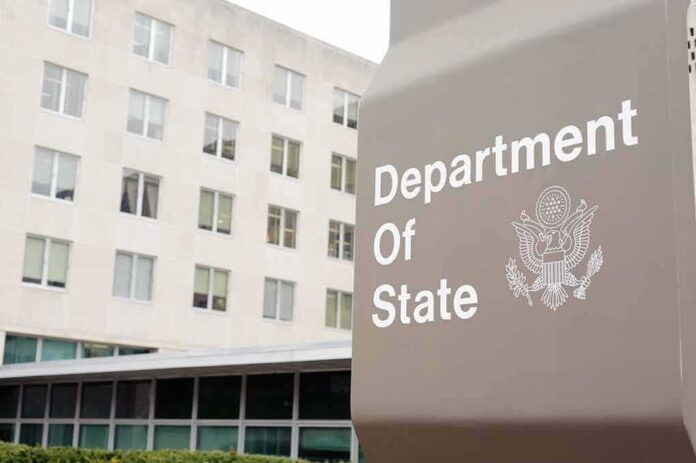
The United States Department of State announced rewards of up to $10 million each for information leading to the arrest or conviction of two alleged Guatemalan narcotics traffickers. The press statement dated November 16, 2026, names Axel Bladimir Montejo Saenz, also known as “Mosh,” and Walfre Donaldo Calderón-Calderón, also known as “El Teniente Jr.” as targets of the offers. The department said the rewards are open worldwide. Officials framed the move as part of a continued campaign to disrupt cross-border drug networks.
The State Department also published a dedicated wanted notice for Walfre Donaldo Calderón-Calderón. The page lists his name and aliases, points to a reward of up to $10 million, and places him within the Narcotics Rewards Program framework. This public listing adds pressure by spreading identifying details and inviting tips. U.S. authorities often pair these notices with criminal indictments and coordination with regional partners to push arrests and extraditions when possible.
How the Narcotics Rewards Program Works and What It Has Achieved
The Narcotics Rewards Program gives the Secretary of State clear authority to pay for information that leads to major foreign traffickers’ arrests or convictions. The ceiling can reach $25 million depending on the case. The State Department reports the program has helped bring more than 75 major violators to justice and has paid over $135 million in rewards across its lifespan. These numbers show a long track record that spans multiple countries and shifts in U.S. administrations.
Recent entries and updates on the program’s pages show a steady run of cases tied to Mexican and Central American groups. The department also highlights other reward tools that target transnational crime beyond drugs, including human trafficking, cybercrime, and arms smuggling. This broader set of incentives aims to break up networks that cross borders, launder money, and exploit weak institutions. The combined approach uses public tips, financial pressure, and cooperation with foreign police.
Why This Matters for Communities on Both Sides of the Border
U.S. leaders say the goal is to cut the flow of cocaine, fentanyl precursors, and cash that fuel overdose deaths and crime at home. Families in Guatemala and the United States carry the costs when cartels recruit kids, extort small businesses, and corrupt local officials. The State Department’s latest trafficking in persons report says criminal groups in Guatemala have exploited girls in sex trafficking and forced boys and men into drug work, extortion, and violence, with reported cases rising in 2025. That is the human face behind these rewards.
At the same time, research on the “kingpin” strategy urges caution about side effects. Studies of Mexico’s drug war find that taking out leaders can splinter groups, spark turf fights, and raise homicide rates in the short run, even as top bosses fall. Analysts describe a cycle where new factions rush to fill the gap, shifting routes and alliances, which can bring new risks to border towns and migrant corridors. Policymakers weigh these trade-offs when they deploy large rewards.
A Familiar Tool in a Long Campaign, With Recent Guatemalan Cases
The State Department has used similar offers against other Guatemalan figures in 2026. One wanted target, Eugenio Darío Molina-López, was later arrested in April 2026, showing how publicity and payouts can help close cases when partners cooperate and tips flow. Each case depends on facts on the ground: safe havens, corruption levels, and the strength of local law enforcement. The United States often follows arrests with extradition requests and federal prosecutions.
Major drug kingpin ‘The Kraken’ caught living secret life in posh California city #Drugtrafficking #Borderpatrol #Guatemalahttps://t.co/2jbtSsdtHL
— cecilia (@cecilia39121471) November 17, 2026
For Americans who feel Washington ignores border crime, these rewards look like action that aims at real results. For those who fear endless crackdowns without deeper reform, the warnings from research are a reminder that arrests alone do not fix a drug market. Both views reflect a common worry: powerful networks profit while regular people pay the price. The new $20 million in offers is a clear signal. Whether it delivers safer streets will depend on follow-through, partners, and the next moves by the networks.
Sources:
washingtontimes.com, state.gov, occrp.org, link.springer.com
© impactheadlines.com 2026. All rights reserved.