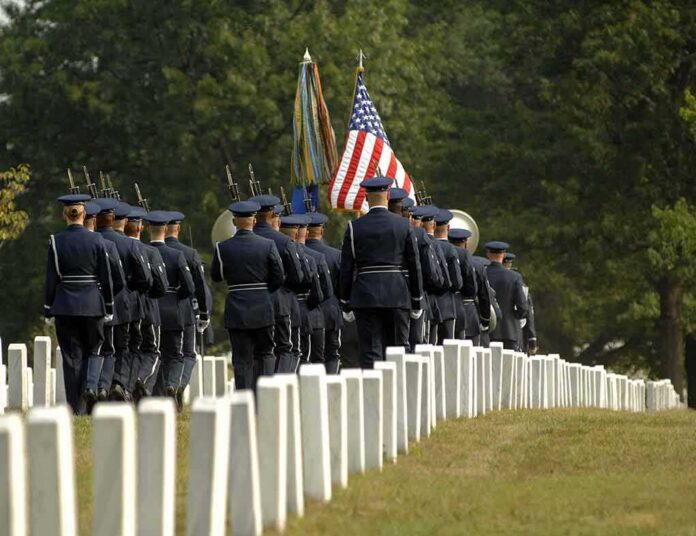
The soldier who told a cabinet-level group to show respect at America’s most sacred tomb received a medal from the very man he corrected.
At a Glance
- A tomb sentinel halted conversation and laughter near the Tomb of the Unknown Soldier on Veterans Day.
- The Pentagon said the guard acted correctly and respectfully to uphold decorum.
- Defense Secretary Pete Hegseth later awarded the Joint Service Commendation Medal to the guard.
- Critics questioned the timing and motive behind the award amid political backlash.
What Happened On The Plaza
On November 11, at the Tomb of the Unknown Soldier, a U.S. Army sentinel stepped toward a group that included Defense Secretary Pete Hegseth. The sentinel projected a standard command: maintain silence and respect. Reports say a photo had just been taken and a loud laugh followed, triggering the warning. Pentagon spokesperson Sean Parnell later said the soldier did the right thing and delivered the reminder respectfully. That aligns with posted rules at the tomb requiring quiet at all times.
The guard was identified in reports as Specialist Thomas Iglesias. The exact spelling has varied across coverage, but outlets used Iglesias in describing the award. The Pentagon’s statement focused on duty, not the viral clip, saying the medal recognized Iglesias “for the execution of his duties at the Tomb of the Unknown Soldier” on Veterans Day. That language matched the rule the sentinel enforced: protect the solemn atmosphere, even if the visitors are powerful.
Why The Pentagon Backed The Warning
The Pentagon’s message was concise: the sentinel’s correction upheld the standard at the tomb. The rule is set for a reason. The Tomb of the Unknown Soldier is a place where ceremony is precise and silence matters. Enforcing that standard is not optional for a guard; it is the job. Parnell’s description of the reminder as correct and respectful framed the event as routine duty, not a confrontation. That is common sense and tracks with American conservative respect for order and tradition.
Hegseth then leaned into that frame. He presented the Joint Service Commendation Medal and posted photos that showed him pinning the medal on Iglesias, with a message praising soldiers and standards. The move turned a tense moment into a public salute to discipline. It also made clear that at sacred sites, rank bows to the rules on the ground. When a sentinel says “respect,” everyone listens—or should.
The Unusual Part: The Medal Itself
The Joint Service Commendation Medal recognizes “meritorious achievement or service” in a joint context. It is not the highest medal, but it carries real weight. It is less common for junior enlisted troops, which raised eyebrows about whether this was symbolic or a proportional award for routine enforcement. The Pentagon’s wording—“execution of his duties”—left room for debate about what precise act merited the decoration, beyond the viral moment.
That gap matters for process-minded readers. The public accounts did not show the award recommendation, approval chain, or citation text. Without that packet, people cannot judge how the case compared to other medals. The presentation, however, had public documentation in photos and statements, not just rumors. The facts support this much: a sentinel enforced the rule, the Pentagon endorsed him, and Hegseth pinned a real medal on his uniform.
Backlash, Motives, And What Holds Up
Critics attacked the original conduct by Hegseth’s group and questioned the medal’s timing. Some called it a bid to quiet outrage after the video spread. The Associated Press reported that the Pentagon’s supportive statement landed as the controversy grew. The critique hinges on motive, not on the facts of what the guard did. On the merits, the guard enforced a posted standard and received support from his chain of command.
Defense Secretary Pete Hegseth was publicly reminded to be quiet during a Veterans Day visit to Arlington National Cemetery after a soldier guarding the Tomb of the Unknown Soldier appeared to reprimand his group for laughing and talking near the memorial.
The incident happened… pic.twitter.com/QPWG5kYchX
— Mighty News (@Mighty__News) November 14, 2026
Common sense says the rule at a hallowed memorial should not bend for status. That principle matches conservative values: standards, duty, and respect for the fallen. If a cabinet-level visitor gets corrected, that only proves the standard is strong. The open question is proportionality of the medal. Reasonable people will want the citation to know why this case rose above routine duty. Until that record appears, the clean takeaway is simple: the guard guarded, and the institution backed him.
Sources:
© impactheadlines.com 2026. All rights reserved.