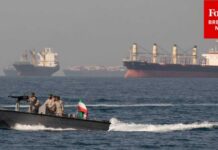
Four dollars a gallon is back, and the road to it runs straight through the Strait of Hormuz.
Story Snapshot
- National gas average nears $4 after a sharp weekly jump tied to Gulf conflict
- Tanker traffic through Hormuz slowed to a trickle, tightening supply
- Brent crude climbed about 10% this week to the high $80s per barrel
- Households have paid hundreds more for fuel since the war began
What pushed pump prices to the brink
Reporters at major networks said the national average for gasoline crept to about $4.00 per gallon on July 20, after a 12-cent rise in a week. They tied that jump to fighting near the Strait of Hormuz and a fast rise in crude prices. Brent crude traded near $88 per barrel after a 10% weekly gain, which sets the baseline for what you pay at the pump. The math is simple. When the global benchmark climbs, retail prices follow within days.
Ship-tracking firms showed why crude rallied. Tanker flows through the Strait of Hormuz, the narrow waterway that moves a big share of the world’s oil, slowed to a “single-digit trickle,” according to data cited on air. That means fewer barrels leaving the Persian Gulf and less slack in the system. Time-lapse images after July 12 strikes showed a steep drop in crossings, backing up the claim that the route is not normal right now.
The war’s toll shows up in your wallet
Beyond the price sign, the squeeze is personal. Moody’s Analytics estimated the average American household spent about $620 extra on gasoline, diesel, and jet fuel since the war began in late February. That is five months of higher costs that also push up shipping and airfare. The pain can run longer. The chief executive of Bank of America said companies are building higher energy costs into prices that could keep inflation elevated into 2027 if tensions hold. That is how a distant strait reaches your grocery aisle.
Military facts match the market mood. United States Central Command released video of a strike that destroyed an Iranian surveillance tower in the Strait. That confirmed active operations in the chokepoint area, which spooks shippers, insurers, and traders. Higher risk means higher costs and fewer willing vessels, even before a bullet hits a tanker. When ships hesitate, spare barrels vanish, and crude spikes. Consumers then pay the tab a week or two later.
Yes, prices are volatile, not a straight line
Some data cut against a runaway spike story. GasBuddy and local reports showed the national average near $3.82 at one point, down about 21 cents from a month earlier, and the Twin Cities at $3.86, down two cents month over month. That points to chop rather than a one-way climb. A forecaster also noted “market fatigue,” saying prices may not revisit wartime peaks unless something far worse happens. That view checks out with how risk premiums cool when headlines pause.
Government modeling leans the same way. The United States Energy Information Administration said disruption in Hormuz and other outages are key drivers right now, but it also projected Brent crude could drift below $90 later in 2026 and average lower in 2027. That implies the current bump is sharp but not endless if flows improve and demand steadies. The same agency’s work on chokepoints shows shippers can reroute some barrels, like Saudi flows overland, which can blunt but not erase a Hormuz shock.
Sorting cause from noise without the spin
Skeptics ask if Hormuz is the main culprit or just the latest headline. They cite other factors, like drone strikes on Russian refineries that tighten fuel supplies. Those do matter, and so does summer driving demand. But the clearest linkage today runs through the strait: tanker slowdown, insurance stress, military strikes, and a fast move in Brent. The lack of a perfect econometric split does not erase the obvious chain from chokepoint to crude to pump.
The Strait of Hormuz story is beginning to move beyond a geopolitical headline.
Restricted tanker traffic is now being reflected in energy and rates. Oil and European gas are higher, bond yields are rising, and energy stocks are outperforming fuel-sensitive sectors.
The first…
— Data Over Noise (@DataOverNoise) July 20, 2026
Policy messaging should match reality on the water. Mixed claims that the strait is “open” while strikes and toll talk swirl only feed confusion and give cover to price games. A common-sense approach aligns with conservative values: restore secure passage, increase domestic output where possible, cut red tape on pipelines and refining, and publish clear data on flows. Markets calm when supply looks sure. Families win when energy is steady, simple, and local.
Sources:
washingtontimes.com, aljazeera.com, reuters.com, cnbc.com, news.un.org, usatoday.com
© impactheadlines.com 2026. All rights reserved.