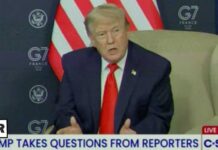
Blue-state politicians are daring Trump’s Homeland Security team to walk away from millions in security cash rather than clean up their election rules.
Story Snapshot
- Trump’s team is tying chunks of Homeland Security grant money to basic election security steps like paper ballots and citizenship checks.
- States that refuse the new rules could lose up to 20% of key grants, worth millions in gear and personnel.[1]
- Liberal groups claim the plan is unconstitutional “coercion,” but past court fights turned more on lack of clear law than on coercion itself.[18]
- The real fight is over who controls election rules: voters and state legislatures, or Washington lawyers and activist judges.[20]
What Trump’s Homeland Security Funding Fight Is Really About
Cable outlets and left-wing groups are blasting headlines that the Trump administration is “threatening” states with lost homeland security funds over elections.[1] Buried under the spin is a simple fact: the administration wants states to use federal security dollars for actual election security, not tech boondoggles or partisan pet projects. Internal grant rules reviewed by CNN say states would have to phase out certain electronic-only systems, move to hand-marked paper ballots, and conduct manual audits using federal standards.[1]
Grant conditions would also push states to verify voter rolls and polling-place workers against the federal Systematic Alien Verification for Entitlements database to flag likely noncitizens.[1] If states refuse, they would lose about 20% of specific Department of Homeland Security grants, which could mean millions of dollars in lost equipment and training.[1] For many conservative readers, that sounds less like “blackmail” and more like common-sense accountability: if Washington sends security money, it can demand real security in return.
The Legal Tug-of-War Over Who Sets Election Rules
Critics argue Trump is grabbing power he does not have. The Brennan Center claims his 2025 election order tried to “illegally overhaul” elections, and notes a court blocked one piece requiring extra citizenship documents for the federal voter registration form.[2] Another left-leaning group insists that presidents “cannot take that money away by himself” once Congress has appropriated it, calling similar attempts to reshape grants a separation-of-powers violation.[16] These attacks frame any funding condition as a step toward a federal takeover of elections.
But the deeper constitutional fight is more focused. The Elections Clause gives states primary control over the “time, place, and manner” of federal elections, while letting Congress change those rules by law when needed.[20] The clause does not give that power directly to the president. That means Trump’s lawyers must hook his actions to existing statutes Congress already passed, including laws that created the Election Assistance Commission and the grant programs his orders reference.[4] If those laws let agencies attach security-focused conditions, the White House has at least a colorable argument.
Conditional Funding, Coercion, and Federal Overreach
For decades, Washington of both parties has used funding conditions to steer state policy. A Wisconsin legislative brief on Supreme Court cases like South Dakota v. Dole explains that Congress can attach strings if they serve the general welfare, are clear, relate to the funded program, respect the Constitution, and are not unduly coercive.[15] In the Affordable Care Act case, the Court finally called one program coercive when the federal government tried to yank huge existing Medicaid dollars to force expansion.[19]
Crucially, recent scholarship notes that coercion arguments almost never win when states can realistically refuse the money.[17] In earlier fights over Trump-era immigration grants, several appeals courts ruled against the administration not because every funding condition is unlawful, but because statutes did not clearly authorize the exact strings the Justice Department tried to add.[18] That history cuts both ways. It warns Trump’s team that they must ground each election-related condition in clear law, yet it also undercuts claims that any hard-nosed grant condition is automatically a constitutional crisis rather than standard federal bargaining.
What States Stand to Lose by Refusing Election Security Conditions
Homeland security grants already require states to set aside a small portion—about 3% in some programs—for election security upgrades.[10] The new Trump rules build on that link by saying: if Washington covers part of your voting infrastructure, you must take basic steps to make that infrastructure trustworthy. Those include paper trails voters can see, audits after the fact, and stronger checks against illegal voting or noncitizens working elections.[1] States that reject those terms could see a 20% cut in certain grants, which can mean fewer officers, delayed equipment, or weaker cyber defenses.[1]
Some deep-blue states may choose to walk away on principle, betting courts will bail them out later. But that choice has real costs for local law enforcement and emergency planners who rely on this money for everything from radios to protective gear. Ballotpedia’s review of past mandate fights shows federal judges are ready to freeze new rules they see as arbitrary or beyond an agency’s power.[7] Conservative readers know that playbook well: use sympathetic courts and media allies to protect loose election systems, then blame Trump when security funding dries up.
Sources:
[1] Web – States That Won’t Adopt Trump’s Sweeping Election Changes Risk Losing …
[2] Web – Trump admin plans to use DHS funds to force states election changes
[4] Web – The Trump Administration Has No Legal Authority To Invoke …
[7] Web – The Trump administration is threatening to withhold tens of millions …
[10] Web – Exclusive: Trump administration uses homeland security funds to …
[15] Web – Trump Rejects DHS Funding Deal, Ties Shutdown to Voter ID …
[16] Web – [PDF] Conditions on Federal Funding: Constitutional Considerations
[17] Web – Sharing the Facts About Coercive Funding Demands
[18] Web – [PDF] The Coercion Test and Conditional Federal Grants to the States
[19] Web – 121. Spending, Coercion, and Commandeering
[20] Web – [PDF] Conditional Spending Doctrine and the Future of Federal …
© impactheadlines.com 2026. All rights reserved.