

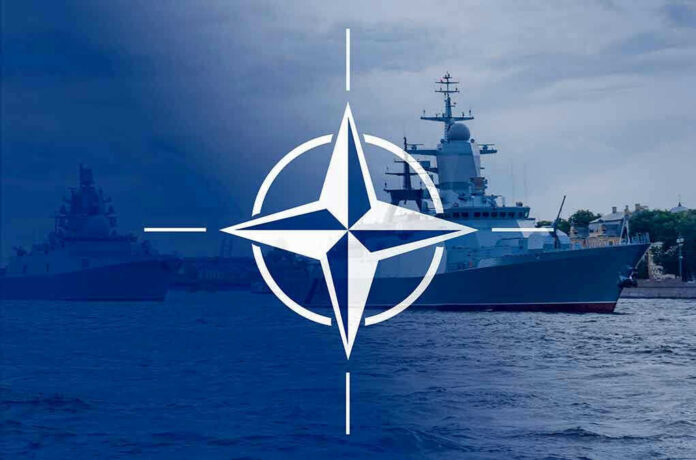
NATO’s top official just validated what many Americans feared for years: Iran wasn’t “peacefully enriching” — it was moving toward a nuclear weapon, and the strikes were meant to stop it.
Story Snapshot
- NATO Secretary General Mark Rutte said U.S. and Israeli strikes are degrading Iran’s ability to obtain nuclear capability.
- Rutte praised the operation while stressing NATO as an alliance is not directly involved in the fighting.
- Iran retaliated with missile attacks against Israel and targets in the Gulf, raising the risk of wider escalation.
- Rutte claimed key allies broadly backed the action, though public reporting shows uneven support and earlier hesitation from some governments.
Rutte’s public confirmation changes the political argument
Mark Rutte’s remarks mattered because they moved the debate from speculation to a blunt assessment by NATO’s sitting secretary general. In interviews after the strikes, Rutte said the attacks were “degrading the capacity of Iran to get its hands on nuclear capability,” and later argued the nuclear threat was essentially “gone.” Those lines undercut the long-running claim that the world could safely manage Iran’s program through diplomacy alone.
NEW: NATO Secretary-General Mark Rutte:
• I really commend what is happening here
• US has not underestimated Iran's firepower
• US & Israeli action is really important
• Supports degrading Iran's nuclear/ballistic
• No plans for NATO to be involved in conflict pic.twitter.com/DwQYWVM7gl— Alex Salvi (@alexsalvinews) March 2, 2026
Rutte also emphasized alliance boundaries: NATO is not launching this campaign as NATO, even if NATO members are involved as sovereign states. That distinction is central for European publics wary of another Middle East conflict. It also signals that Washington’s current approach is being treated as a coalition-backed security action rather than an Article 5 NATO war, even as the alliance coordinates closely across capitals.
What the strikes reportedly targeted — and what remains unverified
Reporting cited in the research indicates U.S.-Israeli strikes hit Iranian military and nuclear-related sites and were described as crippling nuclear and ballistic missile programs. The same reporting says Iran’s supreme leader Ayatollah Ali Khamenei was killed in the strikes. Those are extraordinary claims with enormous strategic consequences, but outside statements from officials and media accounts, independent verification of the full level of damage to Iran’s nuclear infrastructure remains limited.
The uncertainty matters for two reasons. First, “degrading capacity” is not the same as dismantling a program, especially if knowledge, personnel networks, or hidden facilities remain. Second, the more expansive the stated objectives become, the higher the risk of mission creep — a lesson Americans learned the hard way in prior decades. Even supportive allies can back immediate action while still questioning what the end state is supposed to be.
Allied unity is being sold hard, but the seams are visible
Rutte said there was “no sliver of light” between key allies, describing a broad “all for one, one for all” posture after weekend consultations. Yet other reporting in the same research points to hesitation and internal friction: Spain reportedly refused some basing support, Turkey criticized the action, and the United Kingdom initially hesitated before later resolving access issues. Those details don’t negate support, but they do complicate the claim of seamless unity.
For U.S. voters who have watched Europe lecture America while underinvesting in defense, that mixed picture will sound familiar. The immediate takeaway is practical: logistics and basing decisions can shape how long operations last and how much pressure stays on Iran’s remaining capabilities. When European governments delay or split hairs, it can shift a greater operational burden onto American forces and taxpayers.
Iran’s retaliation raises escalation risks — and tests deterrence
Iran’s response came quickly. The research notes missile attacks against Israel and Gulf targets after the strikes, putting civilian populations and regional infrastructure at risk. The United Nations secretary-general issued a statement condemning escalation and warning about violations of the UN Charter. Regardless of where one lands on the legal arguments, the operational reality is that Tehran still has the ability to lash out, even if parts of its program were hit hard.
NATO's Secretary General Confirms Iran Was on Its Way to Getting Nuclear Weapons https://t.co/ly28nmZRx0
— Fearless45 (@Fearless45Trump) March 3, 2026
Rutte and other officials framed the stakes in larger strategic terms, linking Iran to the wider axis involving Russia, China, and North Korea. If that alignment hardens, the U.S. will have to balance Middle East crisis management with broader deterrence priorities. For conservatives focused on national sovereignty and security, the key issue is whether the action keeps nuclear weapons out of the hands of an aggressively anti-American regime without dragging the U.S. into an open-ended ground conflict.
Sources:
Trump presses NATO partners for support; Hegseth blasts hesitation
NATO chief praises US and Israeli strikes on Iran, stresses alliance won’t be involved
Statement by the Secretary-General on Iran
NATO chief praises Trump’s Iran strikes, says key allies ‘all for one, one for all’
Joint statement by the leaders of France, Germany and the United Kingdom on Iran





















![AIR FRANCE A320 & Business Lounge 🇫🇷 Paris CDG to Tunis 🇹🇳 [FULL FLIGHT REPORT]](https://impactheadlines.com/wp-content/uploads/sites/27/2026/08/maxresdefault-34-100x70.jpg "Misbehavior Kills Air France Sauna")