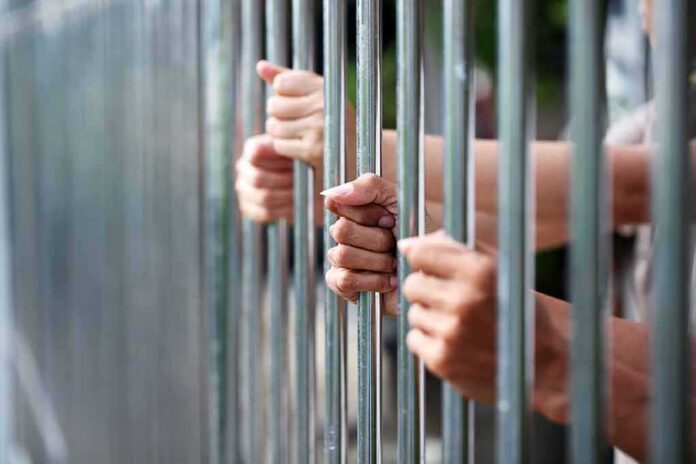
Venezuela’s new amnesty law promises freedom for political prisoners, yet over 200 remain on hunger strike demanding release while military personnel and key opposition figures are deliberately excluded from its benefits.
Story Snapshot
- Venezuela’s National Assembly unanimously passed an amnesty law on February 20, 2026, potentially freeing hundreds of political prisoners detained under the Maduro regime
- The law excludes 174 military personnel accused of rebellion and prominent opposition figures like Nobel Peace Prize winner María Corina Machado, raising questions about selective justice
- Over 200 prisoners launched a hunger strike on February 24, 2026, protesting uncertainty about their eligibility under the new law’s restrictive provisions
- The legislation follows the January 3, 2026 US military raid that captured Nicolás Maduro, with interim president Delcy Rodríguez acting under pressure from Washington
Amnesty Law Passes After Maduro’s Removal
Venezuela’s National Assembly unanimously approved an amnesty law on February 20, 2026, following Nicolás Maduro’s capture during a US military raid on January 3, 2026. Interim president Delcy Rodríguez signed the legislation into law the same day after two weeks of consultations with political and civil society groups. The law applies retroactively to 1999, covering 13 periods of political upheaval including the 2024 riots against Maduro’s disputed reelection. This represents a significant reversal for a government that spent decades denying it held political prisoners. The unanimous passage occurred despite Venezuela’s deeply polarized political environment, though the law contains controversial exclusions that limit its scope.
Exclusions Undermine Reconciliation Claims
The amnesty law deliberately excludes 174 military personnel accused of rebellion and opposition figures accused of promoting foreign military intervention. Nobel Peace Prize winner María Corina Machado falls into the excluded category due to accusations she called for foreign intervention. This selective application raises serious concerns about whether the law represents genuine reconciliation or political calculation. Foro Penal Director Gonzalo Himiob criticized the legislation as a “flawed document” that leaves deserving Venezuelans behind bars. The law’s requirement that beneficiaries submit to the same justice system that imprisoned them reflects ongoing power imbalances. Opposition lawmaker Nora Bracho acknowledged the law as “not perfect, but undoubtedly a great step forward,” revealing cautious optimism tempered by recognition of its limitations.
Implementation Uncertainty Sparks Prisoner Protest
Over 600 political prisoners remain detained despite the amnesty law’s passage, with approximately 444-450 released since January 8, 2026. On February 24, 2026, more than 200 political prisoners launched a hunger strike seeking benefits under the new law, indicating widespread uncertainty about eligibility and implementation. A parliamentary commission of 23 lawmakers was established to monitor the amnesty’s application and fight for review of excluded cases. Families of detained prisoners express frustration with the slow pace of releases and restrictive conditions imposed on those already freed. The government’s historical pattern of denying political imprisonment and suppressing opposition suggests caution regarding optimistic interpretations of the law’s ultimate impact on Venezuela’s political freedoms.
Washington’s Influence Shapes Venezuela’s Direction
Interim president Rodríguez pushed for the amnesty legislation under pressure from Washington following the US military’s January 3 raid that removed Maduro from power. US Military Command held talks with Venezuelan leadership on February 19, just one day before the law’s passage, highlighting American influence over the transition government. UN Human Rights Experts urged that the amnesty’s scope be restricted to victims of human rights violations while expressly excluding those accused of serious violations and crimes against humanity. This international oversight demonstrates concern that the law could be misused to pardon government abuses. The law’s passage represents Venezuela’s attempt to gain international legitimacy and improve diplomatic relations, particularly with the United States, though fundamental disputes about accountability and justice remain unresolved between Chavismo and opposition forces.
Sources:
Venezuela parliament unanimously approves amnesty law – Tico Times
Venezuela’s National Assembly gives unanimous approval to amnesty bill – El País
Venezuela approves amnesty for likely release of hundreds of political prisoners – Euronews