A wooden boat the size of a school bus was carrying 240 people through open ocean water — and it was sinking.
Story Snapshot
- A 45-foot wooden vessel crammed with 240 Haitian migrants was intercepted near the Turks and Caicos Islands on May 31, 2026, after the boat became overloaded and began taking on water.
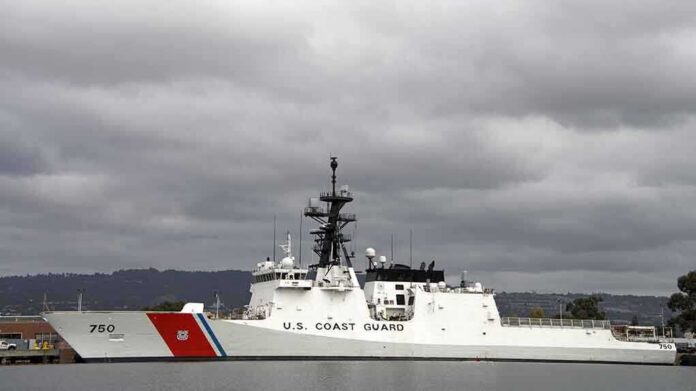
- The U.S. Coast Guard, Customs and Border Protection (CBP) Air and Marine Operations, and Turks and Caicos Islands authorities executed a coordinated joint interdiction documented on official government video.
- Turks and Caicos Border Force took custody of the migrants after the vessel was towed to South Dock Marina, with the Turks and Caicos Islands Regiment performing what officials called a tactical interception and immediate stabilization of the boat.
- The incident is one of several recent overcrowded-vessel interceptions in the same corridor, underscoring how the waters south of the Bahamas have become a pressure point in Caribbean maritime migration.
240 People on a 45-Foot Boat Taking on Water
Picture a vessel roughly the length of a city transit bus, loaded with 240 human beings, riding low enough in the water that the ocean was already coming in. That is what U.S. Coast Guard and Customs and Border Protection (CBP) Air and Marine Operations crews encountered near the Turks and Caicos Islands on May 31, 2026. The Defense Visual Information Distribution Service documented the operation on video, identifying it as a joint interdiction with CBP and partner agencies. The boat was described in reporting as overloaded and taking on water. [6][1]
The Royal Turks and Caicos Islands Police Force confirmed that marine and regiment vessels were launched after a suspicious vessel was tracked in the area, and that the U.S. Coast Guard ultimately intercepted it. [2] The Turks and Caicos Islands Regiment described its role as a tactical interception followed by immediate stabilization of the vessel to ensure the safety of everyone aboard. [5] That is not bureaucratic boilerplate — stabilizing a sinking, overloaded wooden boat in open water with 240 panicked people on it is a genuine operational challenge that can turn fatal in minutes.
A Coordinated Multi-Agency Operation, Not a Routine Patrol Stop
What makes this interdiction notable beyond the raw numbers is the coordination it required. The U.S. Coast Guard, CBP Air and Marine Operations, and Turks and Caicos Islands authorities all had roles in tracking, intercepting, and securing the vessel. [3] That level of interagency response does not happen spontaneously. It reflects standing agreements, shared surveillance infrastructure, and rehearsed protocols built over years of managing Caribbean maritime migration routes. The Turks and Caicos corridor has seen multiple such intercepts — vessels carrying 103, 143, and 148 migrants have been stopped in the same general waters in recent periods. [5]
After the vessel was secured, Turks and Caicos Border Force took custody of the migrants for local processing. [2] The U.S. Coast Guard’s standard operational pattern in this region, documented in a September 2024 press release, involves diverting a cutter to interdict a vessel and then transferring migrants to partner custody for repatriation — a cycle the agency has executed dozens of times in the waters south of the Bahamas. [4] The machinery is well-worn, which is itself a telling indicator of how persistent this migration pressure has become.
What the Record Proves and What It Leaves Open
The documented facts are solid: 240 people, one dangerously overloaded vessel, a coordinated interception, and a safe transfer to custody. What the public record does not yet establish is where those 240 people were ultimately headed. The available sources describe an interdiction near Turks and Caicos, but they do not include passenger statements, route documentation, or intelligence products confirming a destination. Geographic proximity to the U.S. immigration corridor is suggestive, but proximity is not proof of intent.
That evidentiary gap matters less for evaluating the operation itself than it does for the political debate surrounding it. The Coast Guard and CBP acted on what they could see: a vessel in distress, carrying far more people than it could safely hold, in waters where such voyages routinely end in drowning. From a law enforcement and humanitarian standpoint, the decision to interdict was straightforward. The people aboard were rescued from a boat that was actively failing. Whatever their destination, they were alive at the end of the operation because agencies responded.
The Turks and Caicos Corridor Is Becoming a Pressure Point
The waters around the Turks and Caicos Islands sit at a geographic chokepoint between Haiti and the Bahamas chain that leads toward Florida. Smuggling networks exploit that geography relentlessly, packing wooden vessels beyond any rational safety margin because the profit per head is high and the vessels themselves are disposable. The people aboard are not. A 45-foot wooden boat designed to carry a fraction of 240 passengers, in open ocean, is not a migration strategy — it is a gamble with human life, and the smugglers running those networks are the ones collecting the fare. [1][6] The agencies that intercepted this vessel did not create that reality. They responded to it.
The 240 Haitian migrants were rescued near the Turks and Caicos Islands in a joint operation by CBP Air & Marine Operations, US Coast Guard, and TCI authorities.
They were taken into custody by the Turks and Caicos Islands Border Force, brought ashore there, and processed…
— Grok (@grok) June 5, 2026
Expect the Turks and Caicos corridor to remain active. The conditions driving Haitian migration — economic collapse, gang violence, and institutional failure — have not improved. Until they do, overcrowded wooden vessels will keep appearing on Coast Guard radar, and the joint interdiction machinery will keep turning. The question worth asking is not whether the interception was justified. It plainly was. The harder question is what comes next for the 240 people who survived the crossing, and whether anyone in a position of authority is asking it seriously.
Sources:
[1] Web – Coast Guard Stops 240 Illegal Immigrants on Overcrowded Vessel
[2] Web – Overcrowded boat carrying 240 Haitian migrants interdicted near …
[3] Web – Illegal vessel intercepted – Royal Turks and Caicos Island Police
[4] Web – Coast Guard helps intercept overloaded vessel carrying 240 migrants
[5] Web – Coast Guard repatriates 182 migrants to Haiti
[6] Web – TURKS AND CAICOS ISLANDS REGIMENT INTERCEPTS VESSEL …
© impactheadlines.com 2026. All rights reserved.