President Trump’s ironclad refusal to send American troops to Ukraine signals a fundamental shift in foreign policy, putting an end to the era of endless wars and globalist entanglements that have drained American resources and risked our sovereignty.
Story Snapshot
- Trump guarantees no U.S. military deployment to Ukraine, prioritizing diplomacy over intervention.
- European nations, not American taxpayers or troops, are tasked with providing Ukraine’s security guarantees.
- Direct negotiations between Russia and Ukraine are at the forefront, sidelining failed globalist strategies.
- Trump’s stance challenges prior administrations’ costly international commitments and shifts responsibility abroad.
Trump’s Diplomatic Stand: No U.S. Troops for Ukraine
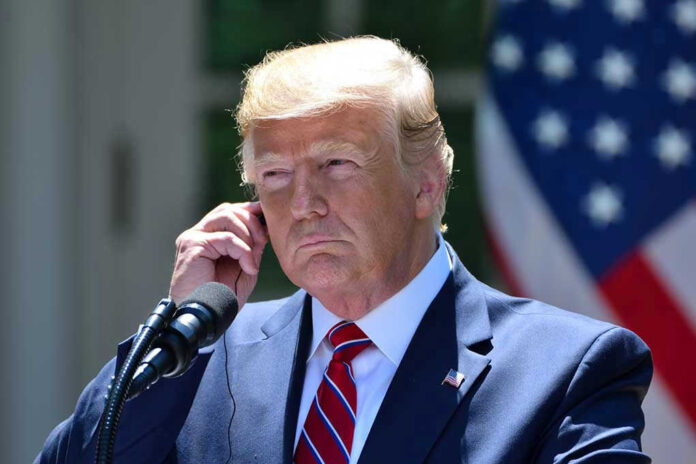
On August 19, 2025, President Donald Trump publicly assured the nation that American forces will not be sent to defend Ukraine’s borders, even after his presidency ends. Trump’s commitment, delivered in a Fox News interview, underscores a sharp departure from previous U.S. foreign policy, which often placed American servicemembers in harm’s way for distant conflicts. Instead, Trump is championing a diplomatic approach, urging direct talks between Russian President Vladimir Putin and Ukrainian President Volodymyr Zelenskyy, and making it clear that the primary responsibility for Ukraine’s security now rests with European allies.
The President’s assurance comes at a time when many Americans, particularly conservatives, are weary of endless overseas commitments that sap national strength and saddle taxpayers with burdensome costs. Trump’s diplomatic initiative aims to halt the high weekly death tolls in Ukraine, advocating for a ceasefire through negotiation rather than escalation. He insists that European governments, not the United States, must take the lead in offering NATO-like security guarantees for Ukraine—a move designed to protect American interests and prevent further erosion of national sovereignty.
European Responsibility and the End of Blank Checks
Trump’s policy signals a decisive end to the “blank check” approach of previous administrations, which often prioritized foreign entanglements over domestic priorities. By explicitly ruling out U.S. troop deployments and NATO membership for Ukraine, Trump is redirecting security obligations to Europe, whose leaders met with Trump and Zelenskyy at the White House on August 18 to discuss peace negotiations. European nations are now under pressure to provide tangible security commitments—both diplomatic and military—without relying on American might or dollars.
This new framework not only protects American troops from foreign quagmires but also reins in wasteful spending that has fueled deficits and inflation at home. Trump’s approach is a direct rebuke to the globalist agenda, restoring the principle that America’s first duty is to its own citizens, not to endless foreign interventions or “woke” internationalist schemes that have characterized recent years. The focus is squarely on negotiation, burden-sharing, and protecting constitutional limits on executive power abroad.
Challenges for Ukraine and Europe: Security Without U.S. Troops
While Trump’s strategy is a victory for those who oppose reckless military interventions, it raises urgent questions for Ukraine and European leaders. Without a U.S. military guarantee or NATO membership, Ukraine’s security will depend on the credibility and resolve of European nations to honor new commitments. The risk remains that non-binding assurances—similar to the failed Budapest Memorandum of 1994—could leave Ukraine exposed to further aggression. Experts note that the success of these arrangements hinges on Europe’s willingness to take real responsibility, both diplomatically and militarily, even as the U.S. steps back from a direct combat role.
Diplomatic negotiations are ongoing, with no formal peace agreement yet in place. Trump’s call for a direct Putin-Zelenskyy summit, followed by trilateral talks, aims to break the deadlock. However, some ambiguity remains about the specifics of security guarantees and the possibility of territorial concessions. European leaders face heightened security and financial burdens, as the U.S. no longer serves as the ultimate backstop. The future of Ukraine’s sovereignty and the stability of the region will largely depend on whether Europe can fill the gap left by America’s strategic withdrawal.
For American conservatives, Trump’s stance is a restoration of common-sense foreign policy—one that rejects the failed interventions, runaway spending, and globalist overreach of the past. The new doctrine returns power to the American people, prioritizes constitutional values, and demands that allies shoulder their fair share. As the nation watches these historic negotiations unfold, the core promise is clear: American blood and treasure will no longer be sacrificed for wars that do not serve U.S. interests. Instead, the focus returns to defending the homeland, securing the border, and upholding the rights and values that make this nation exceptional.
Sources:
Trump offers ‘assurance’ of no US troops in Ukraine, believes Putin-Zelenskyy meeting will happen
Major Takeaways: Trump’s Meeting With Zelenskyy and European Leaders
Trump: No Troops for Ukraine, Security Deal Instead
Trump says US troops won’t be sent to Ukraine following meeting with Zelenskyy
Trump, Zelenskyy, World Leaders Meet at White House to Negotiate Peace Deal