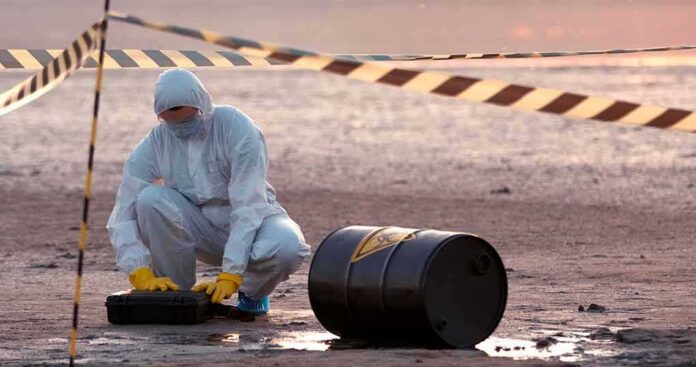
impactheadlines.com — A damaged Southern California chemical tank forced 50,000 people from their homes, raising hard questions about safety, government oversight, and how long families are expected to live with bags by the door.
Story Snapshot
- About 50,000 Orange County residents were ordered to evacuate as a pressurized tank of toxic chemicals in Garden Grove overheated and began venting vapors.
- Officials warned the tank, holding roughly 7,000 gallons of methyl methacrylate, would either leak or explode, describing the situation as “not precautionary” and “going to fail.”[2][4]
- Governor Gavin Newsom declared a state of emergency while residents spent Memorial Day weekend in shelters, hotels, and with relatives, with no clear return timeline.[1][2][3]
- Air monitoring showed pollution levels outside the immediate zone within normal limits, fueling frustration over risk, response, and years of poor regulation.[1][2]
How a Single Tank Emptied Neighborhoods Across Orange County
Authorities in Garden Grove, California, ordered mass evacuations after a pressurized industrial tank overheated, vented vapors, and was labeled at risk of catastrophic failure.[1][3][4] The tank, located at an aerospace manufacturing site, holds an estimated 7,000 gallons of methyl methacrylate, a volatile chemical used in plastics production that can irritate lungs, skin, and eyes on exposure.[2][3] Officials said the damaged valve left them unable to properly control temperature and pressure, forcing them to plan for failure rather than hope for stability.[2][4]
Evacuation orders expanded quickly from Garden Grove into parts of Anaheim, Cypress, Stanton, Buena Park, and Westminster, ultimately sweeping in about 50,000 residents with no firm timeline for return.[1][2] Families who had just endured years of inflation, high housing costs, and past lockdowns now found themselves spending Memorial Day weekend in shelters, hotels, and crowded relatives’ homes.[1][2] Officials stressed they were acting to prevent mass casualties if the tank ruptured, while residents grappled with yet another disruption they did not cause.[1][2]
Officials Say “Not Precautionary” as Crews Race to Prevent Leak or Explosion
Orange County fire commanders described the tank as extremely volatile, saying this emergency was “not precautionary” and that the tank “is going to fail,” though they could not predict when.[2][4] Methyl methacrylate is most stable at about 50 degrees, but officials reported internal temperatures near 90 degrees and rising, despite firefighters drenching the exterior with water to cool the contents.[2] Incident leaders warned that if the tank failed, it would either crack and spill thousands of gallons or trigger a potentially massive explosion.[2][3][4]
Emergency teams deployed specialized monitoring equipment and arrays of stationary air sensors around the evacuation perimeter, searching for signs of toxic gas release.[1][2] State and federal environmental officials said readings outside the immediate danger zone remained within normal limits, suggesting no wide airborne plume had formed.[1][2] Health authorities still urged residents inside the zone to leave, noting that methyl methacrylate exposure can cause dizziness, nausea, and significant lung and nasal irritation.[2] The message was clear: better to relocate temporarily than gamble on a sudden blast.[2][4]
State of Emergency, Corporate Scrutiny, and Residents Caught in the Middle
California Governor Gavin Newsom declared a state of emergency for Orange County, emphasizing that public safety was the top priority as local crews worked around the clock to stabilize the tank.[1][2][3] The declaration opened the door to more state resources while also spotlighting the company that owns the facility, identified in some reports as part of the aerospace sector and already facing tough questions about how a critical valve failed in the first place.[1][4] Lawsuits have been filed as attorneys probe whether chemical storage, maintenance, and risk planning met basic standards.[1][4]
Mandatory evacuation orders were issued for nearly 50,000 residents in Orange County, California, after authorities were alerted of a chemical leak from a failing tank at GKN Aerospace.
CBS News' @LanaZak spoke with residents of the area who described feeling "stuck" and not… pic.twitter.com/kGWNzVGFqw
— CBS News (@CBSNews) May 25, 2026
Residents expressed anger that air tests outside the zone showed normal pollution levels while entire neighborhoods remained sealed off with no clear guidance on when life would resume.[1][2] Many families felt whiplash after being told the incident could become one of the worst chemical disasters in state history, even as officials acknowledged they did not yet know the exact ignition point of the tank’s contents.[2][3][4] The pattern looked familiar: years of lax oversight and complex industrial sites, followed by sudden emergency orders that land hardest on ordinary homeowners and working families.[1][2][4]
Sources:
[1] YouTube – Chemical Tank at Risk of Exploding as 40,000 Residents Evacuate
[2] Web – List of evacuation shelters for OC chemical tank emergency – ABC7
[3] YouTube – State of emergency declared over southern California chemical …
[4] Web – Orange County Chemical Tank Emergency Raises Toxic Exposure …
© impactheadlines.com 2026. All rights reserved.