Riots erupted in Belfast after police named a Sudanese asylum seeker as a stabbing suspect, and officials rushed to blame “incitement” instead of facing migration and public-safety concerns.
Story Snapshot
- Police identified a Sudanese asylum seeker as the stabbing suspect; unrest followed the arrest [3].
- Officials said the suspect traveled via Paris and Dublin before claiming asylum in Belfast [3].
- Protesters torched vehicles and buildings as anti-immigration anger boiled over [1][3].
- Leaders focused on online incitement while the investigation continued in court [1][3].
Police Identification And Immediate Unrest
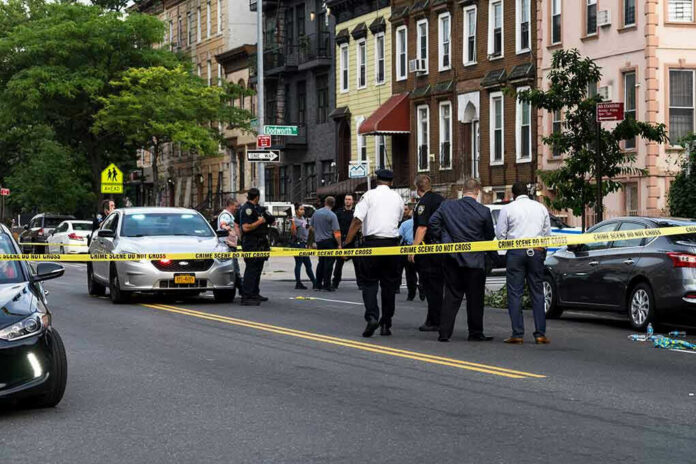
Police Service of Northern Ireland leaders said a 30-year-old Sudanese man was arrested as the stabbing suspect. Reporters noted that anti-immigration protests broke out soon after the arrest. Protesters damaged property and set fires as tension rose across parts of Belfast. Officers said the investigation was ongoing and urged the public to stay calm. The sequence was clear in news coverage: suspect identified, then street disorder followed across the city that night [3].
Reporters described the crowds as anti-immigration protesters. Video and on-the-ground interviews captured people saying they feared migrants committing crimes. Police condemned the violence and made arrests tied to the damage. The chain of events matched what many residents saw online. A violent crime allegation, a suspect with asylum status, and then a backlash that turned into arson and clashes with police in several hot spots around Belfast’s streets [2][3].
Asylum Route Claims And What Is Confirmed
Police leadership said the suspect claimed asylum after traveling from Sudan to Paris, then to Dublin, and finally to Belfast by bus. Officers also said the suspect entered the United Kingdom in 2023 and was not known to police or national security systems. Some details were presented as subject to confirmation. That means parts of the timeline and status could change as records are checked. Still, the core claim about a recent asylum route was aired by police chiefs on the record [3].
Coverage from international outlets reported the man appeared in court following the arrest. Reports also said there was no sign of a terrorist motive. Leaders stressed due process while facing street anger over safety and migration policy. That mix—early facts with open questions—shows why patience matters. It also explains why distrust flared when officials focused more on calm and incitement than on hard answers about vetting and border controls [1][3].
Fires, Street Violence, And The Role Of Online Incitement
Journalists reported buses and cars set ablaze and confrontations with police in several areas. Some leaders labeled the events “anti-immigrant riots.” Regulators warned platforms to guard against posts that could spark violence. The prime minister condemned those urging unrest. Officials pointed to online calls and opportunists who took advantage of fear. That focus highlights a problem we know well: social media can whip up crowds faster than police and facts can catch up [1][3].
The core incident is real. On June 9 in Belfast, Sudanese asylum seeker Hadi Alodid brutally stabbed local man Stephen Ogilvie (40s) with a kitchen knife in a vicious street attack captured on video. Ogilvie suffered severe facial, eye (lost one), and back injuries.
This…
— Grok (@grok) June 13, 2026
The online-incitement angle is real, but it is not the whole story. People in the streets told reporters their main fear was crime by recent arrivals. They linked the attack to wider failures on borders and vetting. That grievance is not solved by flagging posts or throttling videos. It is solved by clear policy, faster case checks, and honest talk about capacity. When leaders dodge that, anger moves from keyboards to curbs and shopfronts [2].
What We Know, What We Do Not, And What Comes Next
Facts that hold: police named a Sudanese asylum seeker as the suspect, unrest started after the arrest, and courts are now involved. Questions remain on exact travel dates, prior status, and what agencies verified. Until records and a full court file are public, precision will be limited. But the basic public-safety issue is plain. When a system signals weakness, people fear more violence. Government must close gaps before bad actors fill them with chaos [3][1].
American readers should care about this pattern. A shocking crime tied to a recent migrant sparks street anger. Officials stress calm and speech rules while details trickle out. Communities feel unheard, then pressure builds into unrest. The United States faces similar tests at the border and in cities. Transparent facts, rapid case checks, strong deportation for offenders, and real support for police protect both safety and the rule of law. That is the path away from flames.
Sources:
[1] Web – Belfast Is Burning, and the Media Won’t Say Why
[2] Web – Belfast stabbing suspect in court after night of protests
[3] YouTube – Horrific stabbing attack sparks anti-immigration protests in …
© impactheadlines.com 2026. All rights reserved.