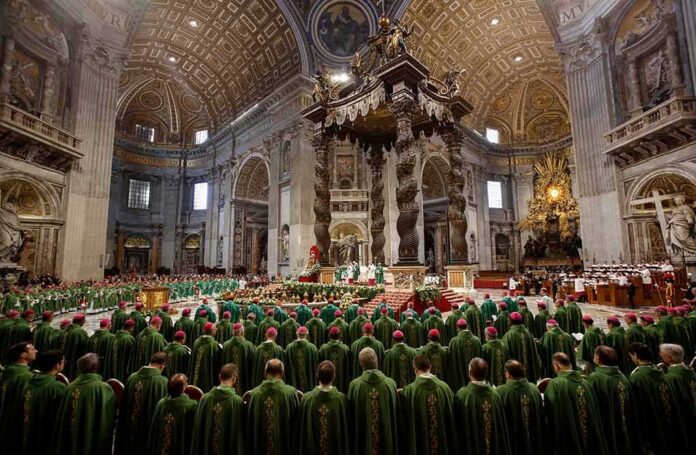
During his Paris visit, Pope Leo XIV prayed at sites tied to clergy killed in the French Revolution, spotlighting faith under fire and memory over politics.
Story Snapshot
- Pope Leo XIV prayed with clergy in Paris and planned stops at major Catholic sites.
- Notre-Dame vespers and a Lourdes pilgrimage anchored the official itinerary.
- A widely shared note described a Paris memorial to priests slain in 1792.
- The visit stressed prayer, healing, and mission more than politics.
What the Pope Did in France
Vatican outlets and major reports said Pope Leo XIV traveled to France to pray, meet leaders, and encourage the Church there. Scheduled events included a meeting with President Emmanuel Macron, an address to officials and diplomats, vespers at Notre-Dame Cathedral, and prayer at Lourdes. The trip placed prayer and pastoral care at the center. Public liturgies in Paris began on September 25, drawing clergy and lay faithful to historic churches and newly restored sacred spaces.
Coverage described the journey as a solemn church mission, not a political rally. Vatican News framed the visit around a call for “missionary conversion,” urging clergy and religious to renew service and prayer in daily life. Other outlets highlighted time with the faithful at vespers and plans for the Lourdes sanctuary, one of the most visited Catholic pilgrimage sites in the world. The stops reinforced themes of healing, repentance, and hope after years of trials for the Church.
The Paris Memorial to Slain Clergy
A widely shared post said Pope Leo XIV would visit the Carmelite church of Saint Joseph in Paris and pray at a staircase memorial to priests and religious killed in the September Massacres of 1792. The memorial sits in a place long linked to the killings. Paris heritage guides and Catholic references describe how nonjuring clergy were targeted and many were slaughtered at the former Carmes monastery, now Saint-Joseph-des-Carmes, during those days of upheaval.
Historical sources record that the September Massacres saw large-scale prison killings across Paris. Many victims were clergy who refused to swear to the Civil Constitution of the Clergy, a law that put the Church under state control. Guides note “more than one hundred” were massacred at the Carmes site, and Catholic accounts remember a large group later beatified as the Holy September Martyrs. These details explain why any papal prayer there would carry intense symbolic weight for Catholics in France.
Why This Moment Matters Beyond the Church
The Pope’s focus on prayer at sites of suffering connects past violence to present wounds. France has wrestled with faith, state power, and conscience for centuries. Praying at Notre-Dame and at a memorial tied to the 1792 killings links memory, national identity, and the right to worship. Reports emphasized that Leo XIV’s France trip centered on listening, prayer, and a call to moral renewal, not public grandstanding or partisanship.
How Will Seb Gorka Juggle Peddling Fish Oil With His New Government Job?
By Greg Walters
July 14, 2020, 6:18pm
WASHINGTON — Should American academia be churning out an army of miniature Seb Gorkas?Presumably, Gorka would think so. Now, the former advisor to President Trump…
— Billy Dunn (@DunnBilly87734) September 24, 2026
For many Americans, this story resonates with deeper concerns about elites, power, and forgotten communities. Remembering murdered clergy underscores how fast basic rights can erode when the state treats conscience as a threat. The Pope’s schedule highlighted prayer with survivors and the faithful, and a pilgrimage to Lourdes known for healing. In an age of mistrust, the act of public prayer at places of loss offers a quiet, shared language: honor the dead, protect the living, and keep faith and freedom linked.
Sources:
youtube.com, vaticannews.va, x.com, apnews.com, gcatholic.org, lourdes-france.com, newsnow.com, ewtnnews.com, france24.com
© impactheadlines.com 2026. All rights reserved.