When a business jet falls from cruise altitude and disintegrates in a neighborhood, the most useful clarity comes from separating what is firmly established from what will take months to resolve: the facts of the crash are settled; the reasons await the National Transportation Safety Board’s process.
The Short Version
- A Learjet 60, tail number N722BD, crashed at about 12:50 p.m. near Greenacres in Palm Beach County, killing all nine on board.
- The jet departed Austin-Bergstrom International Airport and was bound for the Bahamas when it went down in a residential/mobile-home area, igniting a major fire.
- The NTSB is leading the investigation with FAA support; no cause has been determined.
- Early reports describe a violent impact, scattered debris, and significant local disruption, but complete ground-damage tallies were not yet available.
What Happened: The Established Facts
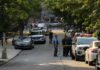
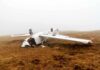
Federal authorities reported that a Learjet 60 crashed near Military Trail and 10th Avenue North, in the Greenacres/Cresthaven area of Palm Beach County, at approximately 12:50 p.m. on November 1, 2026. Multiple outlets, citing federal sources, identified the aircraft as N722BD and confirmed that all nine people aboard were killed; there were no survivors. The aircraft had departed Austin-Bergstrom International Airport and was reported en route to North Eleuthera in the Bahamas when it went down. The impact into a residential or mobile-home area produced a large post-crash fire and scattered debris visible across the neighborhood.
Officials closed nearby roads and warned residents to avoid the scene as firefighting and law enforcement operations unfolded. As is standard in major aviation accidents, the National Transportation Safety Board assumed lead investigative authority, with the Federal Aviation Administration in support. At this stage, investigators had not released a cause; they typically do not offer one until long after initial field work concludes and data is analyzed.
The Aircraft and Operating Profile
The Learjet 60 is a midsize, twin-engine business jet designed for high-subsonic cruise at altitudes typically in the mid-30s to low-40s thousands of feet. Configured for private or charter operations, it often carries executives or families to vacation destinations—precisely the Austin-to-Bahamas profile reported for N722BD on the day of the accident. While the model’s performance envelope is generous, flight crews at cruise altitudes must manage weather, including convective activity and icing at high flight levels, and maintain strict energy control during any turbulence or descent. Reports from the scene and contemporaneous coverage consistently emphasized the violent final moments and the intensity of the post-impact fire, a predictable outcome when a jet carrying significant fuel crashes in a densely built area.
The early public record did not include confirmed crew identities, passenger list, operator of record, or detailed maintenance and operational history for N722BD; that information typically appears after next-of-kin notifications and initial records collection. Similarly, authorities did not release a consolidated accounting of ground injuries or property damage in the first wave of reporting, although the visual evidence of fire and debris made clear the neighborhood suffered significant disruption.
How the Investigation Will Proceed
In U.S. civil aviation accidents, the NTSB leads a methodical, multi-phase inquiry. The preliminary report, generally published within weeks, is limited to early factual information gathered on scene and from initial records; it does not offer analysis or a probable cause. The full investigation—collection of operational documents, maintenance logs, meteorological data, radar and ATC communications, performance analysis, and if available, flight data and cockpit voice recorders—culminates months later in a factual docket and, eventually, a probable-cause determination. General aviation and business jet accidents often require 12 to 24 months to complete, and sometimes longer, depending on complexity.
For this crash, expect investigators to reconstruct the flight path from radar and ADS-B data, authenticate air traffic control audio, recover any onboard recorders if installed, and build a granular timeline of the jet’s energy state—altitude, speed, bank angle, vertical rate—versus the environmental conditions encountered. They will examine airframe and engine components for pre-impact anomalies, review the aircraft’s maintenance and inspection records, verify the flight crew’s qualifications and fitness for duty, and evaluate dispatch, fueling, and weight-and-balance planning. Meteorologists supporting the investigation will model upper-air conditions, turbulence potential, supercooled liquid water content, and icing severity along the route and at the altitudes actually flown.
What Early Reporting Can and Cannot Tell You
In the hours after a major crash, two categories of information tend to be reliable: what, where, when, and who—the occurrence facts; and which authorities are in charge—the procedural facts. Those are clear here: Learjet 60 N722BD, nine fatalities, crash near Greenacres/Cresthaven at about 12:50 p.m., NTSB in the lead with FAA support. What early reporting cannot settle is why; it is routine, not exceptional, that cause remains unknown until investigators have analyzed physical evidence, operational records, and performance data. The NTSB explicitly cautions that preliminary material is not a proxy for probable cause and should not be treated as such.
This discipline matters for readers and residents alike. A spectacular fireball tempts speculation—structural failure, severe icing, loss of control, pilot incapacitation—but aviation safety advances because cause is proven, not inferred. The Board’s docketing system eventually makes much of the underlying evidence public, allowing independent scrutiny and durable lessons to be drawn from tragedy.
The National Transportation Safety Board is investigating a private Learjet crash that killed all nine people on board in Florida's Palm Beach County.
About 600 people were being evacuated to two shelters after the jet came down beside a road near a mobile home park entrance.… pic.twitter.com/USXSsxnShH
— Thenationthailand (@Thenationth) November 2, 2026
Why Location and Weather Details Matter but Do Not Decide the Case
Geographic labels in early reports—Greenacres, Palm Springs, Cresthaven, unincorporated Palm Beach County—describe the same general crash area. The core fact pattern remains unaffected by such nomenclature drift; investigators will map the wreckage distribution precisely and document impact forces and trajectory. Weather, likewise, is a legitimate line of inquiry given the altitude and route profile; any role for icing, turbulence, or precipitation will be established through data, not conjecture. The result is that lay observations—smoke plumes, downed lines, rain on camera lenses—are useful color but not causal evidence.
What to Watch For Next
The first durable milestone is the NTSB preliminary report, which should codify the timeline, aircraft identification, route of flight, basic meteorology, witness statements, and high-level wreckage observations. Later, the public docket will add technical depth: ATC transcripts, performance reconstructions, component examinations, and, if recovered, recorder downloads. Only then will the Board issue a probable-cause statement, often paired with safety recommendations intended to prevent recurrence. Until those documents arrive, the responsible conclusion remains the simplest one supported by the record: a Learjet 60 crashed into a Palm Beach County neighborhood, all nine aboard were killed, and federal investigators are doing the painstaking work required to determine why.
Sources:
facebook.com, floridatoday.com, bloomberg.com, usatoday.com, nbcdfw.com, abc7.com, ntsb.gov, asip.faa.gov, data.ntsb.gov
© impactheadlines.com 2026. All rights reserved.