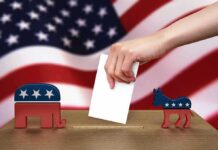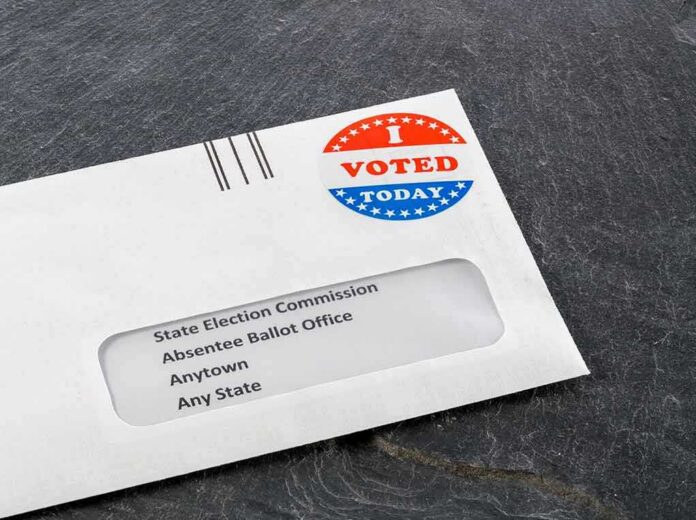
The United States’ overseas voting rules are built around citizenship, not job titles — which is why a U.S. citizen who also happens to be the sovereign of the Holy See cast a lawful absentee ballot from abroad.
The Short Version
- Pope Leo XIV, a U.S. citizen, submitted a mail-in ballot in Illinois; the Holy See confirmed he voted as an American voter living overseas.
- Federal law extends absentee voting to U.S. citizens abroad, including those employed by foreign governments, a category that covers unusual cases as a matter of design.
- Reporting identified his Illinois registration and an absentee request through the Will County clerk, grounding the event in standard administrative process.
- The legal framework prioritizes citizenship and voting residence; symbolism about a pope’s neutrality is a separate, non-legal debate.
What happened: a U.S. citizen pope followed the ordinary overseas-voting pathway
The Holy See Press Office stated that Pope Leo XIV “has exercised his right to vote as a United States citizen, whenever he was eligible to do so,” and confirmed that, consistent with past practice, he submitted a mail-in ballot in Chicago during the midterm cycle. Vatican News, relaying the statement, presented this as routine civic participation for an American living abroad. Independent reporting filled in the administrative picture: Chicago-area coverage and summaries by national outlets reported that Leo, identified under his civil name and local registration, requested an absentee ballot via the Will County clerk earlier that month, using a New Lenox voting residence — the same inputs any overseas voter supplies to obtain a federal ballot.
That combination — a public acknowledgment from the Vatican that a ballot was actually submitted, plus local election-process details — moves the matter out of the realm of symbolism and into the mechanics of U.S. absentee voting. Within that system, the relevant questions are all familiar: citizenship, age, voting residence, and timely, properly executed forms and returns. Occupation is not on the checklist.
The legal frame: UOCAVA centers citizenship and voting residence, not employment
Since 1986, the Uniformed and Overseas Citizens Absentee Voting Act (UOCAVA) has guaranteed a federal absentee-voting pathway to two broad groups: uniformed service members and their families, and U.S. citizens residing outside the United States. Federal guidance repeatedly stresses the universality of that entitlement — most citizens abroad age 18 or older may vote in federal elections, by absentee, through their last or declared voting residence — and operationalizes it with standardized forms like the Federal Post Card Application (FPCA) and the Federal Write-In Absentee Ballot (FWAB).
Crucially, UOCAVA and its implementing guidance do not carve out an exception for Americans who work for a foreign government. In fact, federal summaries state explicitly that citizens living overseas, even those employed by foreign governments, fall within the law’s coverage; in contemporary reporting on Leo’s ballot, that point was stated plainly alongside his dual U.S.-Peruvian citizenship and role as head of state of the Holy See. The architecture is intentional: federal law defines eligibility by citizenship and residence linkage, because those attributes are administrable by local election officials, whereas occupation would be a moving target, difficult to verify and irrelevant to the constitutional franchise.
How it works in practice: the same forms, the same checks
For an overseas citizen voter, the process is prosaic. You establish or confirm your voting residence — the address that anchors you to a particular local jurisdiction — and you request a ballot from that office, usually via the FPCA. The local jurisdiction verifies your registration status, issues the ballot, and upon return, applies the same acceptance checks it would for any absentee: deadlines, signature verification, and any state-specific certificates or witness requirements. The Federal Voting Assistance Program’s materials for voters and election officials walk through these steps, emphasizing standardized forms and timelines designed to minimize ambiguity across fifty state systems.
In Leo’s case, the Chicago-area reporting described exactly that cadence: a request through the Will County clerk from a New Lenox voting residence, and the Vatican’s statement that a completed ballot was submitted — details that map onto the ordinary overseas voter workflow. The novelty is not the mechanism; it is the profile of the voter using it.
Citizenship versus symbolism: two different conversations
The public reaction blended two threads that should be kept analytically distinct. One is legal eligibility under U.S. election law. On that axis, the governing framework is clear: U.S. citizens abroad, including those working for foreign governments, may vote in federal elections by absentee. No cited authority in the current record suggests a head-of-state exception to UOCAVA’s coverage; the law’s structure and federal practice run the other way, treating occupation as immaterial to the right to receive and return a federal ballot.
The other thread is the prudential or ecclesiological question: should a pope vote in a secular election, given the papacy’s pastoral mission and the Holy See’s diplomatic posture of neutrality? Commentary and broadcast segments registered concern that visible participation could tether the papal office to a national political contest; others argued that modeling civic duty is consonant with Catholic social teaching on responsible citizenship. Those judgments are about optics and institutional identity, not about the legal rules that governed the envelope that left Rome and arrived in Will County.
Why U.S. law lands where it does
American election law grew up around the citizen as the bearer of political rights; the uniform application of UOCAVA is a late-20th-century codification of that view for a more mobile world. Instead of parsing employment affiliations or diplomatic statuses — categories that would require stateside election offices to adjudicate foreign legal relationships — Congress chose administrable criteria. If you are a U.S. citizen, of age, tied to a voting residence, and you meet the procedural requirements, you vote for federal offices. That clarity is why the system scales to millions of Americans living overseas, from Peace Corps alumni to multinational executives to, in rare edge cases, dual nationals serving in foreign cabinets or, here, a sovereign who once registered at a suburban Illinois address.
There is a parallel channel for any collateral implications of foreign officeholding: nationality law and diplomacy. As the Associated Press has reported, the State Department may review the citizenship status of Americans who serve as a foreign head of state, head of government, or foreign minister — a separate legal regime with its own standards about potential expatriating acts and intent, which does not run through county election offices or the absentee-ballot pipeline. That compartmentalization is deliberate. It keeps election administrators focused on election law, and nationality lawyers focused on nationality law.
That fact is that the @FBI should be examining this move because Illinois election officials certainly won’t.
Robert Prevost is not eligible to vote in the United States.
Why? Because a pope ordinarily holds office for life. Leo XIV is not a missionary temporarily assigned to…
— Mia Sardinella (@MiaSardinella) November 1, 2026
What this means going forward
This episode will be remembered because a pope did something no pope had done before in a U.S. election. Its policy significance, however, is quieter: it demonstrates that the overseas voting framework functions as a status-neutral instrument. When the categories are clear — citizenship and residence — even a hard case is not hard to administer. If lawmakers ever wish to rewrite that premise, they would need to articulate a principled, administrable exception for classes of employment abroad. To date, they have not, and for good reason: exceptions multiply edge cases and invite unequal treatment.
The more durable takeaway is that U.S. election law answered a seemingly exotic question with an ordinary form. Pope or pastry chef, if you are an American living overseas, the same rules apply — and the system is built to keep it that way.
Sources:
zerohedge.com, sun-sentinel.com, pbs.org, people.com, jonathanturley.org, phuulishfellow.wordpress.com, todayville.com, apnews.com, bbc.com, firstpost.com, dw.com, cnn.com, aol.co.uk, inquirer.com, fvap.gov
© impactheadlines.com 2026. All rights reserved.