Christa Pike’s “recovery” began with a heartbeat, a microphone cut mid-snore, and two lethal doses that did not do their job.
Story Snapshot
- Attorneys said Pike remained alive and audibly snoring after two lethal injections.
- Court filings describe swollen, burned, and blistered arms after the attempt.
- Officials said protocol was followed but offered no explanation for the failure.
- Lawyers asked a court to preserve evidence from the chamber and hospital.
The execution that did not end a life
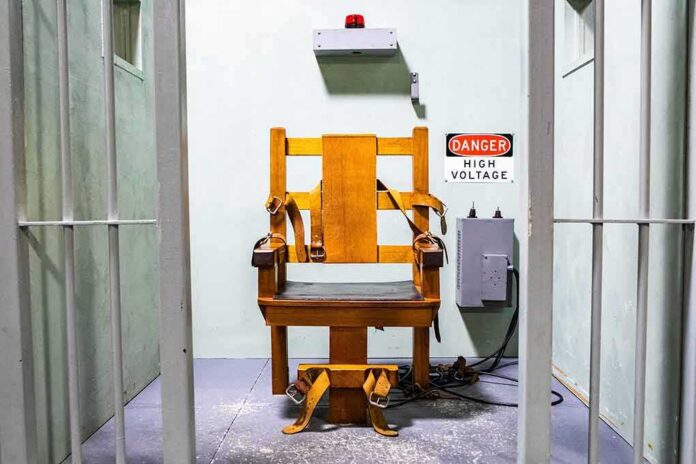
Witnesses heard Christa Pike snoring for nearly an hour after two doses of pentobarbital, a drug that usually ends breathing within minutes, according to reporting and court filings. Journalists and observers also described Pike saying her arm felt like it was about to burst, then louder breathing, and more snoring as officials drew the curtain and later cut the chamber microphone. Her attorneys alleged in an emergency motion that she still had a heartbeat and had not lost consciousness when they ran to court.
After the attempt, attorneys said Pike was intubated, on a ventilator, and unconscious at a hospital. A later filing said both arms were swollen, burned, and blistered, which is consistent with drugs leaking outside a vein during injection rather than flowing into the bloodstream. That theory matches what outside experts told reporters: a misplaced intravenous line or ruptured vein can send pentobarbital into tissue, causing pain while failing to kill as intended.
What the state said, and what it did not
The Tennessee Department of Correction stated it followed every step of the approved execution protocol and transported Pike to an off-site medical facility. The department also said the chemical used has been consistently effective, but it did not explain why two doses did not end Pike’s life in this case. That is not a denial of the reported snoring, injuries, or hospital ventilation. It is a narrow claim of protocol compliance, which answers process but not outcome, and it leaves crucial gaps about who placed the lines and how they verified flow.
The contrast is stark. On one side, filings and witness accounts describe an inmate breathing, speaking, then snoring, with visible arm damage. On the other, the department asserts adherence to rules without details about the execution team, insertion attempts, or any decision points. For readers who value accountability and limited government, this is the core problem: when the state uses its most awesome power, it must show the work. Silence invites doubt, not trust.
Why her “recovery” raises new questions
Attorneys sought a court order to preserve all evidence: syringes, tubing, drug vials, and records from the chamber and hospital, so independent experts can test where the drug went and how much entered blood versus tissue. That is common sense. Chain-of-custody, timing sheets, and intravenous placement notes would show whether the team confirmed venous access or missed a warning sign. If the protocol worked, the records should prove it. If it failed, the same records will show where and why.
This case also fits a wider pattern. Lethal injection has the highest botch rate among execution methods in modern data, with scholars and advocates citing error-prone line placement, secrecy, and drug sourcing problems. Analyses place lethal injection botches around seven percent across certain periods, with researchers also pointing to autopsy signs of distress in many cases. Pike’s case does not prove every critique, but it echoes them enough to merit independent scrutiny, not a closed file.
The narrow path forward that respects justice and the law
Victims deserve justice that is firm, swift, and lawful. Taxpayers deserve a system that does what it promises without hidden errors. The next steps are not ideological; they are practical. Release the execution logs and after-action reports. Take sworn testimony from team members who placed the lines. Preserve and test the physical evidence. Publish a clear timeline that shows when drugs were pushed, what monitors showed, and why the team continued as Pike spoke about arm pain.
Christa Pike has spoken out, and her lawyers are now heading to court to demand that the State of Tennessee preserve evidence regarding her failed execution.
Having narrowly escaped death twice, does the state need to explain why the drugs failed? What does everyone think? pic.twitter.com/78zphdjIlL
— mehdi et htht (@solominto) October 7, 2026
If the state followed its rules and the science still failed, say so and show it. If the team missed basic intravenous checks, fix it in the open. Conservative values prize competence, transparency, and equal treatment under the law. That standard applies most when the government ends a life. Pike’s “recovery” is not a twist to gawk at; it is a warning flare. Until the record is opened and the evidence is tested, confidence in this process will keep bleeding out.
Sources:
bbc.com, wsmv.com, tennessean.com, en.wikipedia.org, usmagazine.com, rte.ie, yahoo.com
© impactheadlines.com 2026. All rights reserved.