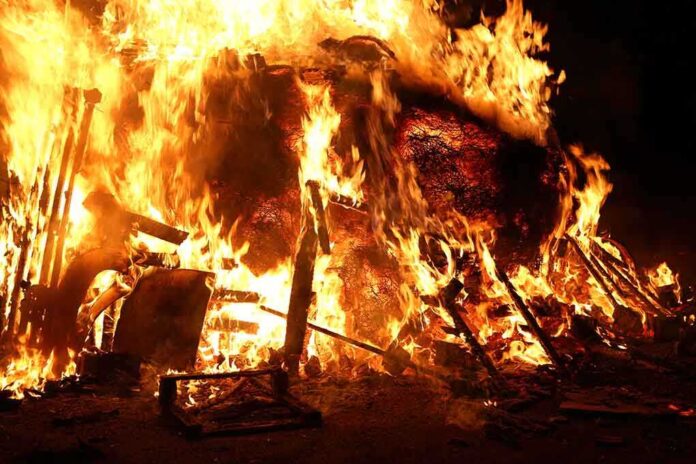
A devastating explosion at a Pennsylvania nursing home transformed a quiet December evening into a nightmare that exposed the deadly vulnerabilities lurking within America’s aging care facilities.
Story Snapshot
- Silver Lake Nursing Home explosion killed 2, injured multiple residents, with several still missing
- Building partially collapsed after initial blast triggered massive fire and secondary eruption
- Emergency crews forced to retreat from active rescue due to structural instability concerns
- Incident highlights critical safety gaps in nursing home infrastructure nationwide
Catastrophe Unfolds in Bristol Township
The Silver Lake Nursing Home in Bristol Township, Bucks County, became ground zero for tragedy when a powerful explosion rocked the facility on December 23rd evening. The blast immediately triggered fires throughout the building, trapping elderly residents who depended on staff assistance for mobility. Within 40 minutes of firefighters’ initial response, a secondary eruption sent massive flames skyward, creating a towering black smoke plume visible for miles.
Emergency responders faced an impossible choice between speed and safety as the building’s structural integrity deteriorated rapidly. The partial collapse that followed forced rescue teams to evacuate their posts, halting debris removal operations and shifting focus from active search-and-rescue to potential recovery mode. Aerial footage captured the devastating scope of destruction, with sections of the facility reduced to rubble.
Vulnerable Population Pays Ultimate Price
The timing and location of this disaster created perfect conditions for maximum casualties. Elderly nursing home residents, many with limited mobility or cognitive impairments, had little chance to escape independently when the explosion struck. The evening hour meant fewer staff members were on duty, reducing immediate response capabilities within the facility itself.
Bristol Township’s emergency services, despite their rapid response, encountered challenges typical of nursing home emergencies. These facilities house society’s most vulnerable citizens, yet often operate in aging buildings with infrastructure that predates modern safety standards. The explosion’s force suggests a catastrophic failure of building systems, likely involving gas lines or other utilities that require regular maintenance and monitoring.
Emergency Response Hampered by Safety Concerns
Fire officials made the difficult decision to prioritize rescuer safety over aggressive search efforts as the building’s structural stability continued deteriorating. This calculated approach, while professionally sound, meant potential survivors remained trapped longer while crews assessed collapse risks. The sight of idle backhoes and evacuated rescue positions painted a grim picture for families desperately seeking news of their loved ones.
Local hospitals strained to accommodate the influx of injured victims, many suffering from smoke inhalation, burns, and trauma-related injuries. The incident overwhelmed Bucks County’s emergency medical systems, demonstrating how a single catastrophic event can cascade through an entire community’s healthcare infrastructure. Multiple casualties required specialized burn treatment, adding complexity to an already challenging medical response.
Broader Implications for Nursing Home Safety
This tragedy illuminates systemic vulnerabilities within America’s long-term care industry. Nursing homes across the country operate in buildings constructed decades ago, often before current fire safety codes and building standards were established. Many facilities struggle with maintenance costs, potentially deferring critical infrastructure updates that could prevent gas leaks or electrical failures.
The Silver Lake incident will likely trigger regulatory scrutiny throughout Pennsylvania and potentially nationwide. State inspectors may mandate immediate safety assessments at similar facilities, while insurance companies could increase premiums for nursing homes with aging infrastructure. Families evaluating care options will demand transparency about facility maintenance records and emergency preparedness protocols, fundamentally altering how the industry approaches safety communications.
Sources: