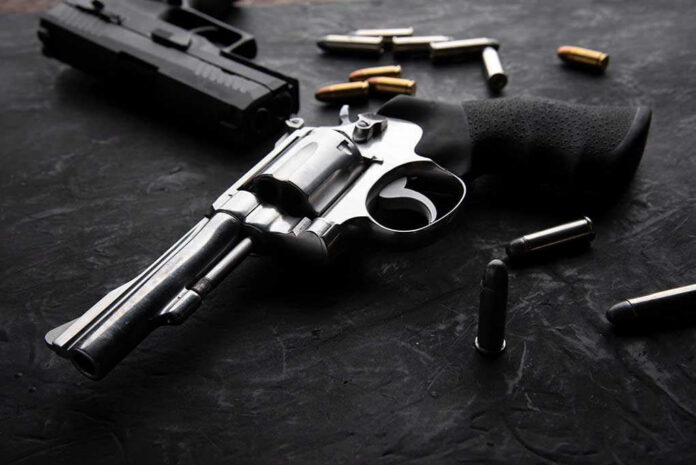
A gunman turned Austin’s West 6th Street into a killing zone—until police ended it in under a minute, even as the FBI weighs possible terrorism indicators.
Quick Take
- Two young Texans were killed and 14 others were wounded in a late-night mass shooting outside Buford’s bar on Austin’s West 6th Street.
- Austin police said officers arrived within about a minute of the first 911 call and fatally shot the suspect at the scene.
- The suspect, 53-year-old Ndiaga Diagne, was a naturalized U.S. citizen originally from Senegal; police said the firearms were legally purchased years earlier in Texas.
- The FBI joined the investigation after officials cited “indicators” that require reviewing whether the attack ties to terrorism, though no motive has been confirmed.
What happened on West 6th Street—and how fast police stopped it
Austin police said the shooting unfolded shortly before 2 a.m. Sunday, March 1, outside Buford’s bar in the city’s West 6th Street entertainment district. Investigators said the suspect drove an SUV around the block multiple times, rolled down the windows, and fired a pistol at patrons in a crowded nightlife area. Police said the suspect then parked, exited the vehicle, and continued shooting with a rifle before officers shot and killed him at the scene.
Authorities credited the rapid response with preventing even more casualties. Police and paramedics were reported to be on scene within about one minute of the first 911 call, a timeline that matters in mass-casualty incidents where seconds determine survival. Officials said two people were killed: Savitha Shan, a 21-year-old University of Texas at Austin student, and Ryder Harrington, a 19-year-old Texas Tech student. Fourteen more people were injured, including three reported in critical condition.
Victims identified, families supported, and evidence still pouring in
At a Monday afternoon news conference, officials identified the victims and described the scale of the investigation now underway. Police said they are working through more than 150 witnesses and “thousands of hours” of video evidence, including body-worn camera footage and bystander recordings from a dense bar district. Austin officials also announced a family resource center to help relatives navigate hospital updates, victim services, and law-enforcement communication as the case develops.
University communities were pulled directly into the tragedy. UT Austin leadership mourned Shan, and the violence left students and families in both Austin and Lubbock demanding answers. Police said at least one severely injured victim could soon be taken off life support, though officials cautioned that conditions can change quickly. Investigators said more information—such as elements of the suspect’s background and history—was expected in a later release, underscoring that early reporting may shift as facts are verified.
Why the FBI is involved—and what “indicators” actually means
The FBI joined the probe through the Joint Terrorism Task Force after officials said they observed “indicators” connected to the suspect and evidence recovered in the case. Reporting cited items such as attire that raised questions in the immediate aftermath, particularly given the broader international context at the time. Officials emphasized that a terrorism link was not confirmed and that investigators must establish motive through interviews, forensic work, digital evidence, and corroborated timelines before applying any label.
That caution matters because political narratives often harden faster than the facts. When authorities use careful language—such as “potential” terrorism or “indicators”—it typically signals an evidentiary threshold has not been met. From a constitutional perspective, Americans should demand due process even for the accused, while also demanding government competence: thorough vetting, clear communication, and consistent enforcement of law. The public still deserves transparency about what officials found and why federal resources were activated so quickly.
Immigration history, legal gun purchases, and the political fight that followed
Investigators said Diagne entered the United States on a tourist visa in 2000, obtained permanent residency through marriage in 2006, and became a naturalized citizen in 2013. Police also said the weapons were legally acquired years earlier in Texas, including a purchase dating to 2017 in San Antonio. Officials said they were still reviewing his criminal history and other background details, with additional information expected after investigators complete records checks and evidence review.
Predictably, the aftermath triggered competing political calls: some Democrats pointed to gun laws, while Texas Republicans focused on immigration and screening failures. The known facts so far support a narrower conclusion than either side’s talking points: the suspect obtained legal status over many years and reportedly acquired firearms legally, yet still carried out mass violence in a dense public setting. Until investigators establish motive and timeline details, proposals that assume a single “root cause” risk oversimplifying a multi-factor failure of public safety.
Sources:
https://cbsaustin.com/news/local/austin-police-to-provide-update-on-6th-street-mass-shooting