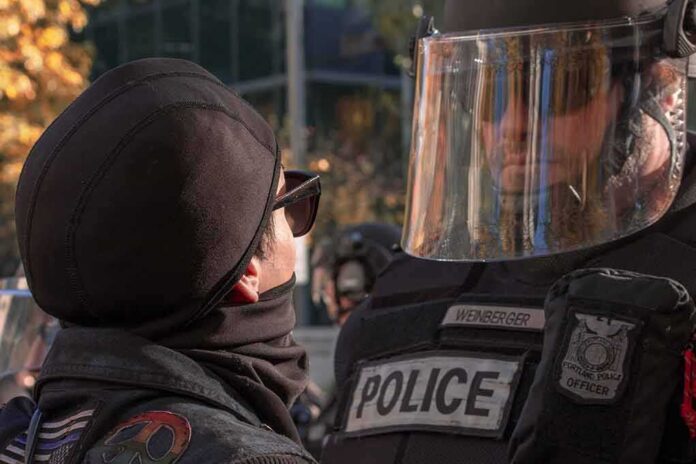
A congressional candidate was shoved to the pavement amid flying barricades and a boiling crowd, and the video turned a local clash into a national Rorschach test.
Story Snapshot
- Video shows a shove during a tense anti–Immigration and Customs Enforcement protest in New York City.
- Darializa Avila Chevalier says she tried to calm things down before an officer pushed her.
- Reports say some protesters rammed police with metal barricades as tensions spiked.
- The fight now centers on proportional force, crowd control, and political theater.
What the cameras caught and what each side says
New York congressional candidate Darializa Avila Chevalier joined a fast-growing protest after a federal immigration shooting in the Bronx. Amid the crush outside a hospital, social video captured a New York City Police Department officer pushing her to the ground. She says she was trying to de-escalate when the shove came, and that officers pushed multiple people to clear space for barricades. A separate report framed the clip simply: police knocked a politician down during the protest.
Other footage and reporting show a broader fight. Some demonstrators rammed officers with metal barricades as the line buckled and officers held their ground. The New York Post wrote that the crowd used barriers and that Avila Chevalier yelled at a supervising officer about “escalating,” while also telling some protesters to step back. The mix matters. Police will cite objects turned into battering rams as a clear threat. Activists will argue the shove was needless and reckless when aimed at a politician in close quarters.
The claim of de-escalation versus the reality of a crush
Avila Chevalier said she has been arrested at protests before but had never been thrown down. She described officers pushing people to make space and said she and others hit the ground as the line surged. A Washington Examiner summary said social video appeared to show a police officer push her during the clash. These are consistent accounts about the shove, though not about the cause. Her narrative centers on intent to calm. Police defenders focus on the crowd risk and the need to move people back.
Both can be partly true. Crowds often mix calm voices, hotheads, and split-second moves. The law does not judge intent in a vacuum. Courts often weigh whether an officer, facing a pressing threat, used force that matched the risk. A hard push can be lawful if it stops a danger and clears space. It crosses a line if aimed at someone who posed no threat and was not blocking a lawful order. That gray zone is where these battles usually live.
Why proportional force is the hinge
New York City’s police already operate under court-ordered protest reforms after past clashes. A federal judge approved a settlement that, among other changes, restricts mass kettling and sets a ladder for response to keep force measured and tied to behavior. That framework matters here. If some in the crowd used barricades as weapons, police can argue they faced an immediate hazard that justified physical pushes to restore a buffer. If the push on Avila Chevalier ignored safer options or clear warnings, critics will say it broke the spirit of those reforms.
DSA Candidate Knocked to the Ground During Heated NYPD Confrontation at Anti-ICE Protest #DarializaAvilaChevalier #DSA #NYPD #AntiICE #ICEProtest #Bronx #ZohranMamdani #NewYork https://t.co/cjhygpUtCw
— Paul Leon (@PaulLeo2020) October 11, 2026
Evidence-based models of protest policing stress communication first, distance second, and force last. Research shows dialogue and clear commands reduce panic and injury, while blunt tactics can inflame a crowd and raise legal risk. That does not erase the duty to act when officers get rammed. It does set a bar: speak, signal, and separate where possible before you shove. When video hits the internet, the public asks a simple question that also tracks the law: was that push necessary right then?
Politics, media, and the outrage machine
Outrage now spreads faster than facts. Studies show social platforms reward moral anger, which pushes people to post sharper, more polarizing takes over time. This event fit that pattern. The left rallied around a candidate thrown down by police. The right pointed to barricade attacks and told viewers the shove was crowd control, not brutality. Both camps pick their frame, then loop the same eight seconds of video until it hardens into a belief.
Common sense cuts through some of it. Officers have a duty to hold a safe line. Protesters have a right to speak, not to swing metal at cops. The video shows a shove; the record shows a chaotic scene; the arguments split on what came a second before. Until the department releases a full after-action review, the cleanest test is the one most Americans use: if you bring a barrier into a police line, expect a hard push; if an officer sees a nonviolent person at arm’s length, use a voice and a warning before force. That is how you keep free speech, order, and everyone’s bones intact.
Sources:
thegatewaypundit.com, cnn.com, edition.cnn.com, transcripts.cnn.com, newsbreak.com, washingtonexaminer.com, tandfonline.com
© impactheadlines.com 2026. All rights reserved.