A deadly mosque explosion in Nigeria is a grim reminder that radical Islamist terror is still alive and spreading, even as Western elites pretend the threat has faded.
Story Snapshot
- A suspected suicide bomber killed at least five worshippers and injured dozens more inside a Nigerian mosque during evening prayers.
- The attack occurred in Maiduguri, a city long targeted by Islamist extremists tied to Boko Haram and ISIS offshoots.
- The bombing underscores how weak borders, failed governments, and globalist distractions fuel terrorism abroad.
- The ongoing jihadist violence overseas highlights why strong borders, clear priorities, and constitutional security at home matter.
Deadly Attack During Evening Prayers in Maiduguri
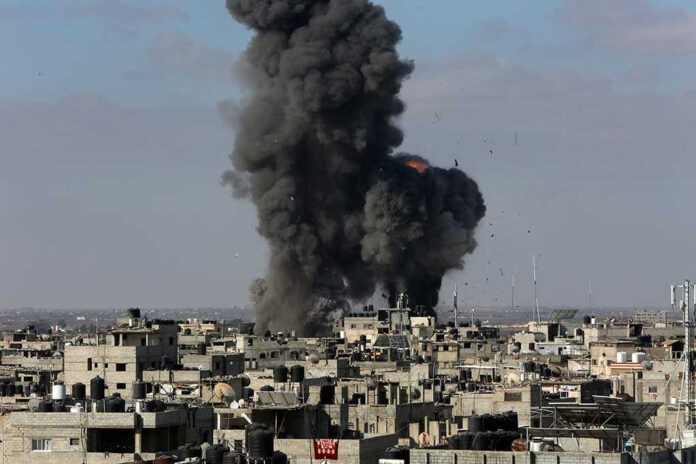
At least five worshippers were killed and thirty-five others injured when a suspected suicide bomber detonated an explosive device inside a mosque during evening prayers in Maiduguri, the capital of Nigeria’s Borno state. Local officials reported that the blast occurred while the congregation was assembled, maximizing casualties and spreading panic throughout the neighborhood. Emergency services rushed the wounded to nearby hospitals as security forces cordoned off the scene and began investigating how the attacker reached the crowded mosque.
Maiduguri has endured years of violence linked to Boko Haram and splinter groups that pledged allegiance to the Islamic State, turning this once-quiet regional hub into a front line against radical Islamist terrorism. Residents describe living under a constant shadow of fear, with public gatherings, markets, and houses of worship repeatedly targeted. Each new bombing deepens the trauma for families who have already lost loved ones, while exposing the Nigerian government’s ongoing struggle to protect its citizens from persistent extremist networks.
Radical Islamist Terror and the Global Security Picture
The suspected suicide bombing fits a familiar pattern used by jihadist organizations across Africa and the Middle East, where crowded religious sites are exploited to inflict maximum suffering and send a chilling message to communities of faith. Nigerian security sources have long warned that porous borders, corruption, and under-resourced local forces allow these militants to move, recruit, and resupply. The attack in Maiduguri reinforces warnings that when national governments fail to secure territory, extremist groups quickly fill the vacuum with violence and intimidation.
For Americans watching from afar, this tragedy is not just a distant regional story but part of a broader map of global instability that can spill across borders. When radical Islamist ideologies flourish in weak states, they often develop training havens, smuggling routes, and propaganda pipelines that eventually reach Western audiences online. That reality underscores why strong border enforcement, rigorous vetting, and clear counterterrorism priorities remain essential. Ignoring these warning signs or downplaying the ideology behind such attacks invites future dangers for free societies that value religious liberty and rule of law.
Why Constitutional Security and Strong Borders Matter at Home
Events like the Maiduguri bombing highlight the stark difference between nations that control their borders and confront terrorism directly, and those that drift under globalist pressure toward open-ended migration and weak enforcement. When foreign extremists exploit unguarded routes or failing states, the chain of risk does not stop at regional lines on a map. Americans who care about their families’ safety, their churches, and their communities recognize that protecting the homeland begins with knowing who enters, enforcing immigration law, and refusing to tolerate terrorist safe havens anywhere.
Under a security-first approach, defending American sovereignty and the Constitution requires both vigilance abroad and firmness at home. That means backing policies that prioritize strong intelligence sharing, clearly defined enemies, and the unapologetic defense of national borders against cartels, traffickers, and potential terror operatives. The Nigerian mosque attack is a stark illustration of what happens when extremists are allowed to organize and strike soft civilian targets, reminding American readers why second chances for open-border experiments are a luxury a serious nation cannot afford.
Respect for Faith, Families, and the Fight Against Extremism
For believers gathering in that Maiduguri mosque, the evening prayer was meant to be a moment of peace, not a death sentence delivered by a suicide bomber. Their suffering resonates with faith communities worldwide that simply want to worship without fear of reprisal or political violence. When radicals target houses of worship, they are not only attacking individuals; they are striking at the heart of family life, moral teaching, and the freedom to live according to one’s conscience under God rather than under terror.
Americans who value religious liberty and family-centered communities can look at this tragedy and see a powerful warning: when governments minimize threats, tolerate lawlessness, or sacrifice security on the altar of ideology, ordinary worshippers pay the price. Standing firmly against radical Islamist terror overseas and insisting on strong, constitutional security at home are two sides of the same struggle. The victims in Nigeria deserve more than passing headlines; they deserve policies, abroad and at home, that take evil seriously and protect the innocent.