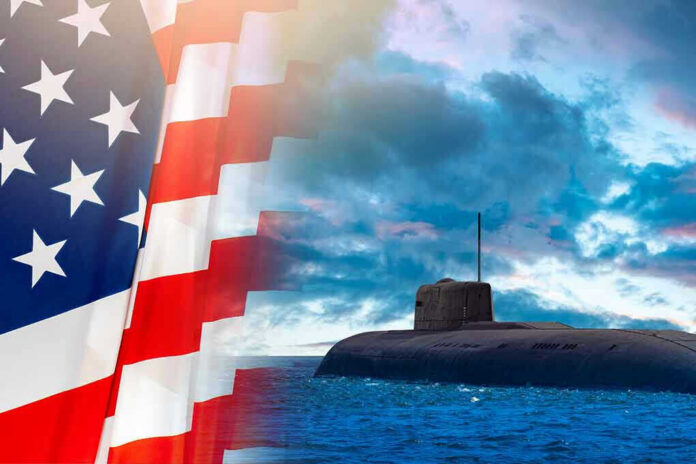
A U.S. Navy nuclear attack submarine achieved what hasn’t been done since World War II—sinking an enemy warship with a torpedo strike—sending Iran’s newest frigate to the ocean floor in what Defense Secretary Pete Hegseth called a “quiet death.”
Story Snapshot
- U.S. submarine fired single Mark 48 torpedo at Iranian frigate IRIS Dena in international waters off Sri Lanka, marking first American submarine torpedo sinking since WWII
- Strike killed between 80-101 Iranian sailors aboard the Moudge-class frigate, one of Iran’s most advanced warships equipped with missiles, torpedoes, and heavy guns
- Attack occurred on fifth day of Operation Epic Fury, with U.S. claiming 17 Iranian vessels destroyed as CENTCOM aims to neutralize entire Iranian navy
- Trump administration escalates military action against Iran following joint U.S.-Israel strikes on Iranian ballistic missiles and leadership earlier in the week
Precision Strike Demonstrates American Naval Superiority
Late Tuesday evening, March 3, 2026, a U.S. Navy nuclear attack submarine fired a single Mark 48 torpedo at the Iranian frigate IRIS Dena approximately 44 nautical miles off Galle, Sri Lanka, in international waters. The precision strike penetrated the vessel’s midsection, triggering a distress call at 5:08 a.m. local time Wednesday as the ship began sinking. Within one hour, Sri Lankan naval vessels arrived to find oil patches, life rafts, and desperate survivors. This represents the first confirmed U.S. submarine torpedo sinking of an enemy vessel since World War II, showcasing American technological dominance that Iran’s regime clearly underestimated.
Iranian Warship Carries Heavy Casualties
The IRIS Dena carried approximately 180 crew members when the torpedo struck, resulting in catastrophic losses. Sri Lankan rescue operations recovered 32 survivors and 87 bodies, though reports indicate between 80-101 Iranian sailors were killed or remain missing. Defense Secretary Pete Hegseth confirmed the strike during a Wednesday press briefing, describing the attack as delivering a “quiet death” to one of Iran’s most capable warships. Joint Chiefs Chairman Gen. Dan Caine provided operational details, emphasizing that a single torpedo proved sufficient to sink the vessel despite its advanced armaments including surface-to-air missiles, anti-ship missiles, torpedoes, heavy guns, and helicopter capabilities.
Operation Epic Fury Targets Iranian Naval Power
The submarine strike represents the fifth day of Operation Epic Fury, an intensified military campaign aimed at degrading Iranian military capabilities. CENTCOM Commander Adm. Brad Cooper reported that U.S. forces have sunk 17 Iranian vessels, declaring Iran’s navy “combat ineffective” and announcing plans to neutralize the entire fleet. Hegseth stated the administration is “accelerating” operations with strikes on Iranian infrastructure and additional naval targets planned within 24-48 hours. This escalation follows joint U.S.-Israel strikes on Iranian ballistic missiles, air defenses, and leadership, to which Iran retaliated with regional missile strikes and halted Strait of Hormuz shipments, threatening global oil transit routes.
Strategic Implications For National Security
The IRIS Dena sinking carries significant strategic weight for American interests and regional stability. The Moudge-class frigate, sanctioned by the U.S. Treasury in February 2023 for ties to Iranian drone supplies to Russia, represented a key component of Iran’s blue-water naval ambitions. The Trump administration’s decisive action protects vital shipping lanes and demonstrates resolve in confronting Iranian aggression that threatens international commerce and regional peace. This military success validates decades of investment in submarine warfare capabilities and sends an unmistakable message about the consequences of Iranian naval overreach in international waters. For Americans weary of endless conflicts without clear victories, this operation shows what strong leadership and superior technology can accomplish when defending national interests.
The successful strike underscores the stark contrast between the current administration’s approach to Iranian threats versus previous policies that allowed Tehran to expand its military presence unchecked. President Trump’s willingness to employ American military power decisively—as evidenced by his 2020 authorization to eliminate Iranian Gen. Qassem Soleimani—continues to define his administration’s posture toward the Islamic Republic. With U.S. forces demonstrating unlimited munitions capacity and operational superiority, Iran faces the potential collapse of its naval capabilities, though the broader implications for regional stability and potential conflict expansion remain uncertain as Tehran considers its response options.
Sources:
US submarine strike sinks Iranian warship for first time since WWII
Torpedo warship Iran WWII – Stars and Stripes