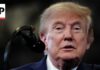
President Trump declared this week that Iran is “completely collapsing” and ordered a new economic strike on the regime, even as Tehran insists the key oil waterway he says is open remains shut.
Story Snapshot
- Trump says no talks are happening with Iran and claims the Strait of Hormuz is fully open with all mines cleared.
- Iran’s Foreign Ministry calls the “collapse” claim American propaganda and says its economy remains resilient.
- President Masoud Pezeshkian says foreign analysts expected Iran to fall apart but it hasn’t.
- Economists and U.S. intelligence reports describe Iran as badly strained, but not on the verge of total collapse.
Trump Escalates Pressure Campaign On Tehran
President Trump told reporters this week that no talks were taking place with Iran, insisting “the Hormuz Strait is open and operating” and that “all water mines have been removed or detonated.” He said the naval blockade remains in full force even as he described Iran’s economy as being in a state of total collapse.
The president has paired that message with fresh economic muscle. His administration has moved forward with what officials called “the greatest financial offensive ever marshalled,” targeting Iran’s trading partners with new sanctions meant to choke off the regime’s remaining revenue. For a White House that campaigned on ending endless wars while crushing hostile regimes through strength, not surrender, this is the maximum-pressure playbook conservatives have wanted since Trump first pulled out of the failed Obama-era nuclear deal.
Tehran Pushes Back Hard On Collapse Claim
Iran’s government is not taking the “collapsing” label quietly. Its Foreign Ministry has publicly rejected the narrative as American propaganda, blaming Trump’s pressure campaign for killing mediation efforts while vowing the country will stay resilient no matter what Washington throws at it.
Iranian President Masoud Pezeshkian went further, saying outside analysts expected the country to buckle under sanctions and were now confused it hasn’t. “They expected the country to collapse because of the pressures they applied,” he said. “Now, in their analyses, they are surprised as to why we haven’t collapsed”. Iran’s governing institutions, including its cabinet and security council, have kept functioning throughout the war.
Economists Say Strain Is Real, Total Collapse Is Not
Even analysts skeptical of Tehran’s spin agree Iran is hurting badly, just not broken. A former Central Bank of Iran adviser said the economy is “deteriorating under the weight of mounting sanctions” but is “far from unraveling,” adding there has been no major run on Iranian banks. Reuters has separately reported that Iran avoided a full economic collapse even after Trump’s first-term sanctions hit hard back in 2018.
Multiple U.S. intelligence assessments have reached a similar conclusion: Iran’s leadership remains intact and is not in danger of collapsing anytime soon, according to reports citing sources familiar with the analysis. A former Treasury sanctions official likewise said pressure alone “can’t topple a regime on their own,” even while making Iran’s military and nuclear programs far costlier to run.
None of that undercuts the bigger picture conservatives should take from this fight. Whether or not Iran’s government falls tomorrow, the regime is rationing goods, restricting foreign currency, and shifting economic pain onto its own people just to keep the lights on. That is exactly what happens when an American president stops appeasing a terror-sponsoring regime and instead squeezes it with real consequences. A shuttered Strait of Hormuz would be an unprecedented shock to global oil markets, and analysts warn a prolonged closure could send prices sharply higher. That leverage is precisely why Trump is applying it now, and why Tehran is screaming the loudest when it starts to work.
Sources:
redstate.com, reuters.com, nytimes.com, aljazeera.com, theguardian.com, cnn.com
© impactheadlines.com 2026. All rights reserved.















![AIR FRANCE A320 & Business Lounge 🇫🇷 Paris CDG to Tunis 🇹🇳 [FULL FLIGHT REPORT]](https://impactheadlines.com/wp-content/uploads/sites/27/2026/08/maxresdefault-34-100x70.jpg "Misbehavior Kills Air France Sauna")