As Iran’s Revolutionary Guard ramps up strikes on tankers and talks of “closing” Hormuz, global energy lifelines — and America’s pocketbook — are suddenly on the line.
Story Snapshot
- Iran’s Islamic Revolutionary Guard Corps (IRGC) is openly attacking tankers and claiming control over the Strait of Hormuz.
- A recent tanker was hit by an “unidentified projectile” near Hormuz, echoing a wider pattern of IRGC strikes and threats.
- Conflicting claims from Iran, the United States, and maritime agencies complicate who is responsible for each incident.
- These attacks threaten global oil flows, risk higher energy prices for American families, and test Trump’s pledge of strong U.S. deterrence.
IRGC Strikes Put the World’s Oil Chokepoint in the Crosshairs
The Strait of Hormuz is a narrow waterway where a large share of the world’s oil moves every day, and it has become the center of a dangerous showdown. Iran’s Islamic Revolutionary Guard Corps, a powerful arm of the regime, now claims it has “closed” the strait and is striking ships that refuse to obey its rules. State media in Tehran reported that an oil tanker using the commercial name Prima was hit by a drone after ignoring IRGC warnings that movement through Hormuz was banned for “security reasons.” At nearly the same time, the United Kingdom Maritime Trade Operations group reported a drone strike on an unnamed vessel north of Jubail, Saudi Arabia, and urged ships to transit with caution. This pattern tells us Iran is not just talking; it is using force in one of the world’s most important energy lanes.[2][3][6][13]
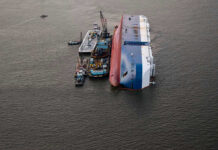
Recent days brought another shock when a tanker was reportedly hit by an “unidentified projectile” while transiting near Hormuz, damaging the bridge but not sinking the vessel. Maritime alerts describe similar incidents off Oman’s coast, where a container ship was struck by an unknown projectile and several containers were damaged. In that case, authorities stressed that the source of the projectile remains unclear and no group claimed responsibility. The lack of hard forensic proof or an open claim for each single strike gives Iran room to deny direct blame in specific events, even as its own military boasts of other attacks and “restrictions” on the strait. For everyday Americans, these details matter less than the bigger reality: ships are getting shot at in the world’s key oil chokepoint, and that drives risk and prices up.[2][4][9]
Iran Claims a Blockade, While the U.S. Warns and Denies
Iranian outlets now say the IRGC has shut Hormuz and hit multiple vessels that try to cross, including at least one Marshall Islands–flagged tanker that Tehran labels as violating its closure order. In one reported case, IRGC gunboats allegedly fired on a commercial tanker northeast of Oman without giving the normal radio warning first, sending five nearby tankers scrambling to reverse course near Qeshm Island. According to a United Kingdom shipping group, a tanker captain later said he saw two IRGC gunboats approach and then open gunfire, with the crew thankfully surviving the encounter. These reports paint a picture of a regime using force to impose its will on international waters, with little regard for long-standing maritime norms or civilian safety.[2][5][8][9]
The United States Central Command, which oversees U.S. forces in the region, pushes back hard on Iran’s narrative. American military officials have publicly denied Iran’s claim that Hormuz is fully closed and insist that commercial ships are still transiting the strait. At the same time, U.S. maritime authorities warn shipowners to “keep clear” of Hormuz for now, given the clear hazard from drones, gunfire, and unknown projectiles. This tension means one thing for conservative readers at home: even as the Trump administration projects strength, hostile regimes like Iran are probing for weakness, testing whether global shipping — and American energy security — can be held hostage.[2][3][4]
From Tanker War History to Today’s Energy and Security Stakes
To understand how serious this is, it helps to look back. During the Iran–Iraq War in the 1980s, both countries fought what became known as the “Tanker War,” attacking ships that carried oil and supplies through Hormuz. Research shows that in that conflict, Iran and Iraq used anti-ship cruise missiles in more than half of their attacks on shipping, and Iraq used missiles in about 80 percent of strikes on commercial ships. Oil tankers proved surprisingly tough, with only about 23 percent of nearly 240 attacked tankers totally lost, yet the real damage was to global markets and confidence. That same playbook — sporadic attacks, threats to close the strait, and use of missiles or drones — appears again today, this time with the IRGC claiming to decide who may pass and who will be fired upon.[2][6][10]
Maritime traffic through the Strait of Hormuz slowed sharply after a tanker was struck by a projectile Saturday. Iran insists vessels must coordinate with the Revolutionary Guard and use routes through Iranian waters.#Hormuz #Iran #AkhbarComhttps://t.co/13QWwuu150 pic.twitter.com/ogedDz05jU
— أخبار السعودية · Akhbar Saudi (@AkhbarDotComSA) June 30, 2026
Think about what happens when a regime hostile to American values effectively chokes off the world’s most important energy lane. Analysts estimate Hormuz normally carries a huge share of global oil flows; when those flows drop, insurance becomes expensive or unavailable, and many crews refuse to sail into danger. Iran’s attacks and claimed restrictions have already squeezed shipping traffic to a trickle, according to market intelligence, with only a handful of tankers crossing compared to more than one hundred per day before the crisis. That not only rattles Wall Street, it hits Main Street — pushing up the cost to fill a gas tank, run a farm, or heat a home. For a conservative audience already angry about past inflation and energy mistakes, a foreign regime firing on tankers is yet another reminder that American strength and energy independence matter.[14][15]
What Conservatives Should Watch Next
For patriots who care about secure borders, a strong military, and protection of family budgets, the Strait of Hormuz story is more than distant news. Iran’s Islamic Revolutionary Guard Corps is officially labeled a terrorist organization by many Western bodies, and yet it is acting like the traffic cop of a vital global waterway. There are still unanswered questions about who fired each projectile and whether every claim can be independently proven, but the pattern is clear enough: hostile forces are willing to risk environmental damage, lives, and world markets to advance their agenda. Going forward, conservatives will want to see firm American deterrence, clear rules for shipping, and honest reporting that does not downplay the danger or excuse regimes that fire on civilian tankers.[3][9][15]
Sources:
[2] Web – IRGC says it struck US-linked vessel ‘Panaya’ after tanker attack …
[3] Web – Iran’s IRGC Strikes Oil Tanker in Strait of Hormuz – Caspianpost.com
[4] Web – Iran says it hit oil tanker near Strait of Hormuz 🛢️ The Islamic …
[5] YouTube – US-Iran war: Tanker hit by unidentified projectile while …
[6] Web – Iran says seized tanker in Gulf of Oman, as US ‘disables’ two ships
[8] Web – Iran Conflict Maritime Update: Islamic Revolutionary Guard Corps …
[9] Web – Iran’s Islamic Revolutionary Guard Corps attacked a commercial …
[10] Web – The Islamic Revolutionary Guard Corps (IRGC)
[13] Web – Tensions continue to escalate in the Strait of Hormuz as … – ABC …
[14] Web – Strait of Hormuz | International Crisis Group
[15] Web – The Legal Regime of the Strait of Hormuz and Attacks Against Oil …
© impactheadlines.com 2026. All rights reserved.