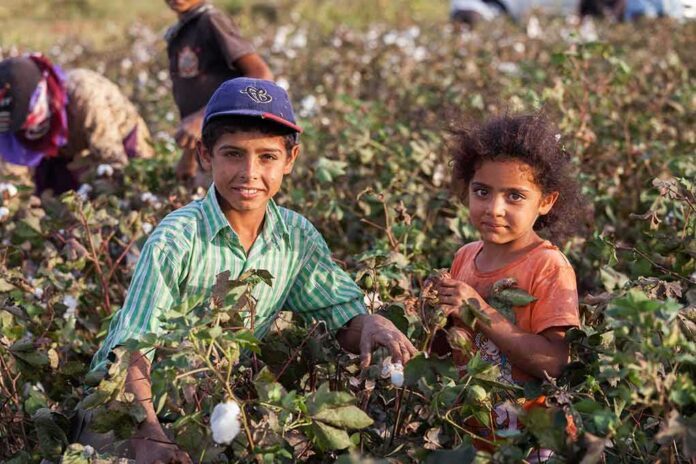
America never stopped growing cotton; what changed is where most of us live, how modern cotton is produced, and how a two‑second video clip can flatten two centuries of agricultural, technological, and social history into a mistaken impression.
At a Glance
- The United States still grows cotton at industrial scale, measured in the tens of millions of 480‑pound bales annually, across millions of acres in major Sun Belt states.
- Mechanization, plant genetics, and integrated pest management remade cotton from a labor‑intensive crop into a highly capital‑ and knowledge‑intensive system.
- The symbol of cotton in American culture is inseparable from slavery and sharecropping; that history coexists with a modern supply chain that powers apparel, medical, and industrial products.
- Short reaction videos mislead by collapsing context; a startled comment about a roadside field does not change the facts of a still‑vital sector.
The reality check: cotton fields never vanished
The core claim is straightforward and well documented: U.S. cotton production remains active and large. USDA’s outlooks and crop reports, which underpin the domestic and global textile supply chain, place recent U.S. output in the range of roughly 13–15 million 480‑pound bales a year, with planted or harvested area in the multimillion‑acre range. Those numbers fluctuate with rainfall, abandonment, prices, and pest pressure—just like any row crop—but they decisively refute the idea that cotton fields are relics of a disappeared past. If you drive through West Texas, the Brazos and Coastal Bend, the Mississippi Delta, the Alabama Black Belt, or the San Joaquin Valley at the right time of year, you will see cotton.
Why, then, does a passerby react with surprise? Because modern agriculture is out of sight for most Americans. Fewer than 2 percent of the population farms; the rest experience cotton as a fiber in clothing or as a line on a retail tag. The spatial and social distance between urban consumers and rural production makes a blooming field look like a tableau from a museum rather than a living industrial system.
How modern cotton actually works
Contemporary cotton farming is a synthesis of machinery, genetics, and management. Mechanical pickers and strippers harvest lint without the armies of laborers that defined cotton before World War II. Transgenic varieties, bred for insect resistance and herbicide tolerance, narrowed the chronic losses that once came from boll weevil and worm complexes; targeted eradication programs and integrated pest management did the rest. Precision agriculture—yield monitors, satellite guidance, variable‑rate application—trim inputs while stabilizing yields. The downstream chain is equally modern: gins separate seed from lint, classing offices grade fiber quality, merchants hedge with futures, and mills—domestic and abroad—spin lint into yarn. These are not plantation scenes. They are capital‑intensive businesses run on agronomy, logistics, and risk management, often under thin margins that punish sloppy execution. That transformation is why output persists without the visible labor that once defined the crop’s public image.
Region matters. Upland cotton dominates U.S. acreage; extra‑long‑staple Pima fills a specialized niche in arid California and Arizona. Weather volatility—drought on the High Plains, tropical systems in the Gulf states—drives year‑to‑year swings. USDA’s balance sheets reflect those shifts, but the through‑line remains: American growers plant, harvest, gin, and market cotton every season.
The weight of history: symbol versus system
No crop in the United States carries the same moral freight as cotton. “King Cotton” financed Southern wealth, fueled the expansion of slavery, and left a long afterlife in sharecropping and Jim Crow. That past is why images of cotton provoke powerful responses in ways a wheat or soybean field rarely does. When a viral clip shows someone expressing astonishment—“I didn’t think they did cotton fields anymore”—audiences often read the reaction not just as a factual error but as a cultural tell about who remembers what, and who prefers to forget. Both instincts are understandable. But conflating the symbol with the current system obscures how thoroughly the agronomy and economics have changed while the fiber’s cultural charge has not.
Holding both truths is possible. Cotton’s past was built on coerced labor and racial subjugation. Cotton’s present in the U.S. is built on mechanization, global trade, and compliance with modern labor, safety, and environmental standards—variability and bad actors notwithstanding. The same bolls that recall atrocities also become medical gauze, cottonseed feed ingredients, cellulose for industrial uses, and, yes, blue jeans.
Where the misperception comes from—and why it spreads
Short‑form video platforms reward emotional clarity over context. A roadside gasp becomes a shareable sound bite; the backstory—regional cropping patterns, modern mechanization, USDA production data—does not. Researchers call these edits “cheap fakes”: technically real footage framed to imply something larger or different than the underlying facts support. On remix‑heavy platforms, users layer reactions atop reactions; each turn amplifies sentiment and strips away detail. The result is a feedback loop perfectly tuned to make a live, ordinary farm look like an impossible throwback, and to transform a teachable moment into a cultural skirmish.
None of this means the initial speaker is malicious, or that audiences are foolish. It means the medium’s incentives select for a clean moral of the story—the cotton field that shouldn’t exist, the gotcha of perceived ignorance—over the messier reality. Good information lives in boring formats: tables of bales and acres, monthly outlooks, and extension bulletins. Viral formats are engineered for speed and emotion; agriculture rewards patience and precision.
She Thought Cotton Fields VANISHED With Slavery… | Steve Watson, Modernity
In a now viral video, a woman pulled over, pointed her phone at a cotton field, and spoke as if she had stumbled onto a dark secret.
Overlay text on the clip asks “how do we still have cotton fields?”… https://t.co/rMyH1wJuMO pic.twitter.com/AoEIwzRVLP
— Owen Gregorian (@OwenGregorian) September 24, 2026
What the numbers say—and what to do with them
When you need the anchor, consult the ledger that governs the trade. USDA’s annual outlooks and monthly crop reports quantify the crop: roughly mid‑teens million bales of U.S. production in recent seasons, with millions of acres planted or harvested and yield dynamics explained in plain language. Global ledgers from the Foreign Agricultural Service situate U.S. output within a 120‑million‑bale world market; the United States is a top exporter whose year swings move prices and stocking decisions abroad. A single clipped video cannot falsify a commodity balance sheet any more than it can halt a gin stand. Data is the antidote to vibes.
For viewers and commentators, two practical habits help. First, separate symbol from system: acknowledge cotton’s history without projecting its worst chapters onto every present‑day field and farmer. Second, privilege primary sources when a claim is empirical—acres, bales, yields, locations—and reserve cultural judgments for when you have enough context to make them responsibly. When a roadside field surprises you, the correct next step is curiosity: where is it, what variety, what’s the picker running this year? The answer is almost always more interesting than the clip.
Sources:
usda.gov, ers.usda.gov, nass.usda.gov, fas.usda.gov, people.com, blackenterprise.com, facebook.com, instagram.com
© impactheadlines.com 2026. All rights reserved.