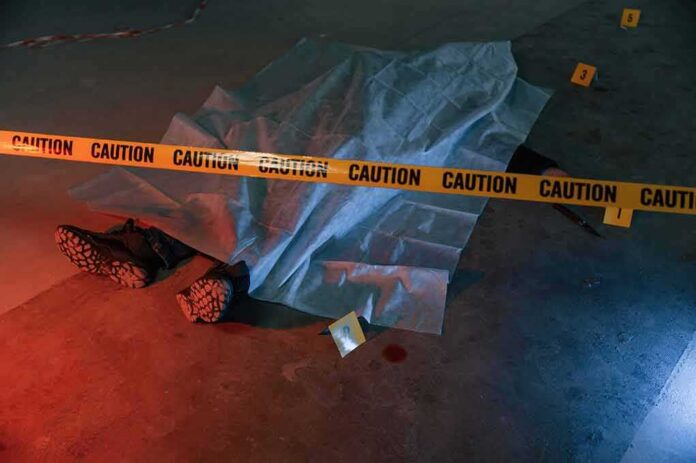
When a body turns up behind a locked door in the subway’s restricted right-of-way, the discovery is rarely immediate and almost never straightforward; infrastructure built for trains and maintenance—not people—can hide a tragedy in plain sight for days.
At a Glance
- An MTA track worker discovered a deceased man inside a utility closet in the No. 6 line tunnel near 125th Street and Lexington Avenue in East Harlem.
- The discovery was around 11 a.m. on a Saturday; EMS pronounced the man dead at the scene, and police reported no visible signs of trauma.
- Investigators believed the body had been there for several days and did not initially suspect foul play; identification was pending.
- Such finds fit a broader pattern: in restricted subway areas, injuries and deaths are often detected during maintenance, with manner and cause confirmed later by the Medical Examiner.
What Happened Underground at 125th and Lexington
A Metropolitan Transportation Authority track worker, on an active project at the 125th Street–Lexington Avenue complex in East Harlem, found a man deceased inside a utility closet situated within the No. 6 line’s tunnel area. The discovery occurred late morning, around 11 a.m., and Emergency Medical Services pronounced the individual dead at the scene. According to police accounts cited in contemporaneous reporting, there were no visible signs of trauma, investigators did not initially suspect foul play, and—based on on-site observations—they believed the body had been there at least several days. The man, thought to be in his twenties, had not yet been identified at the time of the initial report.
Those facts are stark but not unusual in the transit environment. Restricted spaces—utility rooms, cable troughs, trackside niches—are designed for function and separation from passengers. Access is controlled, visibility is limited, and routine passenger traffic never passes close by; discovery often awaits a maintenance sweep or construction access. That is why a case like this can be both shocking at the moment of find and, from an operational perspective, sadly predictable.
How Bodies Go Unseen in a System Meant to Move Millions
The subway is a vast, compartmentalized machine. Between stations and beyond platform edges, it becomes a series of interlocks, fan rooms, signal huts, relay cabinets, breaker panels, and storage closets—each with a specific safety and engineering purpose. The public never enters these spaces; crews reach them according to tightly scheduled access “windows” that balance maintenance with 24/7 service. As a result, conditions inside are audited by procedure rather than by constant human presence. When injury or death occurs in those spaces—whether from medical crisis, exposure, entrapment, or trespass—the event is often detected not by a cry for help but by a worker’s senses during a routine task: a smell, a sightline into a recess, a door opened for the first time that week.
Past incidents illustrate the pattern. MTA employees inspecting tracks have encountered deceased individuals deep in tunnels, sometimes after decomposition or fire damage rendered immediate identification or cause impossible until autopsy; these finds typically occur off-hours and far from the platform edge, reinforcing how insulated the right-of-way is from casual detection. In a separate category, bodies with overt injuries—stab wounds, for example—have at times been located during track inspections, and only then does the event move immediately into a criminal investigation track. The East Harlem case aligns with the former: a non-public space, delayed discovery, and an initial assessment that does not point to violence pending the Medical Examiner’s determination.
What “No Visible Trauma” and “No Foul Play Suspected” Actually Mean
First-look language matters, but it is limited. “No visible signs of trauma” refers to the absence of apparent external injury on scene; it does not resolve internal injury, toxicology, or mechanism of death. “No foul play suspected” is an investigative posture based on what police and EMS see immediately—lack of defensive wounds, blood spatter, weapon indicators, or scene disturbance consistent with assault. In transit cases, those preliminary judgments are particularly provisional because the environment can confound lay inference: heat, airflow, and surfaces can alter postmortem presentation. Definitive answers come from the Office of Chief Medical Examiner through autopsy and toxicology, which can take weeks to complete and release.
The base rate is instructive. Early coverage in restricted-right-of-way deaths often presents a cautious hypothesis that later solidifies—or is revised—once OCME findings are in. Some cases ultimately trace to falls, environmental exposure, or medical events; others, more rarely, to violence or electrical contact. A 1998 case, for instance, was resolved to head injuries after Medical Examiner review, underscoring why the official postmortem remains the arbiter of cause and manner in ambiguous subway settings.
Why Maintenance Crews So Often Make the Discoveries
Put simply, they are the only ones with routine lawful access. Track inspectors, signal maintainers, and third-rail electricians traverse spaces that the riding public never sees. They work to precise protection rules—flagging, foul-time windows, and de-energization procedures—and follow checklists that sometimes bring them to the same locked door every few days and at other times on a longer cycle. That cadence explains both how a body can remain undiscovered—if a space is low-priority or rarely accessed—and how abruptly a case comes to light when a crew finally cycles through. New York’s history contains grim examples: burned, decomposed remains found by night-shift workers deep inside tunnels near Wall Street; disarticulated remains on outlying track segments; and, in rare but shocking instances, bodies tucked into structural voids well away from the running rails.
The effect on workers is not trivial. Track and operating personnel have spoken publicly about the psychological toll of encountering fatalities in the line of duty; trespass-related deaths and injuries are a persistent hazard in large systems, and the human consequences land first on the crews who find, report, and protect the scene. That reality is part of why these episodes, though exceptional in the context of billions of annual trips, demand procedural clarity and respectful handling.
Procedure After a Body Is Found: From Scene Control to OCME
The choreography after discovery is standardized. The crew notifies the Rail Control Center; train movements may be slowed or halted; NYPD and EMS are dispatched; and the area is secured. If there is no immediate sign of a crime, investigators still document the scene, photograph entry points, and log who accessed the space and when. EMS confirms death; NYPD notifies the Medical Examiner, who takes custody. Identification proceeds via fingerprints, dental records, or personal effects; toxicology and autopsy establish cause and manner. That pathway is not unique to New York, but the scale and density of the network amplify the operational consequences: even a localized incident can ripple through schedules, and yet, service restoration must proceed without compromising evidentiary integrity.
Context matters here as well. Transit headlines often conflate disparate events—trespasser strikes, platform assaults, medical deaths in restricted spaces—under a generic “subway fatality” umbrella, but each carries a distinct investigative logic and prevention strategy. A case like East Harlem’s utility-closet discovery points to questions of access control and inspection cadence; a platform homicide triggers entirely different interventions focused on policing and patron behavior. Precision in categorization improves both public understanding and policy response.
A disturbing discovery was made Saturday morning at the 125th Street and Lexington Avenue subway station in East Harlem, where an MTA track worker found a man dead inside a utility closet along the No. 6 line.
The body was reportedly discovered about 100 feet north of the… pic.twitter.com/Q6cxpVNlcv
— World Latin Honey (@WorldLatinHoney) September 27, 2026
What This Case Signals—and What It Doesn’t
The East Harlem discovery signals a familiar operational truth rather than a new public-safety trend: in a sealed, industrial environment, deaths that are not immediately visible to riders tend to be found by the workers tasked with keeping the system running. The preliminary indicators—no visible trauma, no initial suspicion of foul play, belief that the body had been in place for days—fit that pattern. Final answers about cause and manner will come from the Medical Examiner. Until then, the practical implications focus on access logs, inspection schedules, and whether door hardware, camera coverage, and crew checklists are sufficient to catch anomalies sooner without compromising safety. New York’s network has seen the gamut of outcomes in similar cases; it has also learned, sometimes painfully, how to fold those lessons into a system designed for motion, not surveillance.
Sources:
nypost.com, pulse2.com, abc13.com, fox5ny.com, manhattanda.org
© impactheadlines.com 2026. All rights reserved.