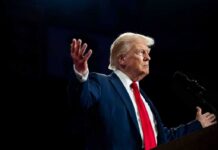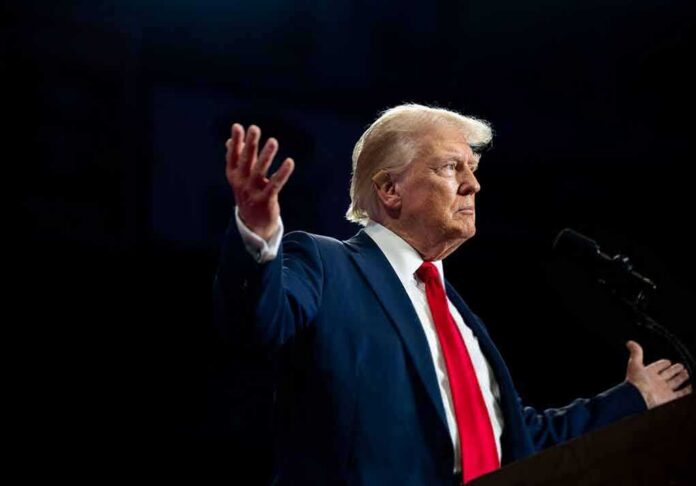
Two new Trump executive orders just put quantum technology at the center of American power while liberal media rushes to call the plan “unrealistic.”
Story Snapshot
- Trump orders a national push to deliver a major quantum computer to a Department of Energy lab by 2028.
- Federal systems must shift to post-quantum cryptography by 2030–2031 to block future quantum hacks.
- War Department is ordered to field next‑generation quantum sensors for the battlefield by late 2028.
- The Left questions the timeline while ignoring China’s race to weaponize quantum technology.
Trump’s Quantum Orders Aim to Protect America Before “Q‑Day” Hits
President Donald Trump has signed two sweeping executive orders that finally treat quantum technology as a core national security issue, not a science fair project. One order, Executive Order 14411, launches the Quantum Computer for Application Development and Discovery Science, or QC‑ADDS, a national push to deliver at least one advanced quantum computer to a Department of Energy facility by 2028.[6] This machine is meant to kick off a new era of discovery in materials, chemistry, and defense modeling, while staying under American, not Chinese, control.[1]
The second order tackles the threat many experts call “Q‑Day” — the moment when powerful quantum computers can crack today’s encryption and expose everything from government secrets to your bank account.[1] Trump directs federal agencies to move their systems to so‑called post‑quantum cryptography by around 2030–2031, with the Office of Management and Budget and the National Cyber Director driving the plan.[1] Commerce and the National Security Agency will issue detailed guidance, and agencies must name leaders to manage this shift, treating it as a real deadline instead of another vague cyber promise.[1]
Building Quantum Weapons and Shields Without Growing the Bureaucracy
The quantum innovation order does more than chase a showpiece computer. It tells the Secretary of War to identify at least three next‑generation quantum sensor projects and get them into the field by September 30, 2028.[6] These sensors could help our troops detect submarines, stealth aircraft, or hidden tunnels and give America a clear edge on the battlefield.[2] At the same time, Commerce, Energy, NASA, and the National Science Foundation must draft five‑year plans for quantum sensing and networking, tying research directly to real‑world missions, not academic vanity projects.[1]
The orders also harden the quantum supply chain so we are not begging China or other rivals for key parts.[2] They call for new domestic manufacturing of quantum components and better workforce training through apprenticeships and new quantum education institutes.[3] To defend that ecosystem, the administration expands a specialized counterintelligence team to monitor foreign threats to American quantum labs and companies.[2] Instead of creating huge new agencies, the orders use existing departments and budgets, pushing them to coordinate through the Office of Science and Technology Policy so money already on the books actually serves clear, measurable goals.[3]
Media Doubt, Missing Details, and the Real Risk if We Do Nothing
Corporate media and some analysts quickly labeled the 2028 quantum computer goal “unrealistic” and accused the White House of political posturing, yet they offered no detailed review of the technical roadmap behind the QC‑ADDS effort.[1] Critics also complain that the orders do not spell out a fresh pot of money, beyond a separate two billion dollar grant program that supports nine quantum firms and gives the government equity stakes in some of them.[3] They warn this structure might distort markets, even though no detailed audit of the program has surfaced yet.[3]
There are real gaps conservatives should watch. The term “scientifically relevant quantum computer” is not defined in plain benchmarks like qubit count or error‑correction standards, which could let bureaucrats claim victory with a half‑finished machine.[1] The post‑quantum cryptography timeline, set for 2030–2031, is slower than some earlier guidance that urged agencies to move “as quickly as feasible,” raising fears that risk‑averse offices will drag their feet.[11] And with the Office of Science and Technology Policy coordinating huge parts of this agenda, there is a danger of regulatory capture if outside scientific and security watchdogs do not stay involved.[7]
Why This Matters for Conservative Voters and the Constitution
For many readers, quantum computing sounds distant, but the stakes hit close to home. A foreign quantum computer that can break today’s encryption could expose military plans, voter rolls, bank records, gun purchase databases, and health data in one sweep. Trump’s orders aim to put American engineers, not globalist planners, in charge of building both the powerful machines and the next‑generation locks that protect our freedoms, our savings, and our grid from hostile regimes like China and Iran.[1]
Trump signs executive order investing in quantum computing
Commerce Secretary Howard Lutnick details the U.S. government's investment in quantum computing through an executive order while speaking from the Oval Office.https://t.co/F6OJpk8Q77 pic.twitter.com/MF9JpbJ9Y3
— SolidLedger Studio (@YouSolidLedger) June 23, 2026
At the same time, these policies keep the focus on national defense and limited government, not new surveillance powers or woke social experiments. The orders talk about sensors, computers, workforce, and supply chains — not speech policing or gun registries.[6] The challenge now is oversight. Congress, auditors, and citizens need to demand clear technical milestones, open accounting for that two billion dollars in grants, and strict guardrails so federal equity stakes in private firms do not turn into favoritism. If conservatives engage now, these quantum moves can become a rare example of Washington using cutting‑edge tech to defend liberty instead of eroding it.
Sources:
[1] YouTube – Live: Trump signs executive order on quantum computers, national …
[2] Web – Trump signs orders calling for powerful quantum computer … – Reuters
[3] Web – Trump signs 2 orders to prepare the US for a quantum future
[6] Web – Ushering in the Next Frontier of Quantum Innovation
[7] Web – Infleqtion Welcomes Executive Order on Quantum Technology
[11] Web – Draft EO Signals Expanded Federal Coordination on Quantum …
© impactheadlines.com 2026. All rights reserved.