A young Chicago man now faces up to 20 years in prison after allegedly helping an encrypted chat group plan a drone and sniper attack on President Trump’s UFC event at the White House and then trying to wipe the trail.
Story Snapshot
- Federal prosecutors say Alexander Iniguez Mercado helped run Signal chats planning a violent June 14 attack on President Trump’s White House UFC event.
- Mercado is charged with obstruction of justice for allegedly warning a key plotter, lying to the Federal Bureau of Investigation (FBI), and deleting the Signal app and its data.
- The alleged plan involved drones with explosives, sniper rifles, and attacks on fleeing crowd members, with President Trump and Vice President JD Vance named as targets.
- Mercado’s lawyer claims the chats were about survivalism and camping and says he panicked and deleted Signal after reading the indictment, not to block an investigation.
Grand Jury Lays Out a Violent Plot Aimed at Trump’s White House Event
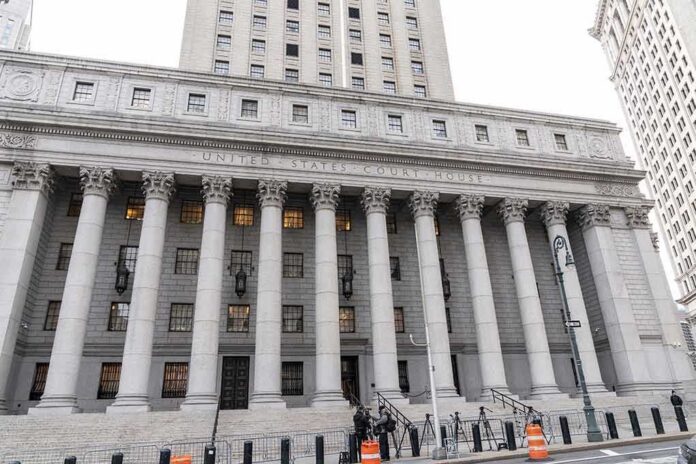
Federal court records say a grand jury in Illinois indicted 20-year-old Alexander Iniguez Mercado for obstruction of justice tied to a foiled plan to attack the Freedom 250 Ultimate Fighting Championship (UFC) event on the South Lawn of the White House. Prosecutors say encrypted Signal groups discussed flying explosive drones over the crowd, using sniper rifles, and shooting people as they tried to escape. The indictment states the intended targets included President Donald Trump and Vice President JD Vance at the June 14 event.
News reports and Justice Department material say Mercado was not some random bystander but an administrator and member of those Signal groups. As an administrator, he allegedly helped manage membership and group settings while others talked about weapons, drones, and attack plans. He is the eighth person charged in the broader case, which has already produced several related indictments naming suspects from different states. Officials say the plot was stopped before the event, and no attack occurred.
Obstruction Charge: What Prosecutors Say Mercado Did After the FBI Came Calling
The obstruction count centers on what happened when FBI agents contacted Mercado shortly before the planned UFC event. The criminal complaint says agents interviewed him the day before the event, and he denied any role in violent planning. After that visit, prosecutors claim, Mercado deleted the Signal app and all related data from his phone and warned a high-level co-conspirator that the FBI was investigating them. Officials argue those steps were meant to destroy evidence and tip off another suspect, blocking the investigation.
Justice Department filings say Mercado also tried to recruit other people into the Signal groups even after the FBI reached out, tying that behavior into the obstruction narrative. United States Attorney Andrew Boutrous has publicly stressed that obstructing a probe into a planned mass killing is itself a serious threat to public safety. If convicted, Mercado faces up to two decades in federal prison, a reminder that tampering with evidence and lying to investigators is treated as more than a “process crime” when lives are at stake.
Defense Pushes Back: Survivalism Story and Questions About Evidence
Mercado’s defense attorney, Jennifer Robertson, paints a very different picture of the Signal chats and his motives. She says the online groups focused on survivalism and camping, not terrorism or a real plan to attack the White House. According to her account, Mercado “freaked” after reading the indictment and then deleted the Signal app in panic, not to block the FBI. That story challenges the government’s timeline, which places the deletion right after agents interviewed him, not after he saw the charging documents.
So far, the defense has not produced forensic phone records, recovered messages, or testimony from the unnamed co-conspirator to support its account. The public filings also do not include the deleted Signal messages themselves, and the government instead relies on statements about deletion and Mercado’s admin role. That leaves a gap where many readers might want hard technical proof. Still, the grand jury did find enough to indict him as an administrator in groups that talked about a violent attack, which the defense has not directly disproved.
Domestic Terrorism, Encrypted Apps, and the Stakes for Constitutional Conservatives
This case fits a growing pattern in domestic extremism prosecutions, where there is no single “domestic terrorism” charge, so officials use obstruction, conspiracy, and weapons laws instead. Experts note that prosecutors often lean on obstruction when suspects delete encrypted messages after contact with investigators, especially in plots aimed at high-profile political figures or major events. Encrypted platforms like Signal make it harder to track threats, so the government pushes for strong penalties when people try to wipe digital trails.
Alexander Iniguez Mercado, 20, faces up to two decades in prison if convicted of the obstruction of justice charge in a grand jury indictment made public Friday. He was set to appear before a federal magistrate judge later Friday afternoon. https://t.co/DHDosj9O2T
— Chicago Sun-Times (@Suntimes) June 26, 2026
For constitutional conservatives, the stakes run in two directions at once. On one side, there is the basic duty to protect the president, the vice president, and thousands of innocent Americans from drone bombs and sniper fire at a public event. On the other, there is a real need for clear evidence when the government says an online “survival” chat crossed the line into a terror plot. As the Trump administration’s Justice Department moves this case forward, it will test how well our system can punish true threats without turning panic and encrypted talk into crimes on their own.
Sources:
townhall.com, newsweek.com, facebook.com, instagram.com, justice.gov, youtube.com
© impactheadlines.com 2026. All rights reserved.