Iran is trying to charge billions in fees for ships to pass through one of the world’s most critical waterways — and the Trump administration says that’s illegal and will not stand.
Story Snapshot
- Iran created a new government body to collect “service fees” from ships passing through the Strait of Hormuz, already pocketing an estimated $2 million from some vessels.
- Iran calls the charges “fees,” not “tolls,” but maritime law experts say the name change doesn’t make it legal.
- President Trump declared the strait permanently toll-free, and Secretary of State Marco Rubio called Iran’s charges illegal, unacceptable, and dangerous.
- The International Maritime Organization says no country has the right to charge ships for simply passing through an international strait.
Iran’s Scheme to Tax the World’s Oil Lifeline
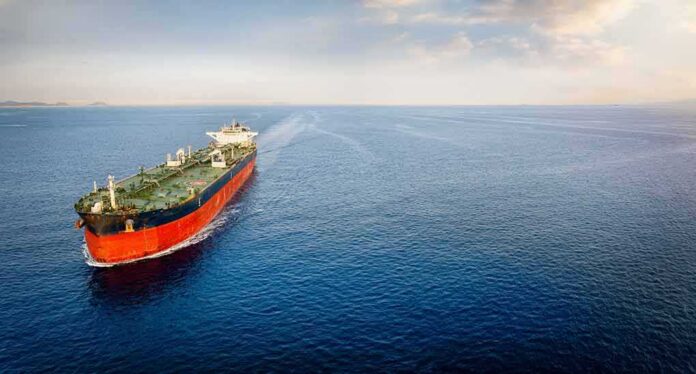
The Strait of Hormuz is a narrow waterway between Iran and Oman. About 20 percent of the world’s oil flows through it. Iran now claims the right to charge ships for passing through. In May 2026, Iran set up the Persian Gulf Strait Authority to issue “safe passage permits” and collect fees. An Iranian lawmaker said the country has already collected about $2 million from some vessels, calling it a “new concept of sovereignty.” [4]
Iran’s Foreign Ministry tried to soften the move by calling the charges “service fees” rather than “tolls.” Spokesperson Esmaeil Baghaei said fees would be charged for services provided, not for the right to pass through. [2] But maritime law experts were quick to push back. Simply renaming a toll doesn’t make it legal. If ships must pay to access the strait at all, it’s a toll — no matter what Iran calls it.
Why the World Says Iran Is Wrong
The International Maritime Organization (IMO) was direct: no country has the right to block shipping or charge transit fees in the Strait of Hormuz. IMO Secretary-General Arsenio Dominguez warned that such actions would set a dangerous precedent for global trade. [12] The strait is protected under long-standing international rules that say ships must be allowed to pass freely through waterways used for global navigation.
Iran has not signed the 1982 United Nations Convention on the Law of the Sea (UNCLOS), the main treaty governing ocean rights. Iran uses that fact to argue it isn’t bound by the rules. But most legal experts and major maritime powers — including the United States — treat those passage rights as customary international law, meaning they apply to all nations whether they signed UNCLOS or not. [5]
Trump and Rubio Draw a Hard Line
President Trump declared the Strait of Hormuz permanently toll-free. Secretary of State Marco Rubio went further, calling Iran’s fee scheme illegal, unacceptable, and dangerous. France and the United Kingdom also pushed back, with French President Emmanuel Macron saying the fees violate international law. A joint UK-France naval mission stood ready to deploy to keep the strait open. The unified international response made clear that Iran’s plan faces serious opposition.
📄 The U.S. and the six Gulf Cooperation Council (GCC) states, Saudi Arabia, the UAE, Qatar, Kuwait, Bahrain and Oman, reject all “tolls” or “fees” in a joint statement following a ministerial meeting in Bahrain.
➤ They welcomed the June 17 U.S.-Iran memorandum of… https://t.co/zQvGfGZJnJ
— Drop Site (@DropSiteNews) June 25, 2026
Iran’s credibility in this fight is already weak. The regime executed over 1,600 people in 2025 and has blocked its own citizens’ internet access. It has also refused to allow inspections by the International Atomic Energy Agency (IAEA). These actions make it harder for Iran to claim the moral high ground in any international dispute — including this one. The money Iran wants to collect would likely flow to the Islamic Revolutionary Guard Corps (IRGC), not to the Iranian people. That makes the fee scheme look less like governance and more like a shakedown of the global economy.
What This Means for Americans
The Strait of Hormuz is not just Iran’s problem — it’s everyone’s problem. Oil prices, shipping costs, and energy bills in the United States are all tied to what happens in that narrow stretch of water. If Iran succeeds in taxing ships that pass through, it gains leverage over the global economy. That’s money and power flowing to a regime that funds terrorism, executes its own citizens, and defies international law. The Trump administration is right to treat this as a serious threat and push back hard.
Sources:
[2] Web – Strait of Hormuz: Legal Status & Iran’s Fee Right 2026
[4] YouTube – Iran deal allows Tehran to charge maritime service fees on Hormuz …
[5] Web – Iran collected about $2M in transit fees from some vessels passing …
[12] Web – Access to the Straits of Hormuz, transit fees, and the International …
© impactheadlines.com 2026. All rights reserved.