A man allegedly asked Donald Trump for “full presidential immunity” while posting threats to kill an Arizona sheriff, and that strange request tells you a lot about where American politics and online hate have collided.
Story Snapshot
- Deputies say Jose Angel Valadez posted online threats to kill Maricopa County Sheriff Jerry Sheridan.
- Police say he tagged Donald Trump and asked for “full presidential immunity” while making the threats.
- The Sheriff’s Office moved fast, arresting him the same day and charging him with electronic threatening.
- The case spotlights how confused ideas about presidential immunity now bleed into everyday crime and politics.
What Police Say Happened On July 1
The Maricopa County Sheriff’s Office says 30-year-old Jose Angel Valadez posted direct threats to kill Sheriff Jerry Sheridan on the social media site X on July 1, 2026. Deputies describe this as a clear threat against a named public official, not vague anger. They say that as he made those posts, he also reached toward national politics, asking former President Donald Trump for “full presidential immunity” while tagging Trump’s account. That odd mix of violent talk and legal fantasy is what grabbed headlines.
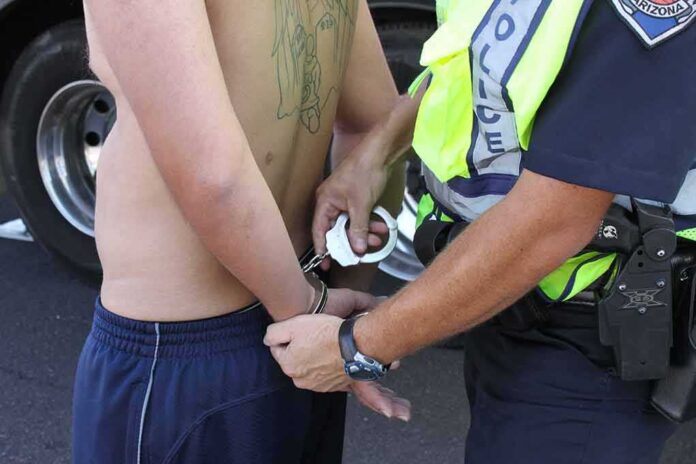
The Sheriff’s Office reports its Threat Management Unit launched a rapid investigation the same day and took Valadez into custody on July 1. Local media say officials stressed the speed of the response, framing it as proof they treat online threats to law enforcement as serious dangers, not just internet drama. He now faces state charges of threatening and intimidating and using an electronic device to threaten, which are standard tools for prosecutors when violence is promised online but has not yet happened.
What We Know And What We Do Not Know About The Posts
So far, the public has not seen the exact language of the alleged X posts. Reporters say officials did not share screen shots or quote full lines, only the summary that he made “direct threats to kill” Sheridan and asked Trump for immunity. The Sheriff’s Office’s own statement on X gives his name, age, and the basic claim, but it does not include the actual text of the threat. That means the picture we have comes from law enforcement, not from independent access to the posts.
There is also no public record yet of a court complaint spelling out each message word by word. The arrest is described in news releases, but not backed by filed charging documents in the materials available here. For now, there is no direct denial from Valadez or his lawyer. No one has come forward to say the posts were fake, misread, or taken out of context. That silence leaves the Sheriff’s Office’s account as the only detailed version in the public square, which both helps prosecutors and limits outside scrutiny.
Presidential Immunity Fantasy Meets Online Threat Reality
The strangest part of this story is the “full presidential immunity” line. Under current Supreme Court rulings, a president can have strong immunity from criminal charges for official acts in office, but there is no immunity for unofficial acts or for private citizens who threaten violence. Legal groups across the spectrum have stressed that Trump v. United States gave presidents broad protection for some official conduct, not a magic shield for supporters or for crimes unrelated to official duties.
Unfortunately, he also rigged the Supreme Court for far right wing Republicans for decades. Possibly ended the U.S. as a nation, given the many horrible undemocratic decisions they've since handed down, including the Trump criminal immunity decision.
— TheGreyMouser (@TheGreyMouser__) July 7, 2026
So when a man in Arizona asks Donald Trump to grant him “full presidential immunity” for an online death threat, he is leaning on a fantasy, not law. From an American conservative, rule-of-law view, this is upside down. Respect for police, judges, and the Constitution means you do not get a pass because you like a president. You face consequences like everyone else. That is why many legal voices frame such immunity claims as delusional thinking, not serious legal strategy.
Why Sheriffs Are On Edge About Social Media Threats
This case fits a larger pattern that has quietly grown more dangerous since 2024. National research shows online harassment, doxxing, and swatting against public officials have moved from fringe behavior to a regular tool for intimidation. Law enforcement guides warn officers to treat direct threats of violence online, especially those that name a person and suggest real intent, as serious crimes that demand quick action and evidence collection. That is part of why the Sheriff’s Office highlights its “rapid investigation” here.
Police leaders say social media now extends the threat to officers beyond the street. Targets can be found at home, tagged, and harassed in front of millions. In that context, public safety agencies risk looking weak if they shrug off posts promising to kill a sheriff, even if the poster might be unstable or confused about the law. Swift arrests send a message: you do not get to test your violent politics online and hope no one takes it seriously. That message aligns with a core conservative value of order and accountability.
Politics, Policing, And Common Sense
Because this threat mentions both Sheridan and Trump, politics hangs over the story. Some critics might call the case a stunt or argue the suspect is more mentally ill than criminal. Others see it as proof that harsh anti-law-enforcement rhetoric has real costs, making officers easier targets. Common sense says both things can be true at once. A man may be unstable and still dangerous. A sheriff may gain political points by acting tough and still have a duty to act.
The deeper lesson is simple enough for anyone scrolling on a phone. Posting death threats at a sheriff is not “free speech.” Asking a president to bless crime does not make you untouchable. Whatever you think about Trump, Sheridan, or the Supreme Court, the law still draws a bright line at violence. When people cross that line online, the response will only get faster and tougher. That may be the only way to keep digital rage from turning into real blood on the ground.
Sources:
mediaite.com, azcentral.com, fox10phoenix.com, yahoo.com, facebook.com, instagram.com, brennancenter.org, justice.gov, policechiefmagazine.org
© impactheadlines.com 2026. All rights reserved.